5 Jobs Robots Could Take Over by 2035 — And 5 They’ll Struggle to Replace
From warehouse workers to drivers, automation is reshaping everyday jobs. But some roles still depend on human judgment, creativity and empathy.

October 2, 2026 by Jeremy
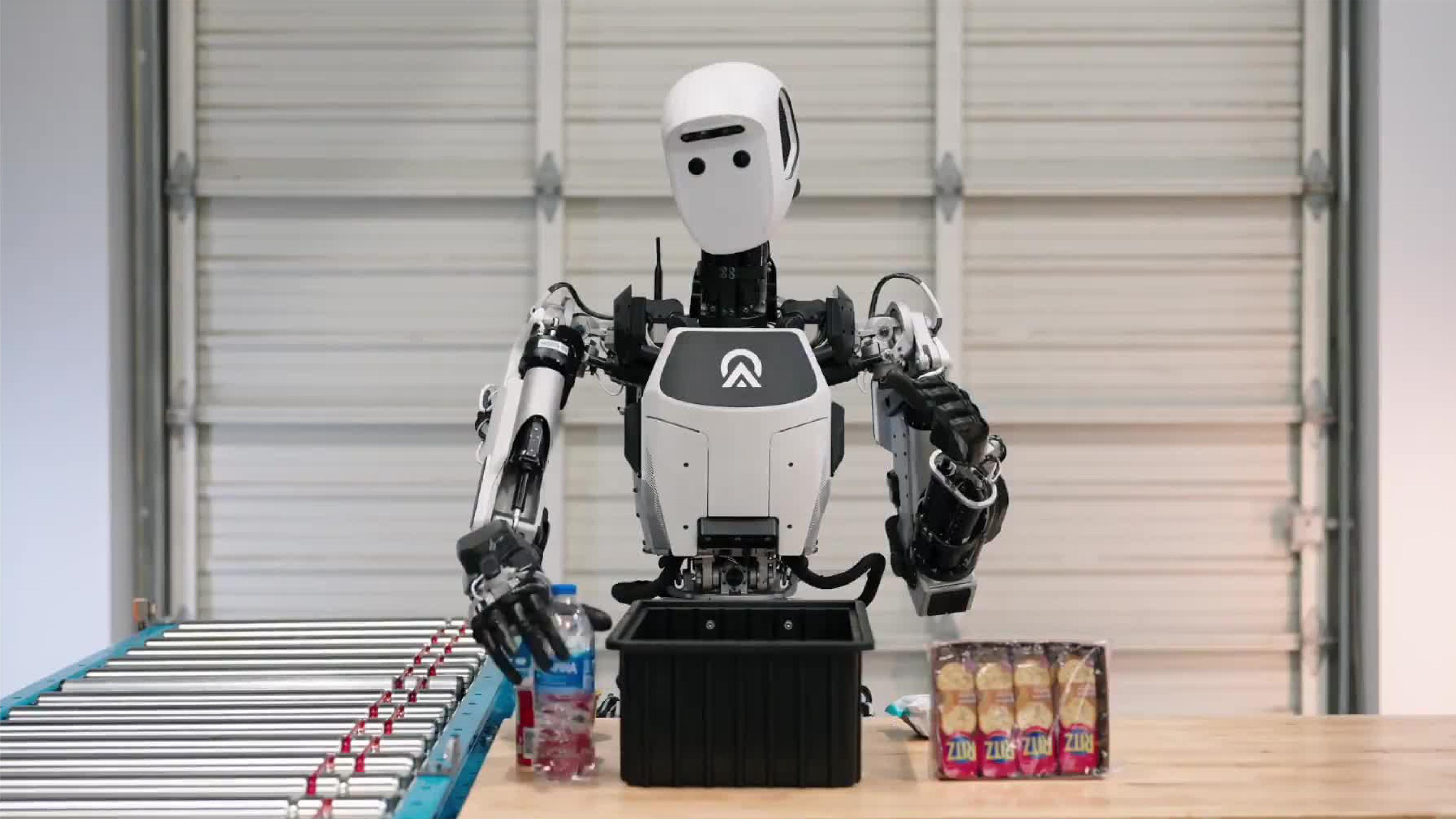
The year 2035 may sound far away, but, as the Chinese proverb goes, time flies like an arrow. Before you know it’ll be just around the corner. Robots are already working with humans across a growing number of industries, and they are here to stay. So, what happens when they begin taking over some jobs entirely?
However Not every role is at risk. Robots and AI still struggle to replicate many of the skills, instincts and interpersonal qualities that humans bring to the workplace.
Here are five everyday jobs robots could largely take over by 2035, and five that may prove much harder to replace.
Jobs Robots Can Take Over
Some occupations are particularly well suited to automation, especially those involving repetitive or predictable tasks.
Assembly Workers
Repetitive jobs are often among the first to be automated, and robots are already widely used on assembly lines to manufacture many of the products we use every day.
Economist Chris Chidzik of the Association for Manufacturing Technology said, “Demand for automation is off the charts, and a lot of that is driven by the lack of available labour.”
With manufacturers facing labour shortages while trying to meet demand, automation is becoming an increasingly attractive solution. As robotic systems become more capable, assembly-line roles could become even more automated by the year 2035.
Drivers
Self-driving vehicles already exist, with companies such as Tesla and Waymo continuing to develop and expand autonomous-driving technology. There are also several other companies that are now making a move towards and adopting autonomous driving.
If autonomous vehicles eventually become reliable enough to operate safely at scale, bus, truck and taxi drivers could face significant disruption. Some people may still choose to drive themselves, while others could continue earning extra income through rideshare services where human drivers remain in demand.
Cashiers
Cashiering is one of the most obvious jobs vulnerable to further automation. Self-checkout machines have already reduced the need for staffed checkout lanes in many supermarkets and retailers.
And when you add increasingly capable AI and computer-vision systems to the equation, the role of the traditional cashier could shrink considerably. By 2035, many routine checkout transactions may require little or no human involvement.
Secretaries
Secretarial and administrative work could also undergo major changes.
AI tools can already draft emails, organize information and handle a growing number of routine administrative tasks. Physical robots could eventually take on additional office duties as the technology improves.
Rather than disappearing completely, human secretaries may increasingly move toward advisory, organizational or higher-level administrative responsibilities that require judgment and interpersonal skills.
Warehouse Workers
Warehouse work can be physically demanding, with employees frequently lifting, carrying and moving goods for long periods.
Robots already perform many warehouse tasks and can move heavy loads without experiencing fatigue or suffering the kinds of physical injuries that affect human workers. As robotic systems become faster and more capable, warehouses could automate an even larger share of package handling, transportation and sorting.
Jobs That Are Safe for Now
Other jobs depend much more heavily on human judgment, empathy, creativity or adaptability, making them considerably more difficult to automate completely, as in a robot or AI may simply not be able to replicate them.
Personal Trainers and Coaches
A robot may be capable of performing impressive physical movements, but that does not necessarily make it an effective trainer or coach, for obvious reasons.
Human trainers draw on experience, observation and personal interaction when helping clients improve. They can adapt exercises in real time, show the trainees the correct form, recognize subtle problems and demonstrate movements in ways that suit individual needs.
Robots may become useful training assistants, but replacing the human coach entirely is a much more difficult challenge.
First Responders
Emergency situations often require immediate decisions under unpredictable and rapidly changing circumstances.
Firefighters, paramedics and other first responders rely on things that extremely important that a robot may not be able to decide on – at least not yet – and those are judgment, experience and human interaction when determining how to respond. Robots can certainly assist with dangerous or specialized tasks, but completely replacing people in these roles would be far more difficult.
Music Teachers
Teaching music involves far more than explaining notes or demonstrating technique.
Human teachers can recognize subtle movements, interpret a student's performance and adjust their teaching style accordingly. Creativity and emotional expression also play major roles in music education, because at the end of the day, emotion plays a huge part in music.
AI and robotics may become useful teaching tools, but reproducing the full relationship between a music teacher and student remains a much greater challenge.
Midwives
Midwives do far more than assist during childbirth. They support expectant mothers, provide guidance and help families understand how to care for newborns.
Their work also requires reassurance, empathy and the ability to make rapid judgments when circumstances change – things that robots may lack. Robots may eventually assist with certain clinical or monitoring tasks, but more importantly, the human element remains central to the role.
Park Rangers
Replacing park rangers with robots would also be difficult, and here’s why.
Park rangers often perform several very different responsibilities, from protecting visitors and enforcing regulations to responding to emergencies and monitoring natural environments. The job requires adaptability and the ability to deal with unpredictable situations rather than repeatedly performing one specialized task.
Robots may help with surveillance, monitoring or other specific duties, but replacing the full role of a park ranger would be considerably more complicated.
Times Change
Futurist Adam Dorr has warned: “Technology has a new target in its crosshairs – and that’s us. That’s our labour.”
By 2035, robots and AI may have transformed many of the jobs people perform today. Some occupations could become heavily automated, while others may remain dependent on qualities that machines still struggle to reproduce.
The bigger change may not always be robots replacing entire professions. In many cases, they could instead take over particular tasks, leaving humans to focus on the parts of the job that require judgment, creativity, communication and empathy.
The real question may not be which jobs disappear entirely, but rather how many everyday tasks within those jobs are handed over to machines.
More articles on this topic
156 articles ReportOctopus-Inspired Muscle Design Simplifies Dexterous Soft Robots
 ReportNvidia Develops Safety Controls as AI Advances Into Robotics
 ReportWhy aren't robots in our homes yet?
 ReportFlourish Opens Preorders for $3,555 Trainable Home Robot
 ReportHow Do Robots See the World?
 Report6 Unusual Jobs Done By Robots
 ReportRLWRLD Expands Physical AI Push for Industrial Robots
 ReportCircus SE Partners With Royal Prestige for UAE Food-Robot Launch
 ReportSix Giant Robots from Around the World
 ReportThree Real Robots Inspired by Star Wars
 ReportJobs You Didn't Know Were Done by Robot Dogs
 ReportBatteries Included: Why Staying Powered is Hard for Robots
BUSINESS NEWS WEEKLY LETTER
The Weekly Letter for Robotics Professionals, Summarizing the Most Important Industry Moves, Launches, Deals and Signals.