Robotera Says Dexterous Hands, Not Walking, Are Humanoids’ Bigger Challenge
The company is betting on direct-drive dexterous hands as competitors including Unitree pursue different approaches to the manipulation bottleneck.

September 30, 2026 by Artem
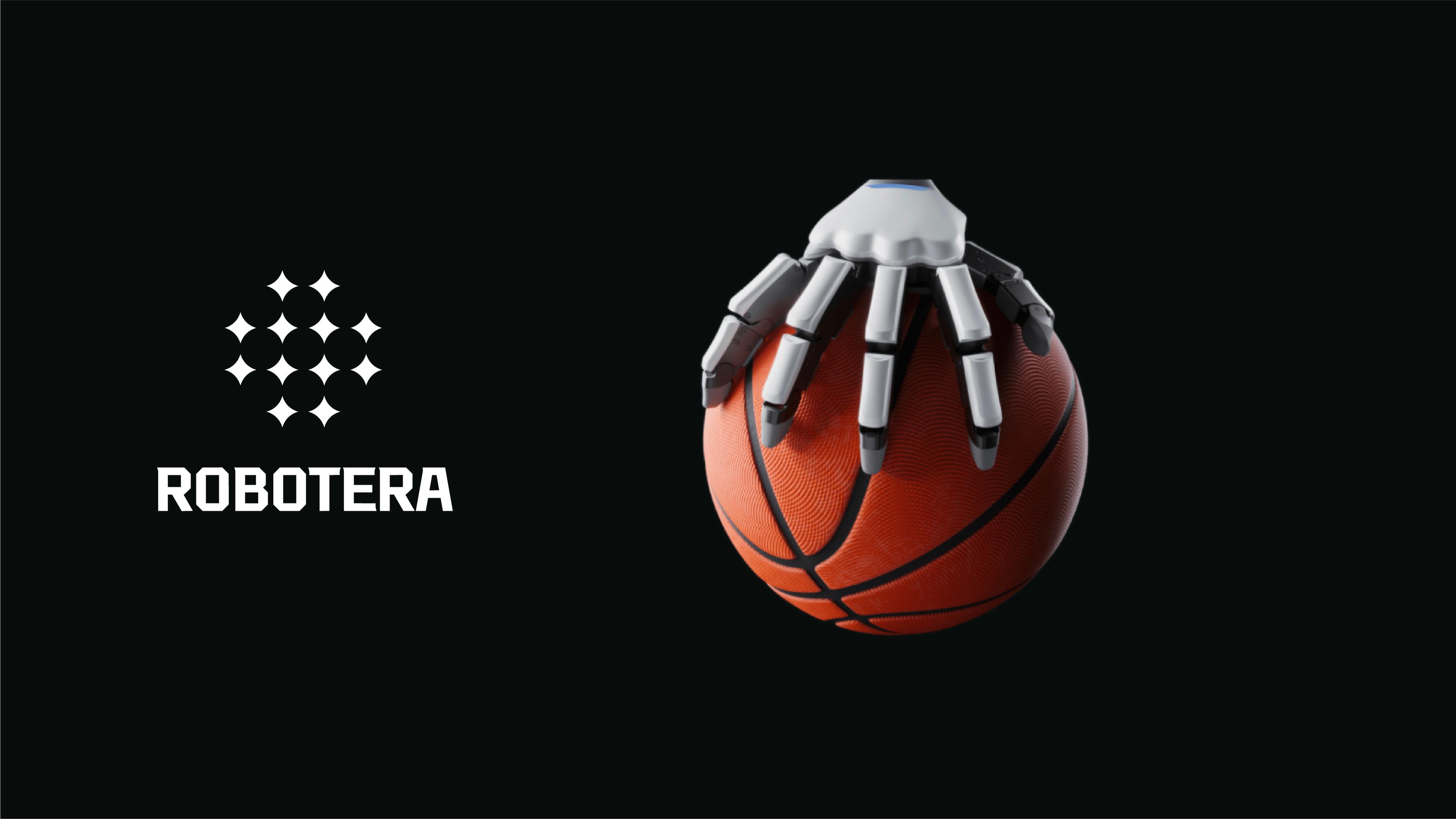
BEIJING — Humanoid robots have become increasingly capable of walking, running and recovering from falls. Robotera says the harder problem now sits at the end of their arms: building hands that can reliably manipulate the unpredictable objects encountered outside laboratories.
“Legged locomotion is primarily a motion-control problem, and advances in reinforcement learning have accelerated progress in this area,” Robotera told ROBOT24.com. “Dexterous manipulation is arguably the more fundamental challenge for embodied intelligence, as it is how robots physically interact with the world.”
The Beijing-based company’s XHAND 1 Pro features 21 degrees of freedom in its five-fingered hand, compared with between 24 and 26 degrees of freedom throughout their entire bodies. Integrating many motors into a hand the size of a human hand while keeping it reliable is a major hardware challenge.
“The dexterous hand is critical to this capability: it sets the physical lower bound, while the model sets the upper bound,” Robotera said in written responses emailed to ROBOT24.com.
Robotera uses a direct-drive system instead of tendons to deliver force from motors located off-board. Its earlier XHAND 1 has 12 active DoF, while the newer Pro increases that to 21 and distributes 18 tactile sensors across the fingers and palm, according to company specifications. Robotera describes the Pro as fully actuated and back-drivable.
The approach puts Robotera into a growing field of companies trying to solve the same mechanical and control problem in different ways.
Unitree’s Dex5-1, for example, has 20 DoF, including 16 active DoF, and 94 tactile sensors. Unitree uses a combination of micro force-controlled transmission joints and geared joints rather than Robotera’s fully direct-driven architecture.
South Korea-based Tesollo takes another approach with its DG-5F-M. The five-finger hand has 20 independently driven joints, four per finger, and is aimed at research, industrial automation and service robotics. Tesollo also describes the mechanism as direct drive.
London-based Shadow Robot has spent nearly three decades developing dexterous hands and continues to use tendon-driven actuation. Its full Dexterous Hand has 20 actuated DoF plus four underactuated movements, driven by 20 DC motors, with more than 100 sensors. That design illustrates that higher dexterity does not require a single transmission architecture.
HARDWARE IS ONLY HALF THE PROBLEM
Simply increasing joints does not guarantee better manipulation. Robotera argues that the remaining obstacle is no longer the main obstacle.
“Embodied-intelligence models are still at a relatively early stage and need much more high-quality real-world data to improve their ability to understand and interact with diverse physical environments,” Robotera told ROBOT24.com.
The company pointed to logistics as an example of how that problem changes as robots encounter more variety.
“Our robots initially handled dozens to hundreds of types of parcels; today, they can handle more than a thousand,” Robotera said. “The diversity of samples available in laboratories and simulation still falls far short of what robots encounter in the real physical world.”
That helps explain why Robotera is focusing first on relatively structured work. The company reported its M7 upper-body robots began commercial operations with SF Express and China Post in April and that it has delivered more than 100 units. Those figures were not independently verified.
Parcel sorting offers variety without the open-ended complexity of residential settings. Packages differ in material, dimensions, orientation and appearance, but the underlying workflow remains unchanged.
HOUSEHOLD MANIPULATION IS FARTHER AWAY
“Highly diverse environments such as homes, combined with complex household tasks and human-oriented services, remain a much longer-term challenge,” Robotera said. “They may ultimately represent one of the broader goals of embodied intelligence.”
That distinction is important as manufacturers add more joints, tactile sensors and increasingly sophisticated actuators to robot hands. Hardware from Robotera, Unitree, Tesollo and Shadow Robot shows that manufacturers can already build machines approaching the mechanical complexity of human hands.
Reliable manipulation of unfamiliar objects still requires coordinated hardware, perception, control and training data, and published DoF counts alone do not establish how well a hand will perform outside controlled tasks.
More articles on this topic
12 articles ReportBoston Dynamics Sacrifices Atlas’ Fifth Finger for Efficiency
 ReportAgility Adds FORT Safety Infrastructure to Digit 5
 ReportEni, Generative Bionics Partner on Industrial Humanoid Robotics
 ReportFeather Prices Modular Dual-Arm Robot at $29,990
 ReportSamsung Plans Factory-First Path for Humanoids Before Home Robots
 ReportNvidia Develops Safety Controls as AI Advances Into Robotics
 ReportDyna Launches Wheeled Semi-Humanoid for Full Workflows
 ReportFlourish Opens Preorders for $3,555 Trainable Home Robot
 ReportSiMa.ai Raises $150 Million to Scale Chips for Humanoids, Physical AI
 ReportNauticus Robotics Seeks Up to $50M in Strategic Investment
 ReportHitachi, Agile Robots Partner to Bring Physical AI Into Factories
 ReportAMD to Buy World Labs for $8.2B in Push Beyond AI Chips
BUSINESS NEWS WEEKLY LETTER
The Weekly Letter for Robotics Professionals, Summarizing the Most Important Industry Moves, Launches, Deals and Signals.