Humanoid Robots Hit Mass Production
Chinese manufacturers shipped ten times as many humanoid robots as their American counterparts in 2025, but the hard question hides behind the raw numbers: how many of any country's humanoids are actually doing paid, unsupervised work, rather than sitting in a lab, a trade-show booth or a pilot program?

September 1, 2026 by Business Desk Team
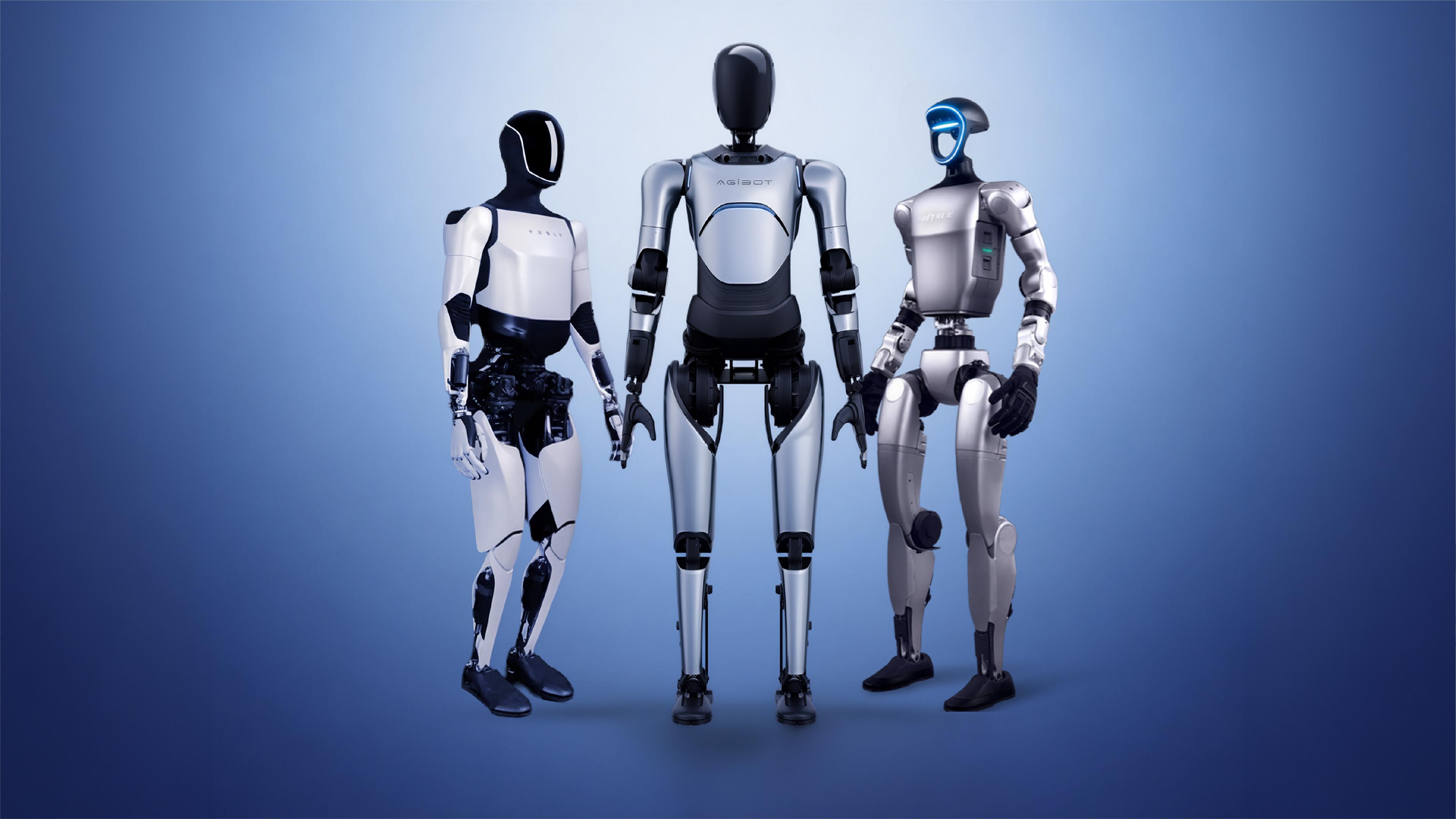
Elon Musk told investors in January 2025 that Tesla would build around 10,000 Optimus units that year and that several thousand would be "doing useful things" in its factories by December.
On Tesla's fourth-quarter earnings call on January 29, 2026, he gave a different answer: zero.
Optimus, he said, remained "in the R&D phase" and was "not in usage in our factories in a material way," according to Electrek's report on the call. Independent estimates cited by Tech Times put Tesla's actual Optimus headcount at a few hundred units, built mainly to collect training data rather than perform production tasks.
That gap between promise and output appears to be the defining tension in humanoid robotics.
It is not that shipments are slow—globally, they are not. Omdia's tracking data, cited by the South China Morning Post and detailed further by Forbes, counted 13,317 humanoid robots shipped worldwide in 2025, up roughly 480% on the prior year. As of July 2026, Tesla had still not disclosed a verified Optimus production count, and its own guidance now points to volume production starting only in "late July or August," according to Tech Times.
However, shipment counts say little about whether those robots are earning their keep.
China's manufacturers have a genuine volume lead
Pricing explains why three Chinese companies account for most of the shipped volume.
Shanghai's AgiBot shipped 5,168 units in 2025, a 39% share of the global total, according to Omdia's figures reported by Forbes. Hangzhou-based Unitree shipped 4,200, and Shenzhen's UBTECH Robotics shipped roughly 1,000 after starting mass production and delivery of its Walker S2 industrial humanoid in November 2025, an order book that had already exceeded 800 million yuan (about $112 million), UBTECH said in a company statement distributed via PR Newswire.
Together, the three shipped 10,368 of the world's 13,317 units—about 78%—while Tesla, Figure AI and Agility Robotics each delivered only 150 units apiece, per Omdia's count as reported by Forbes.
Unitree has published list prices of $16,000 for its general-purpose G1 and $5,900 for a lighter R1 model launched in July 2025, a debut the South China Morning Post described as part of a race among Chinese makers to undercut Western competitors on cost.
TrendForce expects that pricing advantage to keep compounding: it forecasts China's humanoid robot output will grow by as much as 94% in 2026, with Unitree and AgiBot alone capturing nearly 80% of global shipments for the year, according to TrendForce's April 2026 research note. None of this proves the robots are doing skilled factory work—Unitree's R1, for instance, is built more for spectacle than production—but it does show Chinese manufacturers converting factory-floor manufacturing experience into humanoid hardware faster than anyone else.
Capital raised is not the same as robots deployed
Germany's NEURA Robotics announced in June 2026 that it had raised a Series C of up to $1.4 billion, backed by Tether, Amazon, Nvidia, Qualcomm, B osch, and several other investors, according to NEURA's own announcement. The company says its order book and deployment pipeline already exceed $1 billion and that the new capital will fund production of "multi-million" units by 2030, centered on its 4NE1 humanoid.
It has not disclosed how many robots it has actually shipped.
Canada's Sanctuary AI offers a similar lesson in how loosely "deployment" gets used. The company markets its Phoenix robot as commercially proven. By Sanctuary's own account, a single robot completed a one-week pilot of 110 retail tasks at a Canadian Tire-owned store in March 2023.
Its subsequent April 2024 partnership with automotive supplier Magna—covering investment, contract manufacturing, and eventual use of Phoenix inside Magna's own plants, according to The Robot Report—remains a plan rather than a running production line, and Sanctuary has disclosed neither pricing nor unit counts.
A smaller group has real, if unscaled, factory work
Figure AI's Figure 03 robot arrived at BMW's Spartanburg, South Carolina, plant on June 30, 2026, to perform "sequencing"—selecting and positioning parts that do not arrive in a fixed orientation for the assembly line—according to Figure's own announcement. That followed its predecessor, Figure 02, which BMW says contributed to the production of more than 30,000 vehicles in 2025 through sheet-metal pick-and-place work.
Neither company has disclosed how many robots are actually on the line, so scale remains the open question even where the task is genuinely productive.
Other players are chasing the same volume race[1]
Beyond the three headline shippers, a wider field of Chinese challengers has raised large rounds in the same period.
Beijing-based Galbot has raised a combined roughly $712 million across two rounds in five months — over  362 million) in March 2026 — pushing its valuation above 20 billion yuan, which the company says made it, at the time, the sector's most valuable unlisted firm.
Galbot says it has secured cumulative orders totaling several thousand units from industrial clients, including CATL, Bosch, Toyota, BAIC Group, and SAIC Motor. The company is now preparing a Hong Kong IPO.
Shenzhen's EngineAI raised a $200 million Series B in April 2026, pushing its valuation above 10 billion yuan (about $1.4 billion), and has since opened a Zhengzhou manufacturing base with an annual capacity of 5,000 units, aiming eventually to complete one T800 humanoid every 15 minutes.
The company has filed for its own Hong Kong IPO but, like Galbot, has not disclosed an independently verified unit-shipment count—only production-capacity targets and cumulative fundraising.
Shenzhen's LimX Dynamics has raised nearly $400 million over six months, most recently a  2.2 billion valuation. The company says it has secured cumulative orders in the thousands for its Luna and TRON 2 platforms, with more than half of those orders coming from outside China.
As with Galbot and EngineAI, that figure is company-reported rather than independently audited, and none of the three discloses unit economics the way UBTECH did with its Walker S2 order book.
Beijing-based ROBOTERA names specific, checkable deployment sites rather than reporting only an aggregate order count. Its STAR1 humanoids are running in more than 10 logistics centres operated by China Post and SF Express, and the company says it began thousand-unit deliveries in the second quarter of 2026, with growth exceeding 300% for the period.
ROBOTERA has raised more than $200 million in a round led by SF Group, on top of a separate $143 million round completed in March 2026. Its own materials describe operational efficiency of up to 70% of a human worker's efficiency in logistics settings — a company-reported figure, not an independently audited one, but tied to named customers and named sites rather than a generic order-book total.
Guangzhou-based XPENG, the electric-vehicle maker, has announced production plans but has shipped essentially no units yet. The company is targeting monthly production capacity of more than 1,000 units for its Iron humanoid by the end of 2026, at a dedicated 110,000-square-metre factory under construction in Guangzhou.
XPENG's own plan, reported by CnEVPost, is to deploy Iron as a showroom sales assistant in China starting in the first quarter of 2027, before any overseas rollout. As of mid-2026, that is a manufacturing target and a deployment plan — not a shipped robot doing paid work anywhere.
Wuxi-based MagicLab has disclosed less funding than the other companies in this section. In December 2024 one of the company's own researchers posted on X that its MagicBot units were "still in the skill training and learning phase" and "not yet able to fully operate autonomously," even as factory-floor demonstration footage circulated. The company has since raised a RMB 150 million angel round, a far smaller sum than Galbot, EngineAI or LimX Dynamics have raised, and has not disclosed a shipped-unit count of its own.
What the numbers so far actually show
AgiBot and Unitree have shipped humanoids at a scale and price no other manufacturer has matched, according to the Omdia and TrendForce data cited above.
NEURA and Sanctuary have proven they can raise money and sign partnerships. Neither has disclosed a shipped-unit count.
Galbot, EngineAI and LimX Dynamics sit somewhere between those two groups: all three report thousands of cumulative orders and are moving toward IPOs, but — like NEURA and Sanctuary — none has published an independently verified shipment total to set against AgiBot's, Unitree's or UBTECH's disclosed figures.
ROBOTERA names specific deployment sites — China Post and SF Express logistics centres — rather than reporting only an aggregate order count.
XPENG has a stated production-capacity target and a factory under construction, but zero Iron units deployed anywhere as of mid-2026.
MagicLab has disclosed that one of its own researchers stated publicly, in December 2024, that its robots were still in training rather than operating autonomously, and its disclosed funding (a RMB 150 million angel round) is smaller than the other five additions covered here.
Figure remains one of two companies in this piece — alongside ROBOTERA — to name a specific site or customer where a humanoid is completing sustained work, rather than reporting only funding or order totals.
Tesla has guided to volume Optimus production starting in "late July or August," per Tech Times — a date that has been delayed once. NEURA has said its order book exceeds $1 billion but has not attached a shipped-unit number to it.
According to BMW's own press release, a single Figure 02 robot supported production of more than 30,000 BMW X3 vehicles over ten months in 2025, and Figure's own announcement confirms the same figure. Neither company has said how many Figure 03 units are now on the Spartanburg line, so the true scale of the current deployment remains unknown.
[1]Addition
More articles on this topic
60 articles ReportMaxinsights Updates $30M Robot Training Funding Release
 ReportChina's Humanoid Supply Chain Moves Toward Industrial Production
 ReportFFR Sees 2,000 Robot Shipments in 2026 as Faraday Deal Closes
 ReportFormer OpenAI Executive Raises $215M for Robotic Labs
 ReportAgility Expands Humanoid Rollout With GXO to Two More US States
 ReportEnact Intelligence Raises $30M for Development of Force-Aware Robots
 ReportChina Launches First National Standards for Humanoid Robots
 ReportDEEP Robotics Reports Navigation Gains With New Embodied AI Models
 ReportResearchers Show How Two Letters Can Manipulate Robot Behavior
 ReportAI Built on Human History LLMs Will Repeat Human History
 ReportTeradyne, Sereact Expand Physical AI From Research to Industry
 ReportRobot Makers Collaborate with Universities in Race to Advance Humanoids
BUSINESS NEWS WEEKLY LETTER
The Weekly Letter for Robotics Professionals, Summarizing the Most Important Industry Moves, Launches, Deals and Signals.