Can Humanoid Robots Replace the Entire Night Shift?
Imagine you walk into a factory at around 2 a.m. There isn’t any human chattering. You never find tired eyes. There are just machines that are working without getting tired.

August 10, 2026 by Carl
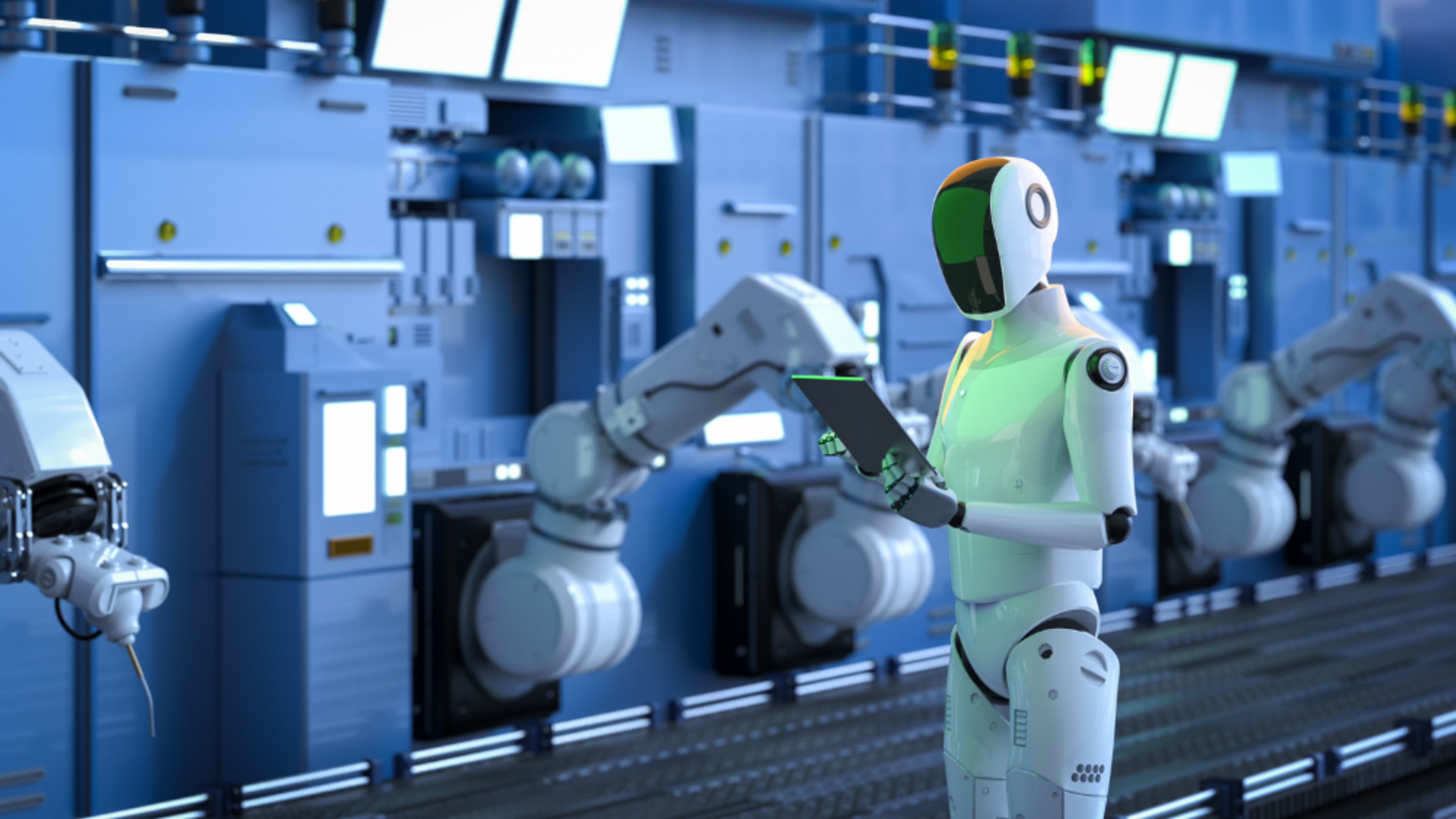
Imagine you walk into a factory at around 2 a.m. The lights are low. There isn’t any human chattering. You never find tired eyes or the smell of coffee. There are just machines that are working without getting tired. They are picking up boxes, sorting them, and loading the welding fixtures. And most importantly, they are doing all this without any humans. Seems interesting? Yes, this is what is happening right now in factories.
And now the biggest question that most people ask is whether they are going to replace the entire night shift or not. Well, let’s break this down and see where things actually are.
Why is the Night Shift Such a Problem?
The first thing that needs to be understood is why night shifts are considered a problem.
Night shifts are usually hard to fill. Companies have a hard time finding people who are willing to work at night. Most people do not want to work when the rest of the world is sleeping.
It is almost impossible for people who have families or school schedules to manage those shifts. Also, for people who are doing second jobs, it is tough to commit to overnight hours.
The numbers back this up. Data states that only about 3.6% of wage and salary workers usually work a night shift. In the hospitality industry, that figure drops even lower to around 2.6%. In other words, companies already have a few workers available for overnight operations.
And when those workers quit, the whole operation suffers. In 2025, the accommodation and food services sector alone saw workers leaving at roughly 4.2%/month.
Besides staffing problems, working at night isn’t good for human health either. Around 20% of the global workforce works some form of shift work. This also includes night shifts.
Research shows that night shifts can disrupt the natural sleep cycle. This can lead to chronic sleep problems and other health issues. In the United States alone, around 15 million people work night or rotating shifts.
The BMW Story
There are practical examples where we can see robots moving out of labs and now working in factories. One such example was seen at BMW’s Spartanburg plant in South Carolina.
In 2025, a Figure AI robot was deployed on the assembly line, where it helped with the production of vehicles. This wasn’t just a small test. The robot worked on the real production line Monday to Friday, in 10-hour shifts.
The results were impressive. Within 10 months, Figure 02 helped produce more than 30,000 vehicles. It moved more than 90,000 sheet-metal components. Overall, it worked for roughly 1,250 operating hours.
The tasks the robot was handling were those that were physically demanding as well as repetitive for humans. This makes human workers tired after a few hours, but the robot did all that without any difficulty.
The robot was expected to achieve a success rate of more than 99% per shift.
BMW was impressed with the results to expand the program. The newer Figure 03 has also arrived at the Spartanburg plant. BMW is also testing another robot called AEON at its Leipzig plant in Germany.
Other Real-World Examples
BMW isn’t the only one testing robots. Early deployments are slowly growing across different industries.
In warehouses: U.S. e-commerce company The Feed uses Brightpick robots that can run a fully autonomous night shift. The robots pick and buffer orders overnight, so human workers can start packing as soon as they arrive in the morning.
In logistics: Agility Robotics’ Digit is working at a GXO warehouse in Georgia under a multi-year service agreement. Digit was specifically designed for logistics work. It helps in moving bins and picking items, along with handling repetitive tasks.
In automotive: Mercedes is testing the Apollo robot at its factories in Germany and Hungary. Mercedes states that the objective is to handle repetitive and physically tiring tasks, especially in areas where companies are struggling to find enough workers. In other words, the purpose isn’t to completely replace human workers.
According to RoboDK, robotic “night shifts” are becoming a noticeable trend. At the end of the day, workers set up the automated machines and then leave them to work on their own throughout the night.
What Can They Do Well?
So what tasks are robots good at? The answer is all the work that is structured and repetitive, as well as happening in a predictable setting.
Think of tasks like:
- Loading and unloading heavy bins or pallets
- Pick-and-place jobs where items are moved from one spot to another
- Material handling on factory lines
- Night-shift logistics
- High-heat or cramped zones where human workers face health risks
Experts recommend using robots for the dirty or dangerous jobs. This includes unloading containers and moving heavy items, along with night-shift logistics and line-side delivery. This also includes working in high-heat areas where humans suffer long-term harm.
Battery life has also improved much. Modern humanoids can now operate for 16 to 20 hours before needing a recharge. This all makes them practical for two-shift warehouse operations.
But They are Not Ready to Take Over Everything
Here, we need to take a realistic and balanced view.
Humanoids have made a lot of progress, but most are still working in controlled pilot programs. They aren’t running full-scale operations yet. Even the companies that have had successful results have deployed only a small number of robots, not thousands.
There are still many challenges that are holding robots back from large-scale adoption.
1. Battery Life is Still a Problem
The battery life of robots is getting improved day by day. But still, there are many models that need a recharge after 1 to 4 hours of work. This makes an industrial operation difficult. If the battery needs to be swapped between shifts, the system becomes more complicated. This can also increase downtime.
2. Hands are Not as Good as Human Hands
Human hands can handle thousands of objects with different shapes and weights. But robot grippers still don’t have the tactile sensing needed to handle a wide variety of products.
That’s why tasks like folding clothes or handling fragile items are still a challenge for robots.
3. They Struggle When Things Get Messy
Until now, robots can only perform better when they are provided with a controlled setting. They find it hard to perform well when something gets messy or when situations get unpredictable. That is what makes them a less favourable choice to work in factories, because the factory layout can change sometimes. In this situation, a robot gets confused. On the other hand, human workers can manage all this on their own.
4. They are Slower Than Humans
Because of safety and balance concerns, humanoid robots move cautiously. They’re not fully suited for speedy environments yet.
In many tasks, they’re also slower than human workers. Speed is still a major gap that robots will need to improve.
5. Safety Rules are Still Being Written
Right now, OSHA has not published specific safety guidance for humanoids. Likewise, safety standards for dynamically balancing robots aren’t available yet. So, do you think it is wise to invest thousands of dollars in a robot whose safety rules aren’t decided yet? Of course not. That is the thing stopping many companies from using these robots.
Businesses don’t have clear answers to all of the questions regarding the safety of their workers. For example, if a robot damages someone, who will be liable for that? Similarly, if an accident occurs, who will be legally responsible for that?
6. The Cost is Still High
You will hear it everywhere that robot prices are going down. But a low price doesn’t mean it will be affordable for small or medium-sized businesses.
A $50,000 robot is still highly priced for them. Only the larger companies with a huge budget can afford those robots.
So, Could Robots Replace the Entire Night Shift?
Not yet, and probably not completely ever.
Leading experts say that instead of eliminating the jobs completely, robots will only transform them. What does that mean? This shows that robots will not handle a task on their own. They will only take over the work that is repetitive. Likewise, human workers will focus more on other important responsibilities.
The World Economic Forum states that by 2030, automation will create around 170 million new jobs. That will replace 92 million jobs. Still, it is net positive in overall numbers. However, the disruption of some jobs is a definite and serious problem.
What is happening and likely to keep happening:
- Based on all data, it is clear that robots will take most of the work that is dangerous for human workers. They will also take over the roles that are repetitive and physically challenging. These include the roles that humans are not interested in doing, or that can cause serious health issues.
- Humans move into supervision and quality control along with maintenance and troubleshooting. These are the roles where judgment and creativity matter.
- There will be plenty of new jobs available. Most of them will appear around designing and building, along with programming and repairing the robots. One thing that is very important to mention here is that robotics engineering salaries have also increased by 25-40%. This is massive. Also, the demand for robot technicians is expected to grow several times by 2035.
The World Economic Forum also points out that companies using automation aren’t simply letting workers go. They are moving assembly operators and testers into new roles. These roles include line-compliance auditors and robotics technicians.
Simply put, robots are taking over some parts of the job.
Now instead of thinking that humanoids will replace the entire night shift workforce, the question can be: “Which parts of the night shift can robots do better, so the people working those hours can focus on other work?”
Thinking this way will help companies make better decisions. The workers will get better outcomes. And above all, this will handle changes brought by technology in a fairer way. The night shift is changing. But how it changes and who benefits from that change is still up to us.
More articles on this topic
60 articles ReportChina's Humanoid Supply Chain Moves Toward Industrial Production
 ReportChina Launches First National Standards for Humanoid Robots
 ReportCounterpoint Expects Work Applications to Drive 90% of Humanoid Shipments by 2030
 ReportUnitree’s 'Superman' Robot Claims to Outrun Usain Bolt
 ReportForeign Investors And Tech Executives Pay Up To $15,000 To Tour China’s Factories
 ReportCan Certified Robots Compete With China's Cheap Patrol Bots?
 ReportQuadruped Robots Are Becoming Big Business: Here’s Why The US Is Targeting Chinese Makers
 ReportHumanoid Robots Hit Mass Production
 ReportHow Robots Are Learning to Read Minds?
 ReportAre Humanoid Robot Videos Misleading Us?
 ReportHow Do Collaborative Robots Increase Workplace Safety?
 ReportHow to Train a Humanoid Robot for Hard Work
BUSINESS NEWS WEEKLY LETTER
The Weekly Letter for Robotics Professionals, Summarizing the Most Important Industry Moves, Launches, Deals and Signals.