Can Humans and Humanoid Robots Work Together Safely?
Humanoid robots are not limited to laboratories only. Now they’ve entered factories and workplaces where humans work too.

July 21, 2026 by Carl
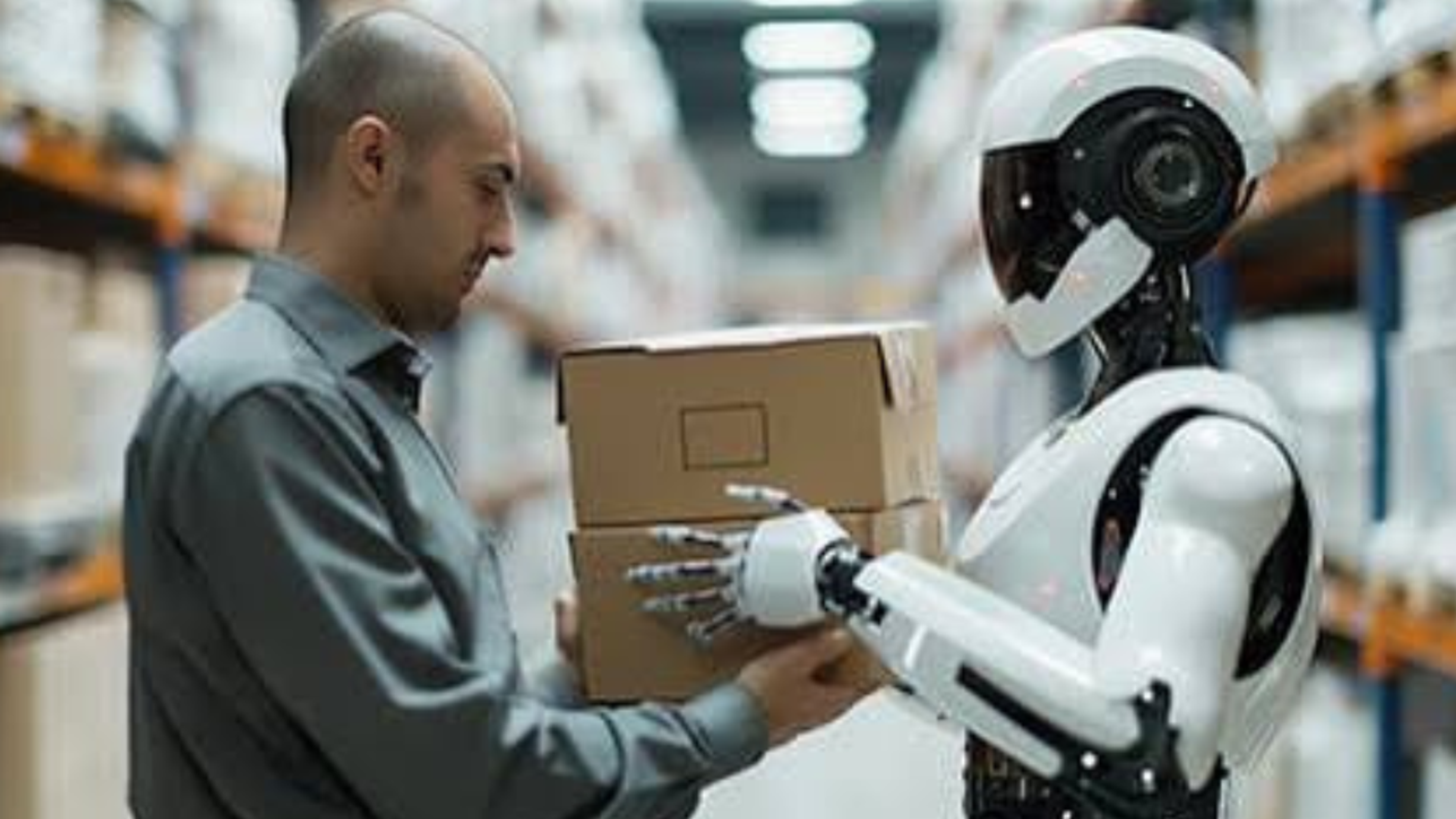
Humanoid robots are not limited to laboratories only. Now they’ve entered factories and workplaces where humans work too. A number of big companies like BMW and Tesla are testing these robots in their factories and warehouses. Since these machines are becoming more and more capable each passing day and are being deployed at workplaces, one important question arises: Can humanoid robots safely work around people? Well, the answer is not as simple as just a yes or a no. In fact, there’s a lot more to the story!
Humanoid robots can, of course, be designed to work around humans. However, making them work safely in a real workplace is way harder than simply making them perform a task in a controlled demonstration. For example, in a workplace, a robot might need to move through a crowded place or avoid unexpected obstacles. It might also need to understand where people are moving and react quickly if something goes wrong. And with robots becoming more autonomous, this challenge becomes even greater.
Why Humanoid Robots are Different
Wondering why humanoid robots are different from those traditional industrial robots? Well, traditional robots often work in a super controlled environment. These robots perform repetitive tasks and mostly operate behind physical barriers that keep people away from moving machinery.
On the other hand, humanoid robots are being developed for a different kind of environment. Do you know what their biggest advantage is? Humanoids can potentially use workspaces that are basically designed for humans. They can walk through existing facilities and climb stairs. Plus, they can also use tools and equipment built for people. Now, this is one of the reasons why manufacturers are considering humanoids for tasks such as factory work/warehouse operations and material handling, etc.
But it is worth noting that the human-like design also creates new safety problems. A humanoid robot has to maintain its balance while walking and carrying objects. It must continuously adjust its movements as people and obstacles around it change. And if it loses balance, the robot itself can become a hazard.
The size and weight of these machines also matter. A falling humanoid could potentially injure a nearby worker, especially if the robot is carrying a heavy object. This makes humanoid safety different from simply programming a machine to stop when a person enters a restricted area.
The Challenge of Unpredictability
Factories and warehouses are not perfectly controlled environments. Workers may suddenly change direction. Someone could drop an object in the robot’s path. Another employee might reach into an area that the robot is using. A person could walk behind the robot without warning.
Moreover, workers’ movement is also something that robots find hard to predict. Knowing where a person is standing is not enough for a robot. In fact, it must also predict where that person is gonna move next. The robot is also supposed to figure out whether a worker is reaching for a tool or is stepping into its path.
Now this is where artificial intelligence becomes important. Modern humanoids are increasingly using AI models that allow them to understand their surroundings and perform more flexible tasks. But here we must note that AI systems can perform differently as compared to traditional industrial automation. Rather than following a fixed sequence every time, an AI-powered robot may interpret its environment and choose what to do accordingly.
Safety is More than Sensors
Humanoid robots can use cameras, depth sensors, lidar, and other technologies to detect people and objects around them. These systems can help robots understand their surroundings and react when someone gets too close. But sensing alone is not enough.
A safe humanoid needs multiple layers of protection. These can include speed limits, force and torque controls, emergency stops, protective devices, and software that can detect dangerous conditions. The robot may also need to reduce its speed when a person approaches and stop or change direction when a collision becomes possible.
The key idea is that safety should not depend on a single sensor or software system. If one component fails, other safety measures should still help prevent an accident. This layered approach is already familiar in industrial robotics. The challenge is adapting it to humanoids that can move dynamically through spaces shared with people.
Why Robot Balance Matters
One of the most important differences between humanoids and many conventional industrial robots is balance. A fixed robotic arm can be mounted to a stable structure. A humanoid robot has to remain upright while walking, turning, reaching, and carrying objects. That creates a unique safety risk.
If a humanoid loses balance, simply cutting power may not be enough. In some situations, removing power could actually cause the robot to fall. Engineers therefore need to consider how a robot behaves during failures, not only during normal operation.
A safer humanoid may need systems that detect instability early and recover its balance. It may also need controlled fall strategies or mechanical designs that reduce the risk of injury if a fall cannot be avoided. This is particularly important in workplaces where humans may be standing only a few feet away.
Humanoids Bring New Safety Challenges
The robotics industry is not starting from zero. Industrial robots already operate under established safety frameworks. The updated ISO 10218 standards for industrial robots and robot applications provide requirements for safe design and operation. Collaborative robot applications also build on safety principles developed for humans and robots sharing workspaces.
However, humanoid robots do not fit perfectly into the traditional model of industrial automation. Their ability to walk, balance, and move through human environments creates risks that are different from those of a fixed robotic arm. This is why standards organizations are working to address new challenges.
The International Organization for Standardization, or ISO, is developing work related to how robots travel around humans. One proposed standard, ISO/CD 18646-7, focuses on evaluating a robot’s ability to move around people without significantly affecting their behavior. The broader direction is clear: safety testing will increasingly need to consider not only whether a robot can complete a task, but also how it behaves when humans are moving unpredictably around it.
Real-World Safety Testing
A robot that performs perfectly during a demonstration is not necessarily ready for large-scale deployment. Real workplaces contain countless variables. People walk at different speeds. Lighting changes. Floors become wet or cluttered. Objects are moved. Equipment breaks. Workers behave differently from one shift to another.
Humanoid robots therefore need to be tested under a wide range of conditions. Fraunhofer IPA, for example, announced a benchmark in 2026 designed to evaluate humanoid robots using application-relevant criteria. The benchmark covers areas including energy efficiency, cleanroom compatibility and data security, with the goal of providing more objective assessments of whether humanoids are suitable for real industrial applications.
This type of independent evaluation could become increasingly important. As the industry grows, companies and customers will need more than impressive videos. They will need measurable evidence showing how a robot performs, how often it fails, how it responds to unexpected situations, and how safely it interacts with humans.
From Demos to Deployment
One of the biggest challenges for humanoid robotics is the difference between a successful demonstration and reliable everyday operation. A demonstration usually shows what a robot can do. A commercial deployment needs to prove what the robot can do repeatedly, safely and economically.
That means operating for long periods, handling unexpected events and recovering from errors without constant human intervention. Safety is therefore closely connected to reliability. If a robot frequently makes mistakes, stops unexpectedly, or requires a human operator to intervene, it may not be ready to work independently around people.
The industry must also consider what happens when communication systems fail, sensors become blocked, or the robot’s AI misunderstands a situation. A safe robot should have clearly defined failure modes. When something goes wrong, it should move into a state that minimizes risk rather than continuing to operate normally.
Humans and Humanoids Together
Should humans and humanoids work side by side? In some cases, the answer may be yes. Humanoids could be particularly useful for jobs that are physically demanding, repetitive, or dangerous. They may eventually handle tasks that expose workers to heavy lifting, hazardous environments, or difficult working conditions. This could improve workplace safety by keeping humans away from dangerous tasks.
But replacing a human with a robot does not automatically eliminate risk. The risk is simply transferred to a different part of the system. Workers may need to learn how to interact with robots safely. Companies will need new training procedures. Workspaces may have to be redesigned. Emergency procedures will need to account for autonomous machines.
The goal should therefore not be to simply put humanoid robots next to workers and hope that the technology is safe enough. Instead, companies need to design the entire workplace around safe human-robot collaboration.
Social and Workforce Challenges of Humanoid Robots
Safety is not only about physical injuries. The arrival of humanoid robots is also raising questions about how workers will be affected. These concerns are becoming more visible as companies prepare for larger deployments. In July 2026, workers at Hyundai’s Ulsan plant in South Korea reportedly raised concerns about the company’s plans and the potential impact of humanoid robots on employment. The dispute shows that the debate around humanoids is expanding beyond engineering and into questions about jobs, workplace protections, and the future of work.
This means the industry will have to address two different forms of trust. Workers need to trust that robots will not physically harm them. They also need confidence that the introduction of robots will not leave them without a meaningful role or adequate protections. Both issues could influence how quickly humanoid robots are accepted in workplaces.
So, Can Humans Trust Humanoids?
Yes, but with an important qualification. Humanoid robots can potentially work safely alongside humans, but safety cannot be guaranteed simply because a robot has advanced sensors or artificial intelligence.
The real challenge is building a complete safety system that combines hardware, software, AI, risk assessment, workplace design, human training, and clear operating procedures. The robot must be able to detect people. It must understand its environment. It must control its speed and force. It must remain stable. It must respond safely to failures. And it must behave predictably enough that humans can understand and trust its actions.
The industry is making progress, but humanoid robots are still entering a relatively new phase of development. Standards are evolving. Testing methods are improving. Companies are beginning to explore real industrial deployments. Researchers are also examining how humans and robots can safely share physical spaces.
The biggest question now is no longer whether a humanoid robot can walk, pick up an object or perform a factory task. It is whether the robot can do those things safely, repeatedly and predictably when real humans are moving around it. That is the real test. And as humanoid robots become more capable, solving that problem may be just as important as improving their artificial intelligence.
More articles on this topic
60 articles ReportChina's Humanoid Supply Chain Moves Toward Industrial Production
 ReportChina Launches First National Standards for Humanoid Robots
 ReportCounterpoint Expects Work Applications to Drive 90% of Humanoid Shipments by 2030
 ReportUnitree’s 'Superman' Robot Claims to Outrun Usain Bolt
 ReportForeign Investors And Tech Executives Pay Up To $15,000 To Tour China’s Factories
 ReportCan Certified Robots Compete With China's Cheap Patrol Bots?
 ReportQuadruped Robots Are Becoming Big Business: Here’s Why The US Is Targeting Chinese Makers
 ReportHumanoid Robots Hit Mass Production
 ReportHow Robots Are Learning to Read Minds?
 ReportAre Humanoid Robot Videos Misleading Us?
 ReportHow Do Collaborative Robots Increase Workplace Safety?
 ReportHow to Train a Humanoid Robot for Hard Work
BUSINESS NEWS WEEKLY LETTER
The Weekly Letter for Robotics Professionals, Summarizing the Most Important Industry Moves, Launches, Deals and Signals.