AGIBOT unveils four new models, showcases real-world operations at WAIC 2026
AGIBOT said the A3 Ultra, G2 Max, and OmniHand 3 Ultra-M robots address three essential layers of that challenge: the humanoid platform, industrial task execution, and dexterous manipulation.

July 20, 2026 by Nikita
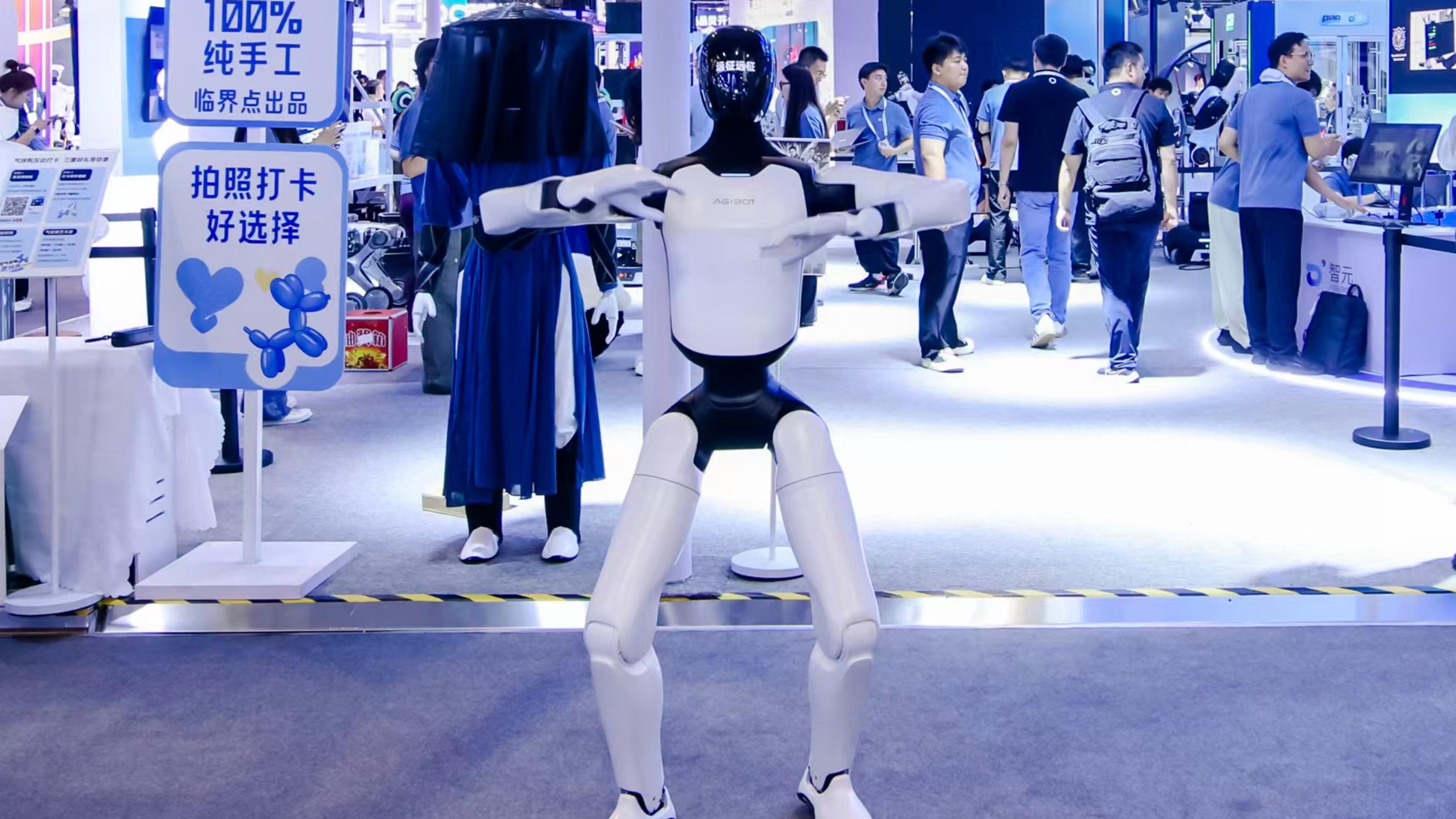
China-headquartered embodied AI company AGIBOT on Sunday unveiled four new products: the AGIBOT A3 Ultra, G2 Max, X2 Edu, and OmniHand 3 Ultra-M, at the World Expo Exhibition and Convention Centre (WAIC) 2026.
“The industry should no longer judge embodied AI by whether a robot can complete an impressive demonstration once, but by whether it can be manufactured, delivered, and integrated reliably into real operating environments,” said Peng Zhihui, Co-founder, President, and CTO of AGIBOT, in a press release.
According to the company, the AGIBOT A3 Ultra, G2 Max, and OmniHand 3 Ultra-M robots address three essential layers of that challenge: the humanoid platform, industrial task execution, and dexterous manipulation.
The company showcased its new full-size humanoid robot, AGIBOT A3 Ultra, developed for long-duration operation in public-facing, commercial, and service environments. The robot, which stands 1.74 metres high and weighs 60 kg, features 51 degrees of freedom, a 5 kg payload capacity per arm, and up to eight hours of combined operating time.
The humanoid, powered by NVIDIA Thor for high-level embodied AI processing, supports direct charging, battery replacement, and autonomous charging, allowing it to remain available for extended service workflows rather than isolated appearances.
It comes fitted with 3D LiDAR, RGB-D cameras, fisheye cameras, and binocular vision, while GPS, RTK, and UWB positioning support navigation and coordinated operation across different environments, the company highlighted.
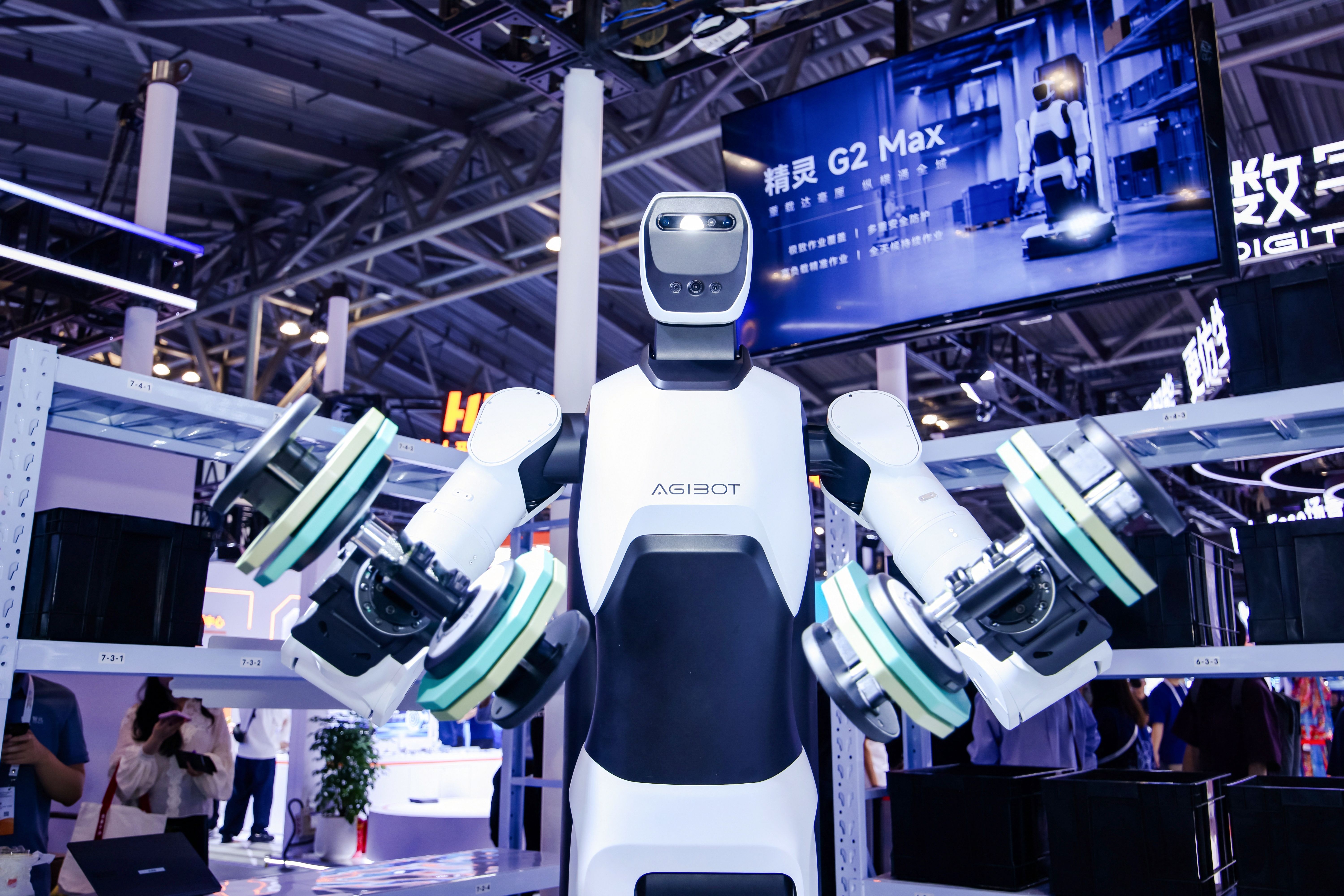
Meanwhile, AGIBOT has developed G2 Max for industrial operations. The robot can undertake repetitive physical tasks on the factory floor alongside existing production equipment and supports battery replacement and autonomous charging capabilities.
This is its first heavy-load, force-controlled embodied task robot, equipped with adjustable height and omnidirectional wheeled mobility.
AGIBOT’s X2 EDU humanoid robotics development platform, as the name suggests, is designed for scientific research, education, and competitions. The robot is about 1.3 metres tall and features 29 degrees of freedom across the body, including seven degrees of freedom in each arm, and supports an end-effector payload of up to 3 kg.
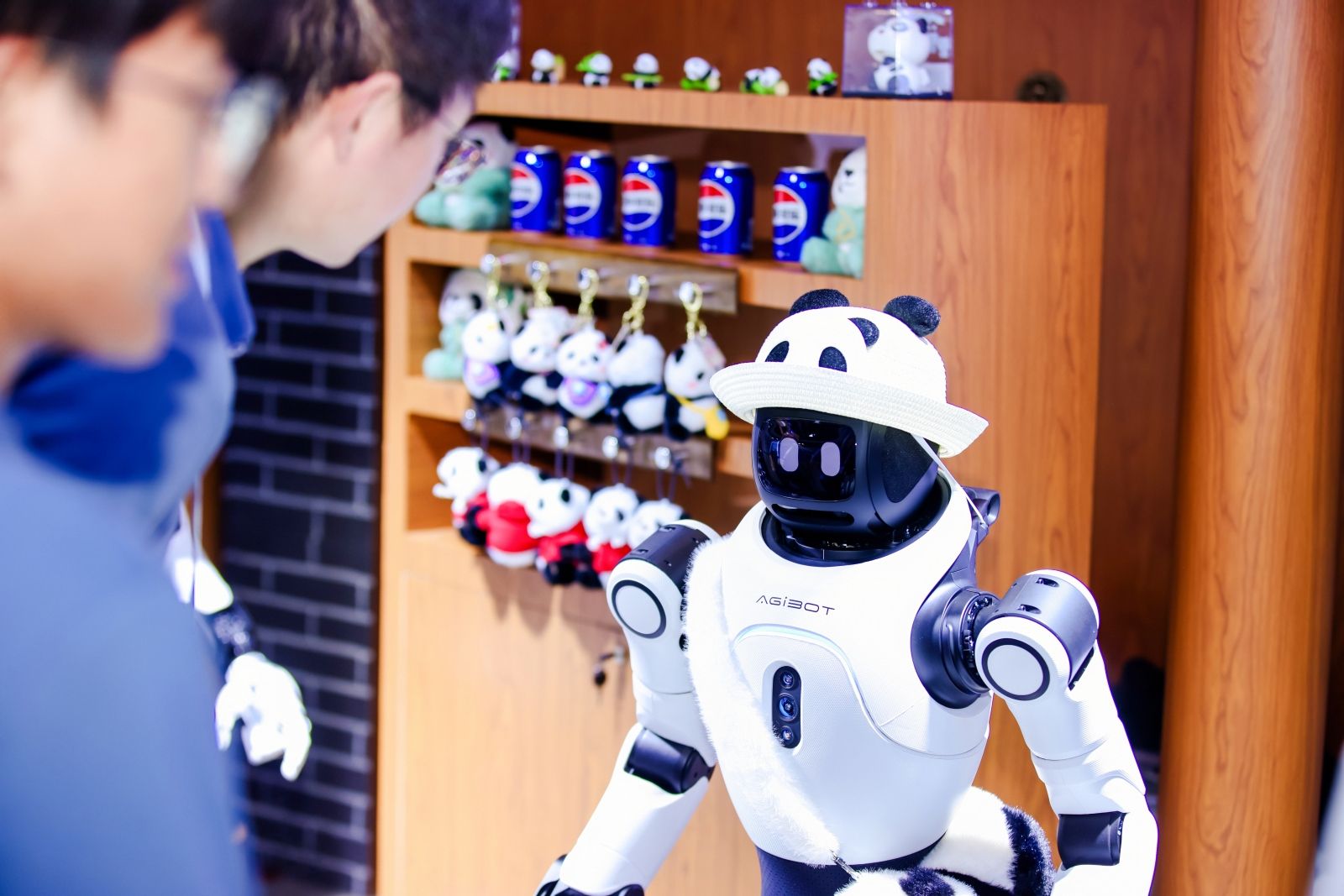
According to the company, the robot’s fully modular architecture allows the robot to be disassembled and reconfigured throughout the hardware chain. In fact, its open motion-control and hardware interfaces provide access for secondary development.
This, AGIBOT claimed, can help developers flexibly integrate end effectors, sensors, and additional computing modules based on different teaching and research requirements.
Lastly, AGIBOT showcased its flagship direct-drive dexterous hand, the OmniHand 3 Ultra-M, designed for teleoperation, embodied AI training, demonstration capture, and contact-rich manipulation.
The robot is integrated with 20 active degrees of freedom in a human-scale form factor weighing 630 gms, the company said, adding that the hands “support a whole-hand gripping load of up to 5 kg, with a typical opening or closing time of 0.3 seconds and repeatability of ±0.2 millimetres.”
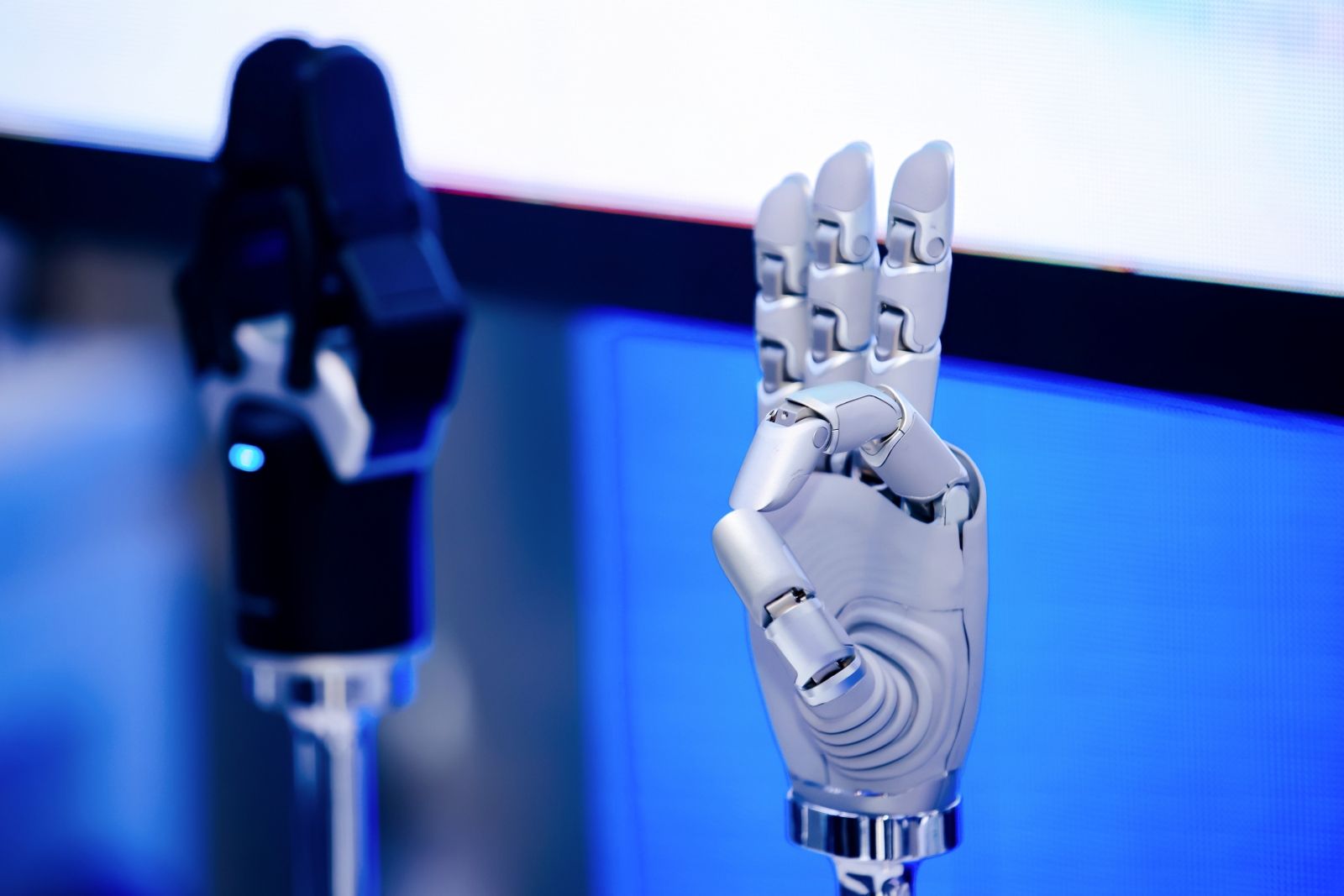
AGIBOT highlighted that the hand is equipped with a tactile array in the palm and vision-based tactile sensors at the fingertips, allowing it to detect changes in contact, force, and object position. The robots’ fully direct-drive architecture supports responsive force regulation during complex manipulation tasks, the company claimed.
At the WAIC, AGIBOT also presented a series of live demonstrations spanning dynamic motion, human-robot collaboration, and multi-step commercial service tasks.
The company presented its industrial deployments developed in collaboration with Longcheer Technology, PIA Automation, and other partners.
It showcased how the AGIBOT G2 robots have been integrated into a live tablet mass-production quality-inspection line at Longcheer’s Nanchang manufacturing facility, where the robots complete a closed-loop workflow covering material collection, precision placement, equipment interfacing, and finished-product return.
It added, “Production-line integration was completed within 36 hours, and the deployment has supported approximately 3,000 units per shift and more than 64 hours of cumulative continuous operation, with downtime loss kept below 4%.”
Besides, AGIBOT presented applications for cultural tourism, transportation, and commercial services. It highlighted the projects it developed with Sichuan Cultural Tourism and Guangzhou Railway, where its robots support guided tours, route guidance, visitor interaction, information services, and on-site assistance.
At WAIC 2026, the company has deployed over 30 robots, navigating around visitors in busy public areas, responding to changing conditions, and maintaining consistent performance over extended periods—a practical test of their mobility, interaction, and operational reliability, AGIBOT said.
More articles on this topic
60 articles ReportChina Is Sending Humanoid Robots To School
 ReportWhat it Really Costs to Own a Personal Assistant Robot at Home
 ReportA Little Company, Courtesy of a Robot
 ReportA Humanoid Walks into a New York Park
 ReportRailway Inspection Robots Search for Defects in Tracks
 ReportChina's Humanoid Supply Chain Moves Toward Industrial Production
 ReportCompanionship now comes with a Charging Cable
 ReportCould a Robotic Guide Help Blind Travelers Navigate Public Spaces?
 ReportThis Robot Finds Cracks and Fixes Them
 ReportXPENG's IRON Humanoid Adapts to Changing Human Gestures in Real Time
 ReportRobots Are Learning to Sort Clothes for Textile Recycling
 Report110 Humanoid Robots Set Guinness World Record With Synchronized Dance
BUSINESS NEWS WEEKLY LETTER
The Weekly Letter for Robotics Professionals, Summarizing the Most Important Industry Moves, Launches, Deals and Signals.