DEEPRobotics Lynx M20Pro vs. MagicBot MagicDog Y1
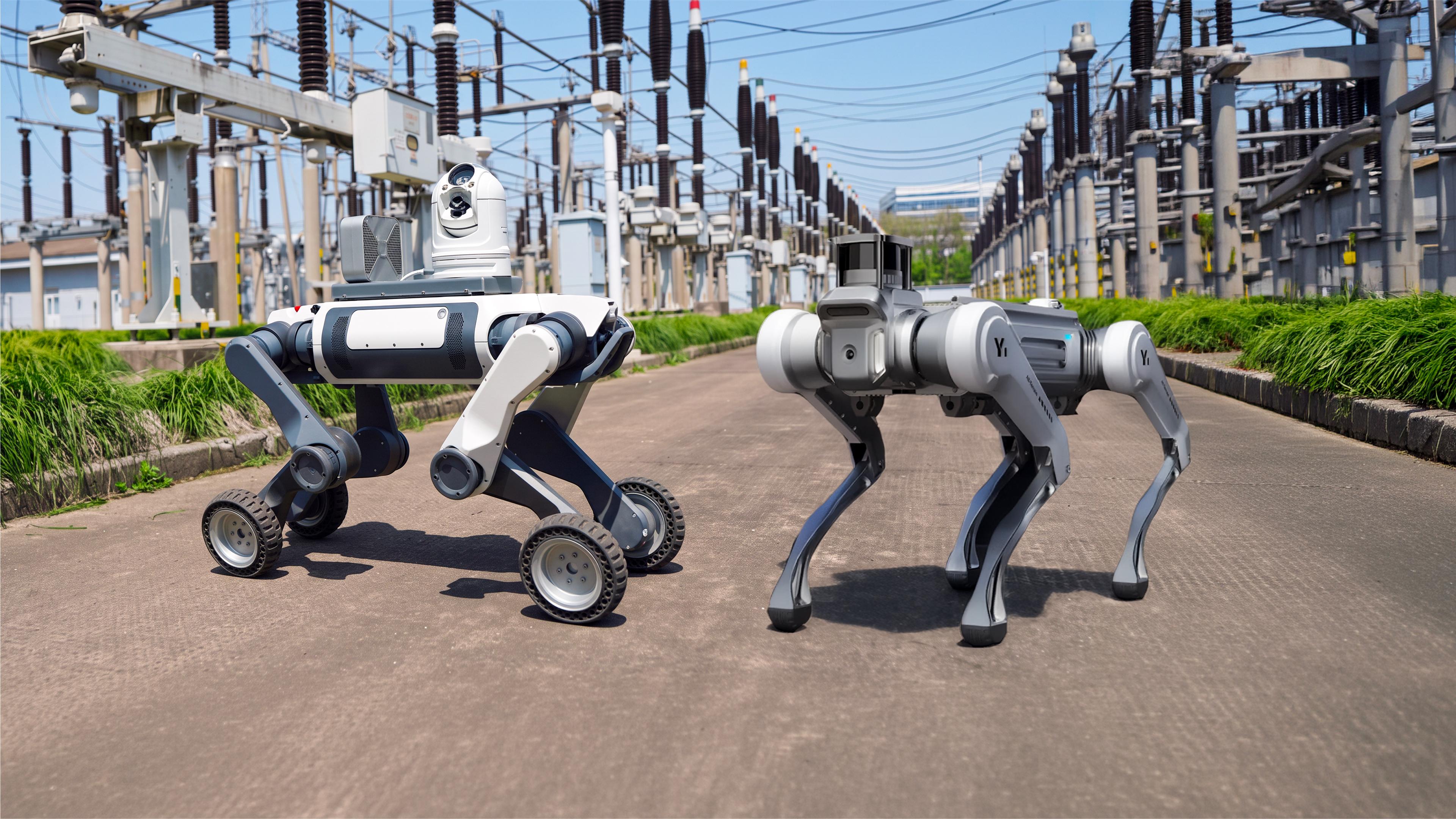
DEEPRobotics Lynx M20Pro and MagicBot MagicDog Y1 are industrial quadruped robots built for inspection, security and emergency response. We compare their payload, speed, endurance, mobility and autonomous navigation capabilities.

September 29, 2026 by Business Desk Team
Introduction
DEEPRobotics Lynx M20Pro and MagicBot MagicDog Y1 are industrial quadruped robots designed for demanding applications including inspection, security and emergency response. This comparison uses specifications and use cases recorded in the ROBOT24.com market-data records.
The Lynx M20Pro is a wheel-legged quadruped listed for industrial and utility inspection, mapping, patrol, security, emergency response and research. MagicDog Y1 is an industrial quadruped designed for industrial inspection, logistics, security, emergency response and research.
While their applications overlap, the two robots differ significantly in size, payload, speed, endurance, mobility and autonomous capabilities. The comparison below examines these differences using the data currently available in the ROBOT24.com market-data records.
At a Glance
| Metric | DEEPRobotics Lynx M20Pro | MagicBot MagicDog Y1 |
|---|---|---|
| Robot type | Wheel-legged quadruped | Industrial quadruped robot |
| Use cases | Industrial inspection; utility inspection; mapping; patrol; security; emergency response; research | Industrial inspection; logistics; security; emergency response; research |
| Dimensions | 820 x 430 x 570 mm | 915-1050 x 458 x 800-810 mm |
| Weight | 33-35 kg | 65-70 kg |
| Payload | 15 kg effective; 50 kg maximum | 45 kg dynamic; 150 kg maximum |
| Maximum speed | 5 m/s max; 2 m/s operational | 6 m/s |
| Runtime | 3-5 hours no load; 2.5-3.5 hours with 15 kg | 4-6 hours |
| Range / endurance | 15-20 km no load; 12-15 km with 15 kg | >20 km reported |
| Navigation | Autonomous wheel-legged locomotion; point-cloud mapping; terrain recognition | Autonomous navigation; path planning; terrain adaptation; GPS-denied capability |
| Sensors | Dual 96-line LiDAR; dual wide-angle cameras; IMU | 3D LiDAR; 2 depth cameras; 2 optical cameras; multi-sensor fusion |
| Protection rating | IP66 | IP67 |
| Special capability | 25 cm continuous stair height; 80 cm single step; SDK | >=60 cm obstacle crossing; >=45 deg slope; optional 157 TOPS AI module |
| Availability | Commercially available | Commercially available |
| Price | USD $49,999-61,200 | US$70,000-104,000 |
How They Compare
The two robots have significant variations in size and performance. Lynx M20Pro weighs 33-35 kg and attains a top speed of 5 m/sec and an operating speed of 2 m/sec. Magic Dog Y1 is much heavier at 65-70 kg but attains a slightly greater top speed of 6 m/sec. The runtime is given as 3-5 hours at no load for Lynx M20Pro, decreasing to 2.5-3.5 hours with a 15 kg load, versus 4-6 hours for Magic Dog Y1.
DEEPRobotics Lynx M20Pro and MagicBot MagicDog Y1 are commercially available industrial quadrupeds with overlapping applications in inspection, security and emergency response. However, the ROBOT24.com market-data records show clear differences in their mobility systems, payload capacities, speed, endurance and autonomous capabilities.
More articles on this topic
52 articles ReportPUDU BellaBot vs. UBTECH CADEBOT L100
 ReportFourier GR-3 vs. EngineAI SE01
 ReportPudu CC1 vs. KEENON KLEENBOT C30
 ReportDEEPRobotics Lynx M20 vs. Unitree B2-W
 ReportDEEPRobotics X30 Pro vs. Unitree B2
 ReportServe Robotics Delivery Robot vs. Cartken Courier
 ReportElliQ vs. LOVOT
 ReportLOVOT vs. PARO
 ReportKEENON BUTLERBOT W3 vs. Relay+
 ReportPUDU FlashBot vs. Relay+
 ReportPARO vs. Joy for All Companion Pet Cat
 ReportServe Robotics Delivery Robot vs. Starship Delivery Robot
BUSINESS NEWS WEEKLY LETTER
The Weekly Letter for Robotics Professionals, Summarizing the Most Important Industry Moves, Launches, Deals and Signals.