Educational Robotics: Types, Benefits and the Future of Learning
Educational robots help students learn through practical experiences, develop problem-solving skills, and connect technology with real-world learning.

July 29, 2026 by Carl
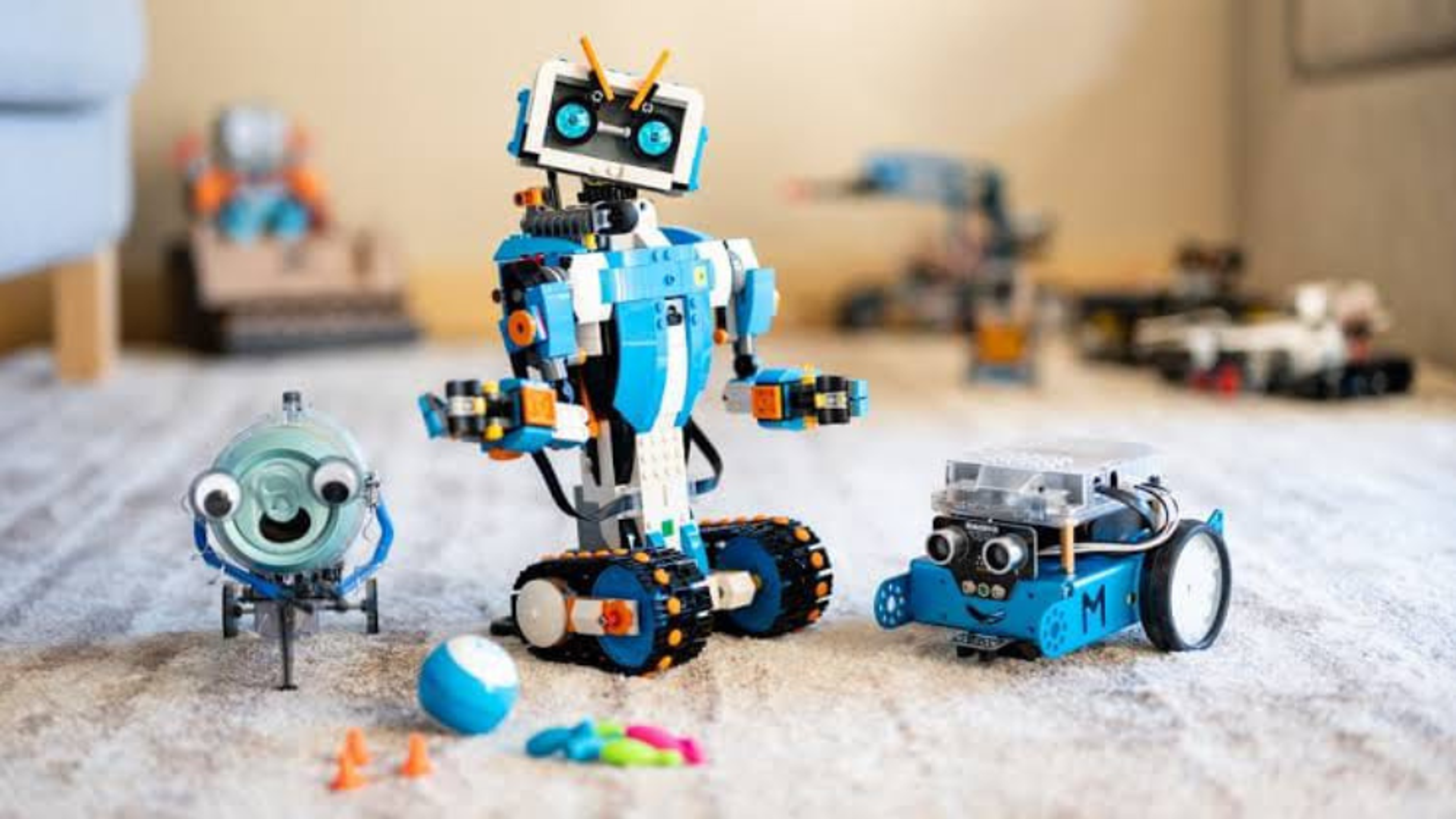
Over the years, as technology evolved, we’ve seen education evolving, too. From computers and interactive whiteboards to online learning platforms and artificial intelligence, new technology has been changing the way students used to learn, along with reshaping how teachers used to teach. And do you know what the most interesting development is so far? Well, that is the use of educational robots.
There was a time when robots were limited to factories/warehouses, etc. But now these machines are quickly becoming part of classrooms, after-school programmes, and even special education settings. Some of these robots are super simple and are used to teach basic programming concepts to young children. However, on the other side, some of the robots are complex humanoid machines that are designed to interact with students.
The growing interest in educational robotics definitely shows a shift towards more active and practical learning. Rather than just reading about coding, students can actually experiment with physical systems and can instantly see the results of their experiments.
What are Educational Robots?
As the name indicates, educational robots are robotic systems or platforms that are designed specifically for the purpose of supporting teaching/learning. These types of robots are used to help students develop skills and gain knowledge in a variety of fields like robotics, coding, computer science, engineering, mathematics, science, and technology.
However, it is worth mentioning that educational robots are not limited to STEM subjects only. In fact, as per their design and purpose, these robots can support communication, collaboration, creativity, social interaction, problem-solving, and even special education.
Now there are some educational robots that are designed for students to build and programme. Then there are ready-made robots that students can control as well as interact with.
This means that the term “educational robot” covers a broad range of technologies. The most important feature, however, is not how advanced the robot is. It is how the robot is used as part of the learning process.
Why are Educational Robots Becoming More Important?
Now you must be wondering what’s the need of introducing robots in the field of education, right? Well, there are many reasons behind it.
In a traditional classroom setup, students usually just receive information and demonstrate what they’ve learnt through assignments or examinations. However, learning through educational robots, on the other hand, is different as it offers a more interactive approach. This method lets students learn through trial and error methods. Students can experiment, make mistakes, figure out the problems, and ultimately solve them.
Let’s say, for example, simply learning that a sensor is supposed to detect objects is one thing. However, a student programming a robot to stop when its sensor detects an obstacle is a whole different and way more helpful experience.
Hence, this approach creates a practical connection between theory and real-world results. Educational robotics is also closely connected to the growing importance of STEM and STEAM education. As economies are growing and depending more on technology, students really need to know how the latest technology works and how it can solve problems.
Types of Educational Robots
There are many types of educational robots depending on how they are designed, the learning purposes they serve, and how students can interact with them. Given below are the 4 main types of educational robots:
Programmable Educational Robots
Programmable educational robots are the ones that help students learn coding and algorithms, etc. These types of robots allow students to create instructions that control a robot’s actions. Learners can programme behaviours such as movement, navigation, responses to sensors, or task completion.
Programmable robots can support learners at different levels. From simple command-based programming to more advanced coding, they can help learners with all these skills. These robots allow students to develop skills like logical thinking, sequencing, debugging, and problem-solving using practical experimentation.
Pre-Built Educational Robots
Another very well-known category of educational robots is pre-built educational robots. These robots are provided as assembled and ready-to-use machines. So, rather than building a robot from scratch, students can directly focus on learning programming, control, operation, or interacting with the robot. The best part about these robots is that their hardware and basic components are usually integrated already. This is the reason why pre-built robots are suitable for activities where the learning objective is focused on robot behaviour or application.
Prebuilt robots prove to be super beneficial for students who wanna learn the basics of robotics without having a need to build the robot themselves. This makes robotics easier to explore and understand.
Modular Educational Robots
Modular educational robots are built with interchangeable parts. Students can connect, remove, or rearrange the parts to create different robot designs. And do you know what the most interesting feature of these robots is? Well, that is reconfigurability! It allows students to change the robot’s structure or functionality for different tasks and experiments. This approach gives learners an opportunity to explore how individual modules contribute to the overall operation of a robotic system. By repeatedly modifying and testing different configurations, students can develop an understanding of system design, engineering, adaptability, and robotics architecture while experimenting with how changes to a robot affect its capabilities.
Humanoid Educational Robots
Humanoid educational robots are the ones that resemble humans in terms of physical appearance or even behavioural characteristics at times. They mostly have human-like body structures, movements, gestures, and communication abilities.
These robots are able to support direct human-robot communication. Thanks to their design, which enables them to participate in interactive learning. These robots support activities involving language, communication, demonstrations, and interactive instruction depending upon their capabilities.
The Benefits of Educational Robots
So, what makes educational robots so useful in the classroom? Well, they are not just about building machines or learning how to code. They can help students learn in a more interactive way. Here are some of the key benefits they can offer.
Hands-On Learning
The best thing about educational robots is that they make learning practical. Students can learn how to write code and can instantly see what happens. The moment they learn what a sensor is, they can directly use that knowledge and control a robot.
Building Logical Thinking
Robots help students learn thinking step by step. They let students learn how to divide big problems into smaller ones and how to find solutions for these problems. These are the skills that aren’t only useful in classrooms. In fact, these skills come in really handy in other day-to-day activities.
Learning to Solve Problems
It is not necessary that robots work perfectly well on the very first attempt. They can, of course, make mistakes and move in the wrong direction. They can even miss an object or fail to perform as planned. All this gives students a chance to learn from their mistakes.
Supporting Creativity
Educational robots give students the freedom to create and try new ideas. There is often more than one way to complete a robotics challenge. There may be scenarios where different students build different robots but still reach the same goal. This approach motivates them to experiment with different designs, movements, and coding methods.
Encouraging Teamwork
Robotics projects often involve working in groups. One student may build the robot while the other one may write the code. And then, someone else may test it. This helps students learn how to communicate and share ideas. Plus, students can also learn how to divide tasks and work together.
Connecting Different Subjects
Robotics can bring several subjects together in one project. Students may use:
- Science to understand motion and sensors
- Maths for measuring distance and angles
- Engineering to build the robot
- Computer science to programme it
- Art and design to make creative projects
- Language skills to present their work
This makes robotics a useful part of STEM and STEAM education.
Making Learning Interactive
Robots can make lessons more interesting because students can see and interact with what they create. Watching a robot follow their instructions can make them feel curious and excited. However, one must remember that fun should not be the only goal. Good robotics activities should also have clear learning goals.
Supporting Different Learners
Educational robots can also help students with different learning needs. Simple robots can provide hands-on and visual learning. On the other hand, social robots may help with communication activities.
Robots can also repeat tasks in the same way each time, which may help students who prefer predictable activities. Still, robots are not right for every learner or situation. Teachers should choose technology based on what their students actually need.
The Future of Educational Robotics
There is a high chance that the future of educational robotics will bring lots of new possibilities for how technology is used in education. As robots are becoming more and more advanced, they will be able to improve even more in terms of understanding spoken language and identifying human behaviour. And this will ultimately make them capable of responding to students in a much better way.
Artificial Intelligence (AI) can also play a great role in educational robotics. Future robots could understand students’ answers and adjust activities based on their learning progress. This will help create a much more personalised learning experience. This type of technology can prove to be specifically beneficial for classrooms where there are students with different learning needs.
Robots may also become cheaper and easier for schools to use. Smaller and simpler robots could help more schools bring robotics into their classrooms. In the future, educational robots may be more than tools for learning about technology. They could also become interactive learning partners. However, teachers will still have an important role. Robots should be used responsibly and for clear learning goals. The main aim should be to use robotics when it can truly improve learning and make education better.
More articles on this topic
60 articles ReportChina's Humanoid Supply Chain Moves Toward Industrial Production
 ReportChina Launches First National Standards for Humanoid Robots
 ReportCounterpoint Expects Work Applications to Drive 90% of Humanoid Shipments by 2030
 ReportUnitree’s 'Superman' Robot Claims to Outrun Usain Bolt
 ReportForeign Investors And Tech Executives Pay Up To $15,000 To Tour China’s Factories
 ReportCan Certified Robots Compete With China's Cheap Patrol Bots?
 ReportQuadruped Robots Are Becoming Big Business: Here’s Why The US Is Targeting Chinese Makers
 ReportHumanoid Robots Hit Mass Production
 ReportHow Robots Are Learning to Read Minds?
 ReportAre Humanoid Robot Videos Misleading Us?
 ReportHow Do Collaborative Robots Increase Workplace Safety?
 ReportHow to Train a Humanoid Robot for Hard Work
BUSINESS NEWS WEEKLY LETTER
The Weekly Letter for Robotics Professionals, Summarizing the Most Important Industry Moves, Launches, Deals and Signals.