From Hype to Factories: Are Humanoid Robots the Next Industrial Revolution?
The real question is no longer whether humanoids can walk. It is whether they can work safely, reliably, and economically at scale inside factories.

July 30, 2026 by Carl
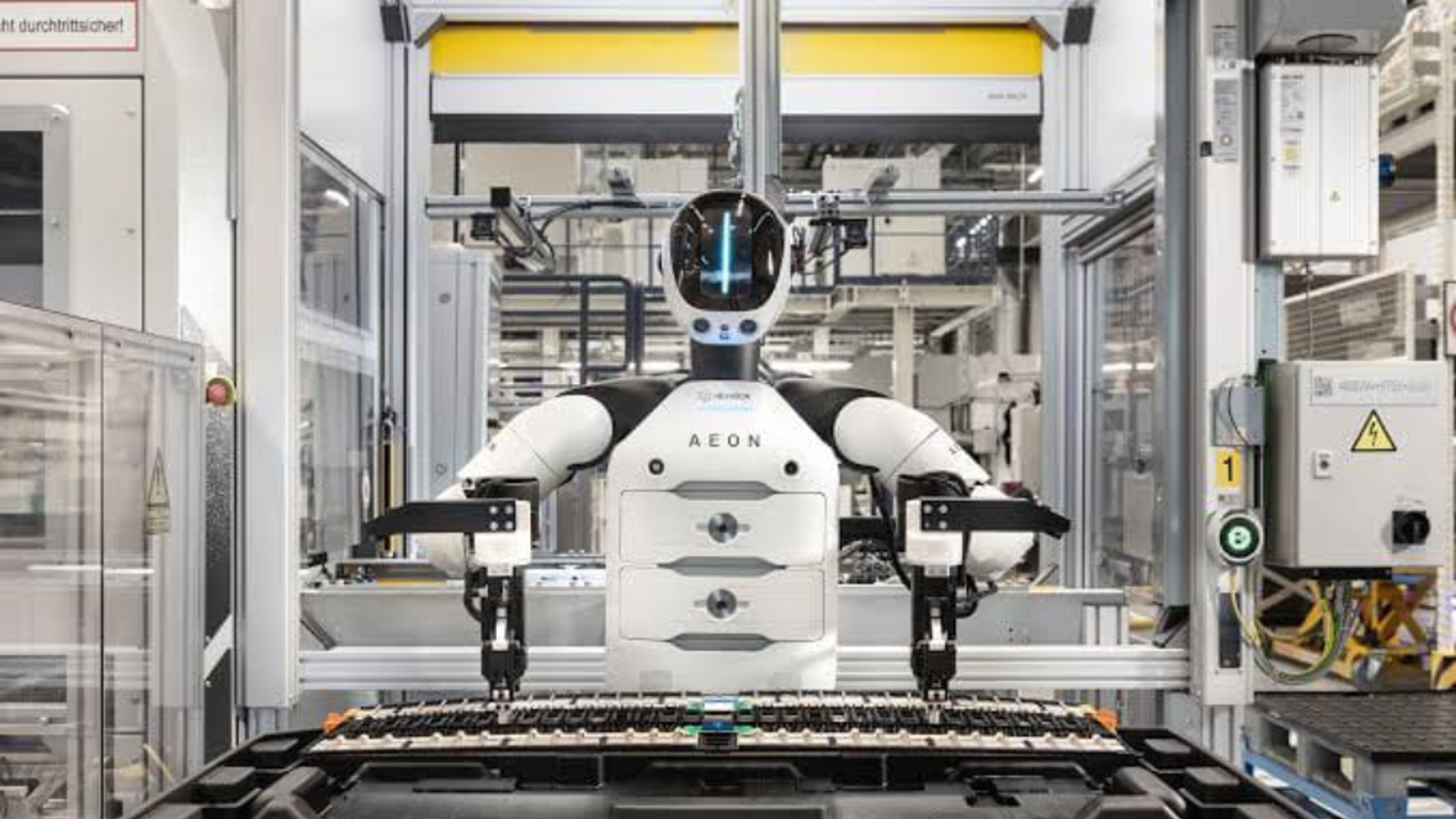
Can humanoid robots really bring an industrial revolution? Are these robots just a technology trend, or are the future of factories and warehouses actually gonna change? Well, humanoid robots have surely attracted many people through impressive demonstrations over the years. These robots can walk/move in places that are basically designed for humans, they can lift objects, and can even understand their surroundings with the help of Artificial Intelligence (AI).
However, one must be well aware of the fact that a robot that is capable of showing impressive demos might not operate in the same way in a factory where day-to-day operations are carried out. There definitely is a difference. And in 2026, this difference is even more important.
In today’s world, humanoid robots are not limited to laboratories and technology shows only. These machines are actually entering real industrial environments. Giant companies like BMW are testing these robots in their vehicle production and logistics. They are doing so to find out whether these humanoids can provide practical value or not.
Why Humanoids in Factories?
At first glance, you might feel like it’s not quite necessary to deploy humanoid robots in factories. And that’s probably because industrial facilities are already using robotic arms, automated guided vehicles, autonomous mobile robots, and cobots, etc. And many of these machines are way more reliable, fast, and precise when it comes to performing specific tasks. So why humanoid robots?
Well, one of the strongest reasons is flexibility. Factories, as we all know, are generally designed considering humans. While constructing a workstation, it is made sure that workers can walk and move freely, use existing equipment, push carts, and adjust their movements if something doesn’t go as expected.
So when it comes to traditional robots, they are, of course, unable to do all this, right? And that is exactly where humanoids make a difference. Their human-like shape lets them move/walk around spaces that are designed for humans and use equipment that is already installed with humans in mind.
BMW Tests the Technology
One of the clearest examples of this shift comes from BMW and Figure AI. In 2025, Figure 02 was deployed at BMW Group Plant Spartanburg in South Carolina. The humanoid worked on an active production line and was used to retrieve and position sheet-metal parts for welding.
According to BMW and Figure, the robot operated for more than 1,250 hours and handled more than 90,000 parts during the deployment. Figure also said the robot contributed to the production of more than 30,000 BMW X3 vehicles.
The robot was not simply performing a controlled demonstration for an audience. It was being tested in an actual production environment where reliability, safety, and repeatability matter.
The experience also helped shape the next generation of Figure’s technology. In 2026, Figure 03 arrived at the same BMW plant for a different application involving logistics and sequencing work. Rather than simply repeating the earlier task, the new robot is being tested for handling parts, moving its body, and pulling a cart.
BMW is also testing humanoids in Europe. At its Leipzig plant in Germany, the company is exploring Hexagon Robotics’ AEON for possible applications in vehicle, battery, and component production.
Together, these projects suggest that humanoids are moving from impressive demonstrations toward practical industrial testing.
The Role of AI
The physical design of a humanoid is only part of the story. Artificial intelligence may be what makes these robots more useful. Factories are not perfectly predictable. Parts can be positioned differently. Objects may appear in unexpected places. People can move around the robot’s working area. A machine may need to adjust its movements instead of following exactly the same sequence every time.
Modern humanoid companies are therefore working on systems that combine vision, language, decision-making, and physical movement. Figure, for example, describes its Helix 02 system as a vision-language-action system that coordinates the robot’s full body. The idea is to allow the robot to understand its surroundings and adjust its actions rather than relying entirely on fixed instructions.
This is often described as Physical AI. Instead of AI only producing text, images, or predictions, Physical AI connects intelligence with machines that must perceive and act in the physical world.
If this technology continues to improve, humanoids could become more adaptable than many traditional robots. However, adaptability should not be confused with full intelligence. Today’s humanoids still operate within defined tasks and environments. Their ability to reliably perform many different jobs remains an open question.
Humanoids aren’t Replacing Every Robot
Another important point is that humanoids do not need to defeat every existing form of automation. A robotic arm can be extremely effective at welding or other repetitive tasks. An autonomous mobile robot can move materials around a suitable facility. A cobot can be a practical option for certain tasks involving human workers.
Replacing these machines with humanoids would not automatically make sense. Instead, factories could become more mixed. A robotic arm could handle welding. An AMR could transport materials. A humanoid could perform tasks that require walking, handling objects, using human-designed equipment, and adapting to changing conditions.
This may actually be the strongest industrial case for humanoids. They do not need to be the fastest machines in a factory. They need to be flexible enough to automate tasks that are difficult to automate using specialised equipment.
Cost and Reliability Matter
Technical ability alone will not determine whether humanoids become a major industrial technology. Companies ultimately need to know whether a robot provides enough value to justify its cost. That includes the price of the machine, software, maintenance, integration, charging, safety systems, downtime, and human supervision.
Reliability is just as important. A factory cannot depend on a robot because it successfully completed a demonstration. It needs predictable performance over long periods.
The Figure 02 deployment at BMW provides an interesting example. Figure has said that the experience revealed hardware reliability problems, including issues involving the robot’s forearm. The company used these lessons when developing Figure 03. This is exactly why real-world testing matters.
Safety is another major challenge. Humanoids are designed to work in environments where people may also be present. They therefore need reliable sensing, motion control, risk assessment, and safety systems.
These challenges do not mean humanoids will fail. They show that moving from a working prototype to a dependable industrial product is a much bigger step.
So, is It a Revolution or a Trend?
Right now, the most accurate answer is somewhere between the two. Humanoid robots have reached an important stage. Now the companies don’t just ask whether a particular robot is able to walk or carry objects. Neither are the companies more inclined towards seeing impressive demos. In fact, what they really consider while deploying humanoids is whether these machines actually make business sense.
In the near future, it is not necessary that factories will be completely operated by humanoid robots. Rather, there is a higher chance that industrial facilities will opt for combining humanoids with robotic arms, AMRs, cobots, computer vision, and other forms of automation.
For humanoids to become exceptionally important and useful, they are not supposed to outperform each and every kind of existing robotic system. In fact, what actually matters is that these robots must be capable of solving problems that other machines find hard to deal with.
How many hours can a robot work? How often does it need human help? How much does it cost to operate? How safely can it work around people? And most importantly, can it perform a task more flexibly or economically than the alternatives?
The answers to these questions will determine whether humanoids become a major industrial technology or remain a specialized form of automation.
For now, humanoid robots surely are more than just a trend. But it is worth noting that these machines are not yet a complete industrial revolution. The technology is still proving itself, and there’s a long journey ahead. The future of humanoid robots’ deployment won’t depend on how human-like they look. The decision would rather depend on how useful, reliable, safe, and affordable they become.
More articles on this topic
60 articles ReportChina's Humanoid Supply Chain Moves Toward Industrial Production
 ReportChina Launches First National Standards for Humanoid Robots
 ReportCounterpoint Expects Work Applications to Drive 90% of Humanoid Shipments by 2030
 ReportUnitree’s 'Superman' Robot Claims to Outrun Usain Bolt
 ReportForeign Investors And Tech Executives Pay Up To $15,000 To Tour China’s Factories
 ReportCan Certified Robots Compete With China's Cheap Patrol Bots?
 ReportQuadruped Robots Are Becoming Big Business: Here’s Why The US Is Targeting Chinese Makers
 ReportHumanoid Robots Hit Mass Production
 ReportHow Robots Are Learning to Read Minds?
 ReportAre Humanoid Robot Videos Misleading Us?
 ReportHow Do Collaborative Robots Increase Workplace Safety?
 ReportHow to Train a Humanoid Robot for Hard Work
BUSINESS NEWS WEEKLY LETTER
The Weekly Letter for Robotics Professionals, Summarizing the Most Important Industry Moves, Launches, Deals and Signals.