From Teleoperation to Autonomy: 5 Strategies for Smarter Robots
Robotics companies can escape the teleoperation trap by improving training data, enabling learning, using simulation, and reducing human intervention.

July 22, 2026 by Carl
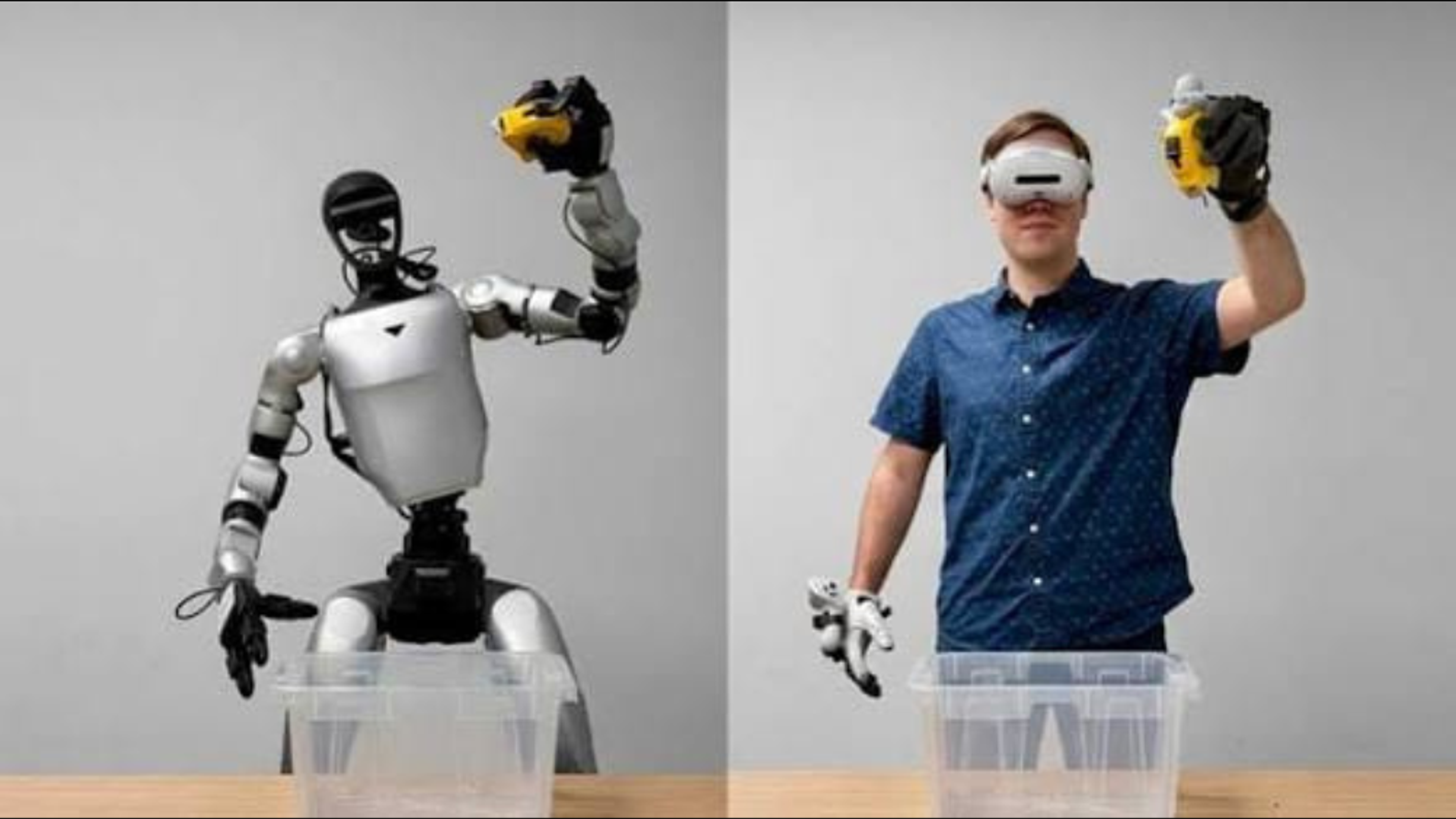
The robotics industry is rapidly moving towards a future where humanoid robots can work alongside humans and perform repetitive tasks or those that are risky for humans to perform. But there’s a problem hiding behind this vision. Even today, a lot of robots heavily depend on humans. And humans are being hired in order to control robots remotely and demonstrate tasks, along with recording movements and generating the data needed to train physical AI systems.
Well, there’s nothing really wrong with hiring human operators in the initial stages of robot development. In fact, human guidance can prove to be super useful. The real issue arises when teleoperation becomes something that companies depend on forever.
What if every new situation requires a human to guide the robot on what to do? Well, this will end up with machines that would apparently be autonomous, but behind the scenes, there will be a large workforce handling everything. So, in order to avoid this outcome, robotics companies need to rethink how they collect data and how they train the robots.
Understanding the Trap
On the surface, teleoperation seems quite attractive, and the reason is quite obvious: It solves an immediate problem. Maybe a robot doesn’t know how to complete a task, so a human operator takes control and performs it. Now what a robot does is it records that demo, and researchers use this data to improve the system. This approach comes in really handy to train the robots in the beginning. However, difficulty arises when companies try to use this approach on a large scale.
In the physical world, there are tons of variations in each and every field. For example, a robot working in a warehouse is required to lift boxes and put them on shelves. It might have to deal with changing lighting conditions and floor surfaces. Similarly, a robot operating in a home might need to face even more different types of scenarios. Now, humans can adjust themselves as per these changes, but when it comes to a robot, it might need additional training.
If the only solution to every new scenario is to collect another human demonstration, then the quantity of data that is required to train robots can increase so much that it would eventually become super complicated for companies to produce that amount of data. And that’s exactly what a teleoperation trap is: Using human control to solve every problem rather than developing such robots that are capable of solving unfamiliar problems on their own.
How to Avoid the Teleoperation Trap
Building truly autonomous robots requires a shift in how the industry approaches training and development. Instead of relying on humans to solve every new problem, companies should focus on creating robots that can learn, adapt, and recover independently. Human demonstrations still have value, but they should serve as a foundation for learning rather than a permanent source of control. The following strategies can help make that transition possible:
Build Better Training Data
One way to avoid the trap is to stop assuming that collecting more demonstrations will automatically lead to full autonomy. Human-generated data is valuable, but quantity alone is not enough.
A robot can watch thousands of demonstrations and still struggle when it encounters something outside those examples. The real test of an autonomous system is not how well it repeats a familiar task. It is how effectively it responds when circumstances change. For that reason, robotics companies should pay closer attention to the quality and diversity of their data.
Instead of repeatedly demonstrating the same task under similar conditions, training should expose robots to a wider range of environments and unexpected situations. The goal should be to teach robots general skills rather than simply building a huge library of instructions.
Use Humans to Teach, Not to Permanently Operate
Human demonstrations will remain useful. Researchers need ways to introduce new skills to robots, particularly when working with complex physical tasks. But there is an important difference between using humans as teachers and using them as permanent operators. The first approach helps robots become more capable. The second creates long-term dependence.
Newer methods are already attempting to make human demonstrations more natural and useful. Egocentric video can capture tasks from a person’s perspective, while tools such as the Universal Manipulation Interface, or UMI, allow people to demonstrate physical actions using a handheld gripper.
These methods may make it easier to collect better training data without requiring an operator to continuously control a robot from a distance. However, they should be viewed as stepping stones rather than the final destination. The long-term objective should be to reduce the amount of human intervention required as the robot improves.
Let Robots Learn
To move beyond permanent teleoperation, robots need ways to learn without being shown every possible action by a human. This is where reinforcement learning can play an important role.
Instead of simply copying a demonstration, a robot trained through reinforcement learning can experiment with different actions. It can try to complete a task, observe the outcome, learn from failure, and adjust its behavior. This approach gives robots the opportunity to discover solutions rather than simply imitate them. That distinction matters.
If a human shows a robot how to pick up one particular object, the robot may learn that specific behavior. But a system that learns through trial and error may be able to develop a broader strategy that works with objects it has never encountered before. This kind of learning could help reduce the need for a human operator every time a robot faces something new.
Use Simulation to Scale Training
There is one major problem with letting physical robots learn through trial and error: the real world is expensive. A robot can break its hardware. It can damage objects. Experiments can take a long time, and repeating the same process millions of times is simply not practical.
Simulation offers a way around this limitation. In a virtual environment, robots can practice the same task again and again without damaging physical equipment. Researchers can change the environment, introduce different objects, and create unusual situations.
Thousands of simulated robots can also learn at the same time. This gives simulation a major advantage over human-led teleoperation. The process can scale with computing power instead of depending entirely on the number of people available to operate robots.
Of course, simulation cannot replace real-world experience completely. Robots eventually need to prove that what they learned virtually works in physical environments. But combining simulation with real-world testing can significantly reduce the amount of human labor required to generate every possible training experience.
Measure Human Intervention
Another important way to avoid the teleoperation trap is to change how robotics progress is measured. Companies can easily highlight the number of demonstrations collected or the number of hours a robot has been operated remotely. These figures may sound impressive, but they do not necessarily show genuine autonomy.
A more meaningful question is: Does the robot need less human help today than it did six months ago? If the answer is yes, the system is moving in the right direction. If the answer is no, simply collecting more data may not be solving the underlying problem.
Robotics companies should track how often humans need to intervene, how well robots handle unfamiliar situations, and whether the machines can recover from mistakes without assistance. The real goal should be a steady reduction in human involvement.
Teleoperation, Not Dependence
There is still a valuable role for teleoperation in robotics development. It can help companies test new hardware, collect demonstrations, teach robots new skills, and deal with situations that current systems cannot handle independently.
The mistake is assuming that more teleoperation automatically means more autonomy. It does not. The industry needs to build a clear path from human-guided learning toward independent decision-making. Human demonstrations can provide the starting point. More efficient data collection can improve training. Reinforcement learning can help robots learn through experience, while simulation can expand that learning far beyond what human operators could provide manually.
The ultimate goal should be simple: every new generation of robots should require less human intervention than the one before it. If a robot constantly needs someone behind the scenes to control it or teach it how to respond to every unfamiliar situation, then the industry has not truly escaped the labor problem it hoped robotics would solve. Avoiding the teleoperation trap does not mean eliminating humans from robotics. It means using human involvement strategically, while building systems that can gradually learn, adapt, and operate with greater independence.
The future of robotics will not be determined by how many hours humans can spend operating machines. It will be determined by how effectively robots can learn to operate without them.
More articles on this topic
60 articles ReportChina's Humanoid Supply Chain Moves Toward Industrial Production
 ReportChina Launches First National Standards for Humanoid Robots
 ReportCounterpoint Expects Work Applications to Drive 90% of Humanoid Shipments by 2030
 ReportUnitree’s 'Superman' Robot Claims to Outrun Usain Bolt
 ReportForeign Investors And Tech Executives Pay Up To $15,000 To Tour China’s Factories
 ReportCan Certified Robots Compete With China's Cheap Patrol Bots?
 ReportQuadruped Robots Are Becoming Big Business: Here’s Why The US Is Targeting Chinese Makers
 ReportHumanoid Robots Hit Mass Production
 ReportHow Robots Are Learning to Read Minds?
 ReportAre Humanoid Robot Videos Misleading Us?
 ReportHow Do Collaborative Robots Increase Workplace Safety?
 ReportHow to Train a Humanoid Robot for Hard Work
BUSINESS NEWS WEEKLY LETTER
The Weekly Letter for Robotics Professionals, Summarizing the Most Important Industry Moves, Launches, Deals and Signals.