How Close Are We to Owning a Humanoid Robot?
Go a few years back, and owning a robot would give you a feeling out of this world. It seemed so unrealistic that no one could ever imagine that, but not anymore.

August 3, 2026 by Carl
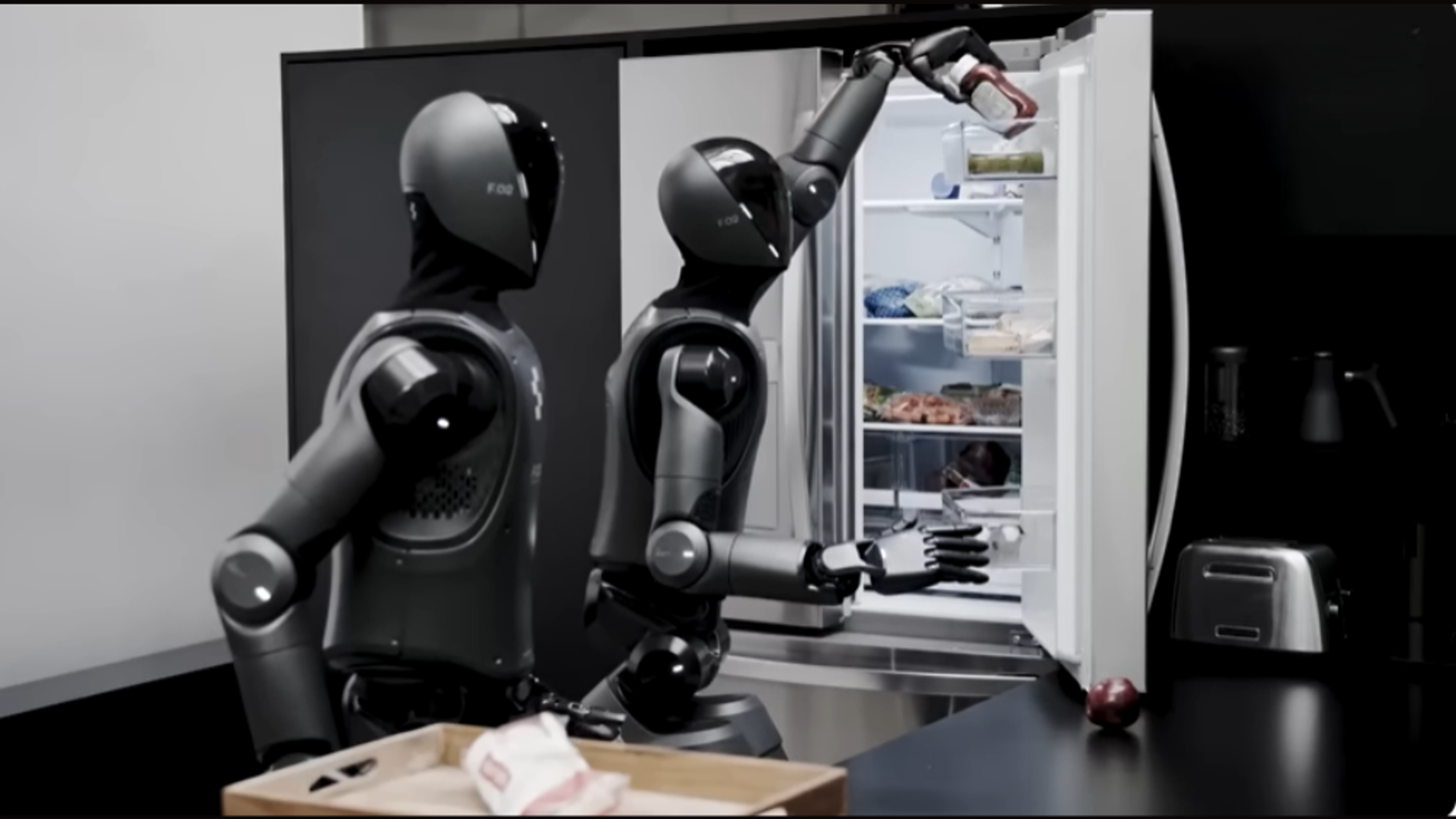
Go a few years back, and owning a robot would give you a feeling out of this world. It seemed so unrealistic that no one could ever imagine that, but not anymore. Now the picture has changed, not completely, but you can no longer doubt, “Will this happen?” Now you have reached a point where you may think, “How soon?” Now let’s talk about where things actually stand.
You Can Already Pre-Order One
This isn’t a future idea. But it has already been started. 1X Technologies has already opened pre-orders for the NEO robot. The very first unit will be delivered to American homes in 2026. The total price of the robot is set to $20,000, but you can also own it on a monthly subscription of $499. A refundable $200 deposit holds your spot in line.
1X Technologies is a Norwegian-American company. They call NEO “the world’s first consumer-ready humanoid robot”. The purpose of the robot is to transform life at home.
That claim is big. And it is partly true. NEO, no doubt, is real, and deliveries are taking place. However, at first, it can only handle basic work on its own. If it faces a complex task like doing laundry or dishes, it won’t be able to do that without a helper. For this purpose, an expert at 1X can supervise the robot and make it perform the tasks remotely. The company said that it will get better with software updates. So yes, we can say that you can buy it, but without expecting too much from it.
What Other Robots Are in the Race?
NEO is not the only one. The competition is increasing faster than ever.
Tesla Optimus
Tesla has been building Optimus since 2021. The company has shown it folding laundry, sorting objects, and doing factory work inside Tesla’s own facilities. Elon Musk has stated the cost of the robot could range from $20,000 to $30,000 once it reaches full-scale production. This would make it far more affordable than most other humanoids.
Tesla wants to make the Optimus robot available for everyone, but it’s still going to take some time. As of August 2026, there’s no public sale or pre-order for Optimus. Many experts believe that, for normal people, it won’t be available until 2028-2029. Right now, its manufacturing cost is very high, around $50,000 to $100,000. So this is contradictory and much higher than what Tesla thinks a future robot price would be ($20,000 to $30,000 per robot).
Figure AI
Figure AI has built Figure 03. Figure 03 stands 1.68 meters tall, weighs 60 kilograms, and has 30 degrees of freedom. It can run for around 5 hours on a single charge. More than 350 units have been delivered from the company’s dedicated BotQ factory in California.
Figure 03 has been seen folding clothes, loading a dishwasher, and carrying boxes, all in real environments. Before that, Figure 02 was placed at BMW’s Spartanburg plant. There, it supported the production of more than 30,000 vehicles across 11 months and achieved over 99% accuracy. Those are serious numbers.
Boston Dynamics Atlas
Boston Dynamics is one of the oldest and most experienced robotics companies. Its electric humanoid robot, Atlas, is considered one of the most advanced robots in the world. Right now, Atlas is being tested in Hyundai factories, where it’s handling complex car manufacturing tasks. The best thing is that instead of making a hurry to launch a robot, Boston Dynamics is mainly concerned about reliability. They are first focusing more on that.
Unitree
If $20,000 is still too much, a Chinese company called Unitree has pushed prices much lower. Unitree’s R1 line starts at around $4,290, and the G1 developer platform is available for $13,500. These are more aimed at researchers and developers than everyday homeowners. But the fact that humanoid robots exist at that price at all is remarkable.
Agility Robotics Digit
Agility Robotics makes a bipedal humanoid called Digit. It is built for warehouse work. Digit has already moved over 100,000 totes at a GXO Logistics facility in Georgia. This makes Digit one of the few robots with a proven commercial track record. Agility Robotics has also partnered with Mercado Libre. The purpose is to deploy Digit in warehouses and logistics operations.
What Can These Robots Do Right Now?
Let’s be honest here.
The videos you see online are awesome. Robots folding shirts. Cooking eggs. Dancing. Carrying boxes. But those clips do not always show what happens when something goes slightly wrong.
Right now, robots can perform very well while giving demos. The problem arises when they work for extended hours or in unpredictable situations.
Most humanoids can only run for 30 to 90 minutes before they need a recharge or some kind of help. Industrial customers typically expect 95 to 99% uptime, and most humanoids are not there yet.
Walking and balance have improved compared to a decade ago. But moving reliably over uneven surfaces and recovering without falling is still a challenge. Dexterous hand and arm movement still fall short of human capabilities. That gap between what robots can do in a lab versus what they can do in your kitchen is one of the biggest challenges.
The first home robots will not fully work on their own. They will need human assistance to perform a limited number of tasks. The robot will not be “generally capable” in the human sense. It will be allowed to do certain things, in certain rooms, at certain times, while staying within set safety limits.
You can think of them as highly intelligent appliances that are still learning, rather than human assistants.
Why Are Prices Dropping Fast?
Just a few years ago, any bipedal robot cost between $50,000 and $250,000. That was the starting price.
However, Goldman Sachs reported a 40% cost reduction occurring more rapidly than analysts anticipated between 2022 and 2023. By mid-2025, Unitree had broken below $6,000 for a full-size humanoid robot.
Several things are driving this down:
- Better and cheaper components.
- More companies competing.
- Manufacturing at greater scale.
- AI getting faster and cheaper to run.
Prices for humanoid robots are expected to drop by around 68% on average by 2030, from roughly $114,700 to around $37,000, according to IDTechEx.
This trend is pretty important. Smartphones were also expensive at first and only a few people could afford them. But over time they ended up in almost everyone’s pocket. Robots aren’t at that stage yet. But we can say that they’re moving in the same direction.
Where Are They Being Used Right Now?
Before they come home, humanoid robots are proving themselves at work. And that is actually a smart path.
Factories and warehouses have controlled setups. The floors are flat. The tasks are recurring. The lighting is consistent. Those conditions make it much easier for a robot to perform smoothly.
Deployment typically follows a predictable pattern. They first start working in structured places like factories and warehouses, then move into places like hotels and hospitals, and finally make their way into homes, which are much more complex and unpredictable. Goldman Sachs says that humanoid robots used in factories could recover their cost in about two years by 2026-2027. Likewise, home robots may take another 2 to 4 years before they become common.
Don’t think of it as a “delay.” It is just another chance to make the robot learn more. Every hour a robot spends in a factory makes it learn further and understand things better. This learning makes the robot more capable before it comes to homes.
How Big is This Market Going to Get?
Goldman Sachs Research projected in February 2024 that the total addressable market for humanoid robots could reach $38 billion by 2035. They forecast more than 250,000 humanoid robot shipments in 2030, almost all for industrial use first. Their base case for consumer robots is that numbers will ramp up quickly, eventually exceeding a million units annually in just over a decade.
The Yole Group expects the market will reach $51 billion by 2035. It is predicted to grow at a rate of about 55% each year.
These are big numbers. But Goldman Sachs Research itself is careful to note that the viability of mass-produced, general-purpose humanoid robots has not yet been proven.
So When Can the Average Person Own One?
See the realistic answer based on experts’ observations.
The first truly useful home robots could start showing up around 2027 or 2028.
Even the International Federation of Robotics has been cautious. And they believe that widely accepted home robots could still be many years away from being mainstream.
If you have a look at the current market, you can buy an early model for around $20,000. But of course, that will have limitations too. This version will require human help for many tasks.
However, by 2030, you can expect a more capable version of a robot. They will have lower prices, longer battery life, as well as stronger AI systems. They may still not be cheap for many people but will be within the reach of early adopters.
By the mid-2030s, if costs keep dropping, humanoid robots could become something much more widely owned. Not by everyone, but by many.
The robot in your kitchen is coming. It is just not rushing.
So What’s the Take On That?
There is a real gap between what you watch in videos and what a robot in your house can do. This gap is closing, but not as fast as predicted by marketers. However, the scenario is different from what it was 5 years ago. You can now invest in robots. Companies are shipping units. Factories are making use of them on a daily basis. And above all, the prices are getting lower gradually.
Owning a humanoid robot is no longer a fantasy. It is becoming a question of when you can afford one and what exactly you want it to do.
More articles on this topic
60 articles ReportChina's Humanoid Supply Chain Moves Toward Industrial Production
 ReportChina Launches First National Standards for Humanoid Robots
 ReportCounterpoint Expects Work Applications to Drive 90% of Humanoid Shipments by 2030
 ReportUnitree’s 'Superman' Robot Claims to Outrun Usain Bolt
 ReportForeign Investors And Tech Executives Pay Up To $15,000 To Tour China’s Factories
 ReportCan Certified Robots Compete With China's Cheap Patrol Bots?
 ReportQuadruped Robots Are Becoming Big Business: Here’s Why The US Is Targeting Chinese Makers
 ReportHumanoid Robots Hit Mass Production
 ReportHow Robots Are Learning to Read Minds?
 ReportAre Humanoid Robot Videos Misleading Us?
 ReportHow Do Collaborative Robots Increase Workplace Safety?
 ReportHow to Train a Humanoid Robot for Hard Work
BUSINESS NEWS WEEKLY LETTER
The Weekly Letter for Robotics Professionals, Summarizing the Most Important Industry Moves, Launches, Deals and Signals.