How Humanoid Robots Could Change the Way We Raise Children
Humanoid robots are slowly making their way into homes and schools. They are also changing the way we teach our kids and develop their skills.

August 6, 2026 by Carl
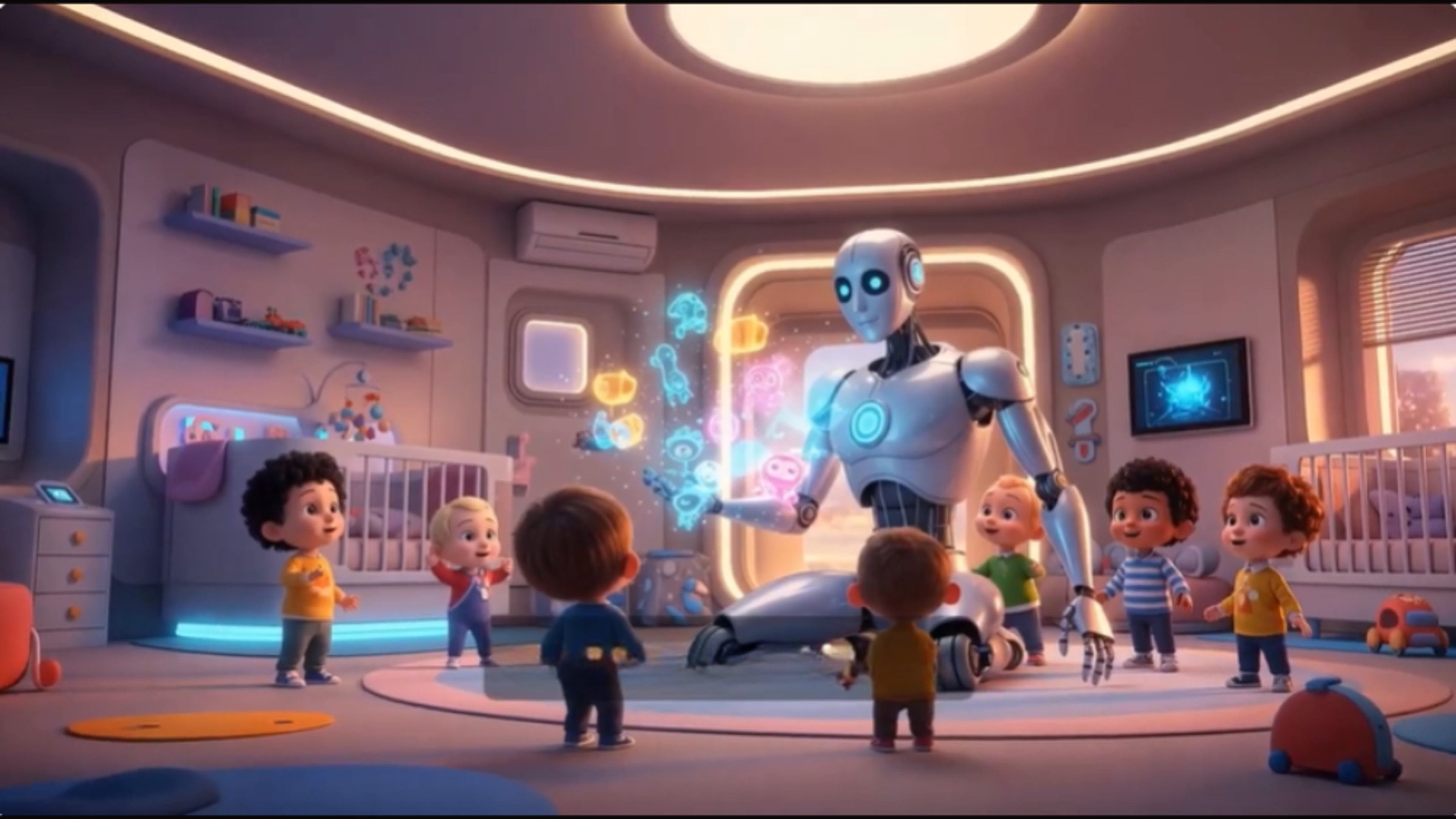
Every parent knows this moment. You are exhausted after a busy day. Your child needs help in their studies. Dinner is burning, and your phone won’t stop ringing. You wish you had an extra helping hand for all this. And what if this extra hand is a robot that looks and talks just like a human? Yes, this isn’t fiction anymore.
Humanoid robots are slowly making their way into homes and schools. They are also changing the way we teach our kids and develop their skills. Want to know what’s happening over there in 2026? Read on and see what the future of those robots is, how they work, and what the concerns most parents have. Before you get too worried or too excited regarding all this, let’s have a look at what’s actually happening.
How Robots Are Helping Children Learn
Education is one of the biggest areas where robots are starting to make a difference in children’s lives. And it’s not just about making school more fun. Research is showing some encouraging results.
A major analysis published in 2026 reviewed 146 studies. This study was conducted on social robots used in classrooms. The results were interesting. This showed that the robots that were designed for thinking and problem-solving purposes improved learning. The results were more satisfactory when these robots adapted to individual needs.
One of their biggest advantages is patience. Robots don’t get tired or frustrated. They can explain the same concept 50 times with the same level of patience every single time. What do you think of this? How would that be helpful? Well, this will help children a lot who are too shy to ask questions. It will also help those who need more time to understand a concept and those who need practice again and again.
In June 2026, a U.S. company called Realbotix introduced its AI-powered teaching assistant robot, Optio, in a New York school district. It’s currently being used in AI and robotics classes, with plans to expand the program to around 500 high school students by Fall 2026.
Research has also shown another interesting benefit. Children were asked to teach a robot. They remembered what they learned better than those who did practice on their own. So what does that mean? In simple words, this shows that when you teach someone else, even if it is a robot, you learn better.
Helping Children Who Need It Most
Perhaps the most promising use of humanoids is in helping children with autism spectrum disorder (ASD).
Social interaction is challenging for autistic children. It is difficult for them to read facial expressions. They also struggle with understanding fast conversations and people’s reactions. But a robot responds in the same way every time. It is consistent and calm. This makes it easy for children to interact with them.
A clinical study published in Scientific Reports in July 2025 involved 32 children with autism. The children who received training with the iCub humanoid robot showed greater improvement in social skills than those who received only traditional therapy. According to the researchers, the robot itself played an important role in those improvements.
Robots like KASPAR, NAO, Milo, and QTrobot have been specially designed for autistic children. They help children practice various skills. This includes making eye contact and recognizing facial expressions. This also includes taking turns in conversations and understanding social cues. And this all happens in a low-pressure environment.
A review confirmed what many therapists and parents have been observing. And what’s that? They observed that robots with facial expressions and gestures, along with body movements, are effective. They help children with ASD build essential social skills.
Robots as Childcare Helpers
There’s another side to this story. That is the challenge of childcare for working parents.
Many countries are facing a shortage of childcare workers. At the same time, more parents are now working full-time. This has created a gap. Children need care. But there aren’t enough caregivers available.
That’s why robots are being explored as one possible solution. According to Reportprime, the global childcare robot market was worth around $23.76 billion in 2025. And it is expected to keep growing through 2032.
In Japan, companies (SoftBank and Toyota) have already begun using robots in public childcare centers. These robots greet children. They can monitor their health, like heart rate and body temperature. And above all, they keep kids engaged while human caregivers focus on other tasks.
The goal isn’t to replace parents or caregivers. At least for now, robots are meant to handle routine tasks so that people can spend more time on other things.
What Children Feel About Robots
Here’s something that might surprise you. Children often genuinely like robots. Not as toys, but as companions.
A study that followed 19 families over several years found something remarkable. Even after the children had grown up and no longer needed the robot, 18 out of 19 families had kept it in their home. Some families had given the robot new jobs, like playing music. Others didn’t let it go because it felt like part of the family. Children treated the robot with care, charging it, talking to it, and even planning a kind of “retirement ceremony” for it when it was no longer active.
Research also shows that when kids interact with robots that are designed for learning, it can boost their self-confidence. It also makes them more willing to participate in activities. It even helps them feel less anxious in learning situations. Teachers who supervised more than 2,600 children in robot-assisted classrooms reported no lasting negative effects on their students’ social or emotional development. They even noticed five positive effects, including increased confidence and a greater willingness to help other children.
The Real Concerns Parents Should Know About
All that does not mean that we should hand over kids to robots fully. There are some serious concerns too. It is worth taking them seriously.
1. Emotional Attachment
Research from Frontiers noted that some children have formed emotional bonds with robots. This connection was so strong that they even started calling them their friends. And they preferred to talk with them instead of other people. As time goes on, children may miss one of the most important experiences of life. And that is building relationships with real humans.
Social-emotional growth can’t be taught by a machine. These skills develop through experience with humans. Robots can support learning, but they, of course, can’t replace the genuine human connection.
2. Privacy and Data Collection
This one is serious and often overlooked. A robot in your home is a sensor system. It has cameras, microphones, speech recognition, along with behavioral tracking. It may store data in the cloud. It may share data with the company that made it. And your child almost certainly doesn’t understand any of this.
Children between the ages of 6 and 12 are vulnerable. They often don’t understand how data collection works or who can access their information.
In September 2025, the US Federal Trade Commission took action against a robot toy maker called Apitor. This app allegedly allowed a third party to collect children’s location data without parental permission. This incident wasn’t ignorable. It reminds everyone of their privacy. A robot that seems friendly can act as a data pipeline that can share your information with those you don’t trust or haven’t agreed to share it with.
3. Robots Work Best With Adults
This point comes up again and again in the research. The 2026 meta-analysis of 146 studies found that robots improved learning outcomes but only when a teacher was present. When robots were used as substitutes for human teachers, the results were much weaker. Robots couldn’t handle unexpected situations and spontaneous questions.
The same applies at home. A robot handling bedtime stories is one thing. A robot being the primary emotional caregiver for a child is quite another. Experts constantly say that robots should be helpers, not replacements.
4. Who Can Afford This?
Leading classroom robots like NAO and Pepper cost anywhere from $9,000 to $30,000. And that’s before you add software and training. If this technology becomes common, it will only be available in wealthy schools and homes.
This will create a gap between children who have access to this technology and those who don’t. This is an equity question that needs a proper answer.
Where is This All Heading?
To be very honest, no one knows that.
An analysis by Impact Lab in early 2026 suggested that we will gradually see more robots in childcare over the next few years. And until 2028, we will see more robots doing childcare work, helping them with homework and adjusting their bedtime routine. However, public debate about how much they should be used is likely to continue.
Until 2030, governments may begin to introduce clear regulations regarding the use of technology. This may include data privacy, appropriate age for usage, and other requirements, as the bots will only be used under strict human supervision. And by 2035, robot-operated daycare centers may become as common as today’s childcare centers. But that will surely be for the families that can afford it.
What This Means for Parents Today
You don’t need to rush out and buy a robot today. But it’s definitely worth thinking about. In the coming years, deciding how much technology to bring into your children’s lives could become one of the most important parenting decisions for this generation of parents.
A robot is just like another tool. Its effectiveness depends entirely on how you use it. For example, a hammer can build a house, but the same hammer can also destroy or break it. Similarly is the case with a robot. If it is helping your child with autism, it is very helpful. On the other hand, if it is collecting data secretly about your family’s private conversations, there is nothing worse than that.
The research so far suggests that robots work best when they:
- Support a specific task (like practicing math or language)
- Are used alongside a human adult
- Are chosen with privacy and safety as top priorities
- Are age-appropriate
One thing that robots can’t do is the warmth of human relationships. And this is what children always need. A perfect hug after a bad day. The parents who know something is off before they even speak a word. The grandparents who tell a story without any script. A robot can never replace all of these. It can never replicate this love or experience that a child gets from being raised by people who truly care about them.
The good part is that we still have time to make the right choices. Technology is advancing fast. But the decision of whether we want our children to use this technology, and how much of it, is still our choice to make.
More articles on this topic
60 articles ReportChina's Humanoid Supply Chain Moves Toward Industrial Production
 ReportChina Launches First National Standards for Humanoid Robots
 ReportCounterpoint Expects Work Applications to Drive 90% of Humanoid Shipments by 2030
 ReportUnitree’s 'Superman' Robot Claims to Outrun Usain Bolt
 ReportForeign Investors And Tech Executives Pay Up To $15,000 To Tour China’s Factories
 ReportCan Certified Robots Compete With China's Cheap Patrol Bots?
 ReportQuadruped Robots Are Becoming Big Business: Here’s Why The US Is Targeting Chinese Makers
 ReportHumanoid Robots Hit Mass Production
 ReportHow Robots Are Learning to Read Minds?
 ReportAre Humanoid Robot Videos Misleading Us?
 ReportHow Do Collaborative Robots Increase Workplace Safety?
 ReportHow to Train a Humanoid Robot for Hard Work
BUSINESS NEWS WEEKLY LETTER
The Weekly Letter for Robotics Professionals, Summarizing the Most Important Industry Moves, Launches, Deals and Signals.