How Restaurants Could Benefit from Humanoid Robots
Humanoid robots are stepping into restaurants. And the industry, which is already facing labor shortages and other serious problems, may be the perfect place for them.

August 4, 2026 by Carl
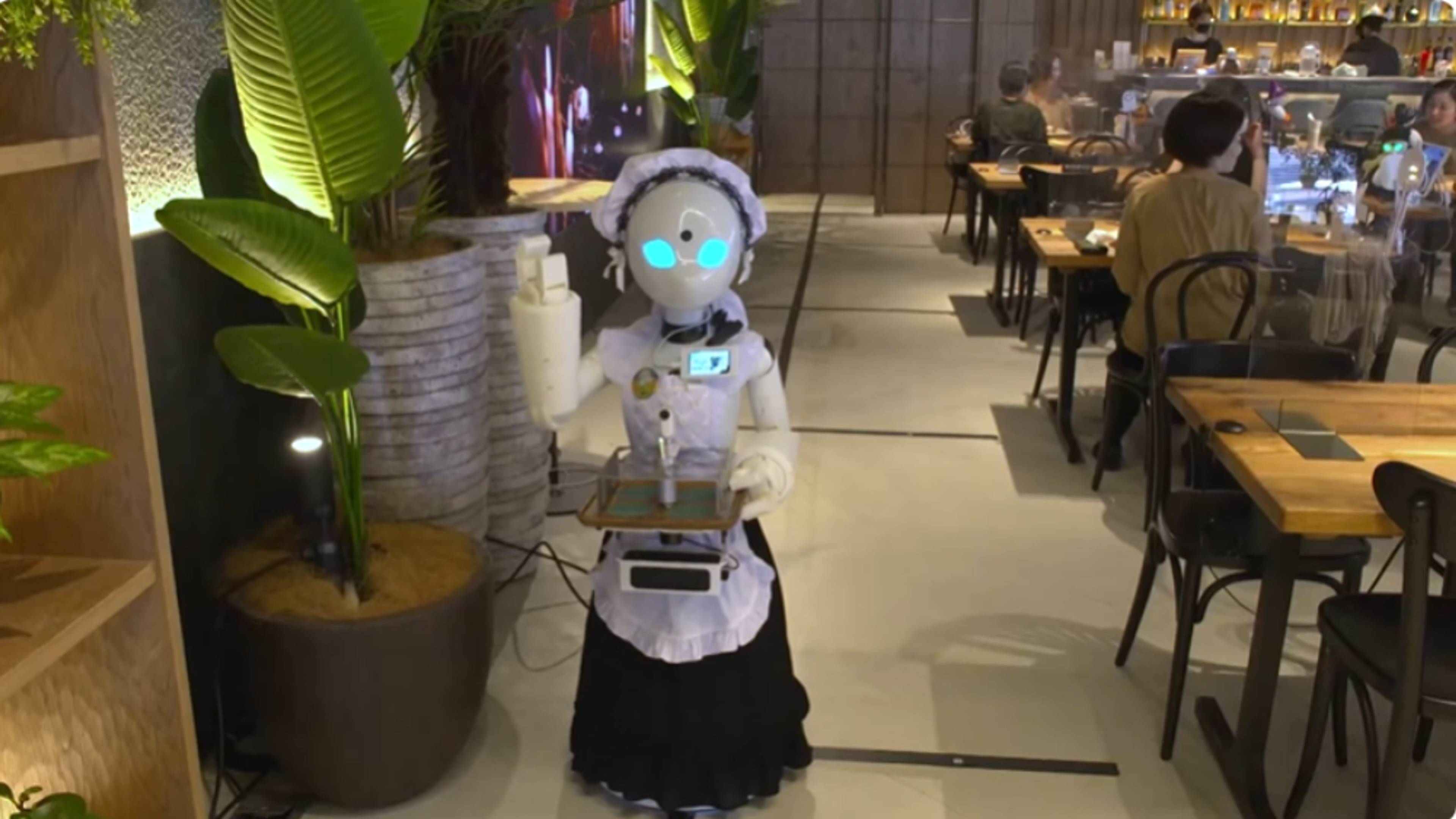
Just imagine you are entering a restaurant and are greeted by a robot. How would it feel? It takes your order, serves you food, and does all this without making mistakes. It may seem unreal, but now it is happening in real life.
Humanoid robots are stepping into restaurants. And the restaurant industry, which is already facing labor shortages and other serious problems, may be the perfect place for them.
The Real Problems Restaurants Are Facing
Before you know how robots are beneficial for restaurants, it is important to understand what problems exist there. Because knowing benefits will only make sense once you know the problems.
The Staffing Crisis is Real
Restaurants have had a hard time finding and keeping workers for years. According to the National Restaurant Association’s 2025 State of the Restaurant Industry Report, 58% of restaurants report difficulty recruiting new workers and filling empty positions.
The quit rate is also alarming. The accommodation and food services sector continues to experience severe churn, with a 6.0% quit rate as of December 2025, according to the U.S. Bureau of Labor Statistics. This turnover costs restaurants an average of $5,864 per employee, covering recruiting, training, and lost productivity.
That’s nearly $6,000 every single time a worker leaves, and in a business with thin profit margins, that adds up fast.
Too Many Open Jobs, Not Enough People
According to the U.S. Bureau of Labor Statistics, as of March 2025, job openings in the accommodation and food services sector remain above pre-pandemic norms, with 858,000 openings reported, compared to the 2017-2019 average of 835,000.
That’s nearly a million unfilled restaurant jobs. Think about that: hundreds of thousands of tables going unserved, kitchens running short-handed, and managers doing three jobs at once.
In 2024, nearly half of U.S. restaurant operators reported plans to increase automation to fill staffing gaps. A majority of those operators emphasized that they viewed technology not as a replacement for their teams, but as a way to support overburdened staff and improve operational efficiency.
So the push toward automation is not about firing people; it’s about surviving when there aren’t enough people to hire.
Humanoid Robots Help Close the Staffing Gap
This is the most straightforward benefit. When you can’t find enough humans to do a job, a robot can step in.
A 2025 ABB survey found that 89% of hospitality managers and 73% of workers support robotic automation, with 67% agreeing it reduces dull, dirty, or dangerous tasks.
That’s a big deal. Most people assume workers hate the idea of robots. But when the work is exhausting, repetitive, and stressful, many employees actually welcome the help.
Humanoid robots can work the fryer during the rush hour without complaining. They can clear tables all night without needing a break. They can run orders back and forth across a busy dining room without ever getting tired. Robots in restaurants provide a strategic advantage: consistency, 24/7 availability, and cost efficiency in a workforce environment that’s anything but predictable.
Saving Serious Money on Labor Costs
An article from Forbes notes that, on the high end, as many as 82% of restaurant roles could be filled by robots in the future, with 31% of those machines serving in various food preparation capacities. The cost-cutting effects could be potentially dramatic, with an estimated annual savings of more than $12 billion for restaurant operators.
Now, not every restaurant is going to automate 82% of its staff tomorrow. But even partial automation can lead to huge savings.
Restaurant owners who have deployed serving robots have witnessed a 20-50% reduction in front-end labor costs.
Working Around the Clock
One of the biggest practical advantages of robots is that they don’t need to sleep.
A human server can work maybe eight or nine hours before they’re exhausted. They call in sick sometimes. They have bad days. They need vacations.
A humanoid robot can work at 2 AM just as well as it works at 2 PM. Businesses gain 24/7 availability, lower long-term labor costs, consistent service quality, and a stronger guest experience.
For restaurants that stay open late, this is a massive advantage. You no longer have to worry about finding staff for the overnight shift or paying expensive overtime wages.
Better Food Quality and Consistency
Have you ever gone to a restaurant twice and had your favorite dish taste completely different each time? That’s a human problem. People have off days; they get tired, and sometimes they accidentally add too much salt or cook something a little too long.
Robots don’t have off days.
Robots follow the exact same process every single time: same portions, same cook times, same presentation. When consistency matters more than creativity, restaurant robots eliminate variation.
A Safer Kitchen
Food safety is a bigger deal than most people realize. Approximately 48 million people get sick annually from foodborne diseases, and despite following hygiene protocols, human workers often represent the greatest contamination risk in food production.
That’s 48 million people every year, sick from food that wasn’t handled properly. Even when workers try their best, human hands spread germs. People forget to wash their hands, touch their faces, or sneeze at the wrong moment.
Robots don’t do any of that. Robotic handling reduces human-to-food contact by 90%. Service robots improve food hygiene and safety due to reduced human contact.
Robots can also handle tasks that may be dangerous for human workers, such as working with hot oil or heavy machinery. Furthermore, automation can help prevent fires by automating tasks like cleaning the range hood, managing oil to reduce burns, and monitoring food temperature to prevent foodborne illnesses.
A Unique Customer Experience
Here’s another benefit that people don’t always think about. Humanoid robots grab people’s attention almost instantly. People stop to watch them, talk about them, and share photos and videos of them on social media.
A great example is the Tesla Diner in Hollywood, California.
When the Tesla Diner opened on July 21, 2025, Tesla’s Optimus robot quickly became its biggest attraction. Tesla fans even nicknamed it “Poptimus.” The robot handed out bags of popcorn to guests and greeted them with a wave.
Within the first 24 hours of opening, the diner attracted such huge crowds that the line to order food stretched around the entire block.
This shows that when a robot isn’t just on display but is actually doing useful work, people are willing to travel just to see it. In that way, it becomes more than just a worker. It also turns into a powerful marketing tool for the business.
Helping Workers, Not Replacing Them
One of the biggest fears people have about robots in restaurants is that they’ll take jobs away. That’s a fair concern, and it deserves an honest answer.
The short answer is: it’s complicated, but not as scary as it sounds.
One of the clearest benefits of robots in restaurants is that they can put humans in a better position to do the jobs that only humans can do.
Think about what happens when a robot takes over table bussing, food running, and fry station work. The human servers are suddenly free to spend more time talking to guests, making personalized recommendations, and handling the moments that actually require empathy and judgment.
When workers are less stressed, they stay longer. When they stay longer, restaurants don’t have to spend thousands replacing them. Everyone wins.
Scaling Up Gets Much Easier
Growing a restaurant business is hard. Every new location means finding new staff, training them, and hoping they maintain the same quality as the original. That process takes time and money.
With humanoid robots, scaling becomes more predictable. A robot trained to perform a task at one location can be programmed to do the exact same task at fifty locations. No retraining required. No personality clashes. No one calling in sick on opening day.
What Does the Market Look Like?
The restaurant robotics market isn’t small anymore. It’s becoming a major industry of its own.
The global food robotics market, valued at $1.81 billion in 2023, is projected to reach $6.81 billion by 2030, a 20.6% CAGR over seven years.
According to the National Restaurant Association, 30% of U.S. restaurants will integrate robotics by 2027.
That’s a significant chunk of the market moving toward automation in just a couple of years. Restaurants that figure this out early will have a head start over those who wait.
Are There Any Downsides?
Honestly, yes. It’s worth being clear about the challenges too.
High upfront cost. A humanoid robot can cost anywhere from $16,000 to over $150,000. That’s a big investment, especially for a small or independent restaurant.
Not great for creative kitchens. If a restaurant runs a scratch kitchen where every dish requires judgment, robots cannot do this. They follow programmed instructions and cannot taste, adjust, or make creative decisions.
Some customers aren’t sure about it. Almost one-third (32%) of diners say they prefer not to see robots making their food, while nearly 30% would be skeptical if they saw robots preparing or delivering meals. But 41% are fine with having robots clean the dining area, bus tables (40%), and deliver orders (38%).
Maintenance is a real cost. Robots break down. They need software updates. They need people trained to fix them. That’s an ongoing expense that owners need to plan for.
That said, these are hurdles, not dead ends. The technology is improving fast, prices are dropping, and public acceptance is growing as people see robots working well in real settings.
The Bottom Line
The restaurant industry is at a turning point. Labor is harder to find, costs keep going up, and customers expect faster, cleaner, more consistent service.
Humanoid robots aren’t a magic solution, but they are a genuinely useful tool that can help restaurants do more with less. They can work all night, never have an off day, keep the kitchen cleaner, and even pull in customers just by being interesting to look at.
Restaurants across the globe are adopting robotics in new and increasingly visible ways. Many of these machines are not only functioning in real restaurants but solving real problems.
The future of dining probably isn’t a restaurant staffed entirely by robots. It’s more likely a team, some human, some robot, where each one does what they do best.
And if that means your food arrives faster, your server has more time to actually chat with you, and your order is always cooked the same way? That sounds like a pretty good deal.
More articles on this topic
60 articles ReportChina's Humanoid Supply Chain Moves Toward Industrial Production
 ReportChina Launches First National Standards for Humanoid Robots
 ReportCounterpoint Expects Work Applications to Drive 90% of Humanoid Shipments by 2030
 ReportUnitree’s 'Superman' Robot Claims to Outrun Usain Bolt
 ReportForeign Investors And Tech Executives Pay Up To $15,000 To Tour China’s Factories
 ReportCan Certified Robots Compete With China's Cheap Patrol Bots?
 ReportQuadruped Robots Are Becoming Big Business: Here’s Why The US Is Targeting Chinese Makers
 ReportHumanoid Robots Hit Mass Production
 ReportHow Robots Are Learning to Read Minds?
 ReportAre Humanoid Robot Videos Misleading Us?
 ReportHow Do Collaborative Robots Increase Workplace Safety?
 ReportHow to Train a Humanoid Robot for Hard Work
BUSINESS NEWS WEEKLY LETTER
The Weekly Letter for Robotics Professionals, Summarizing the Most Important Industry Moves, Launches, Deals and Signals.