Mirokaï vs. NUWA Kebbi
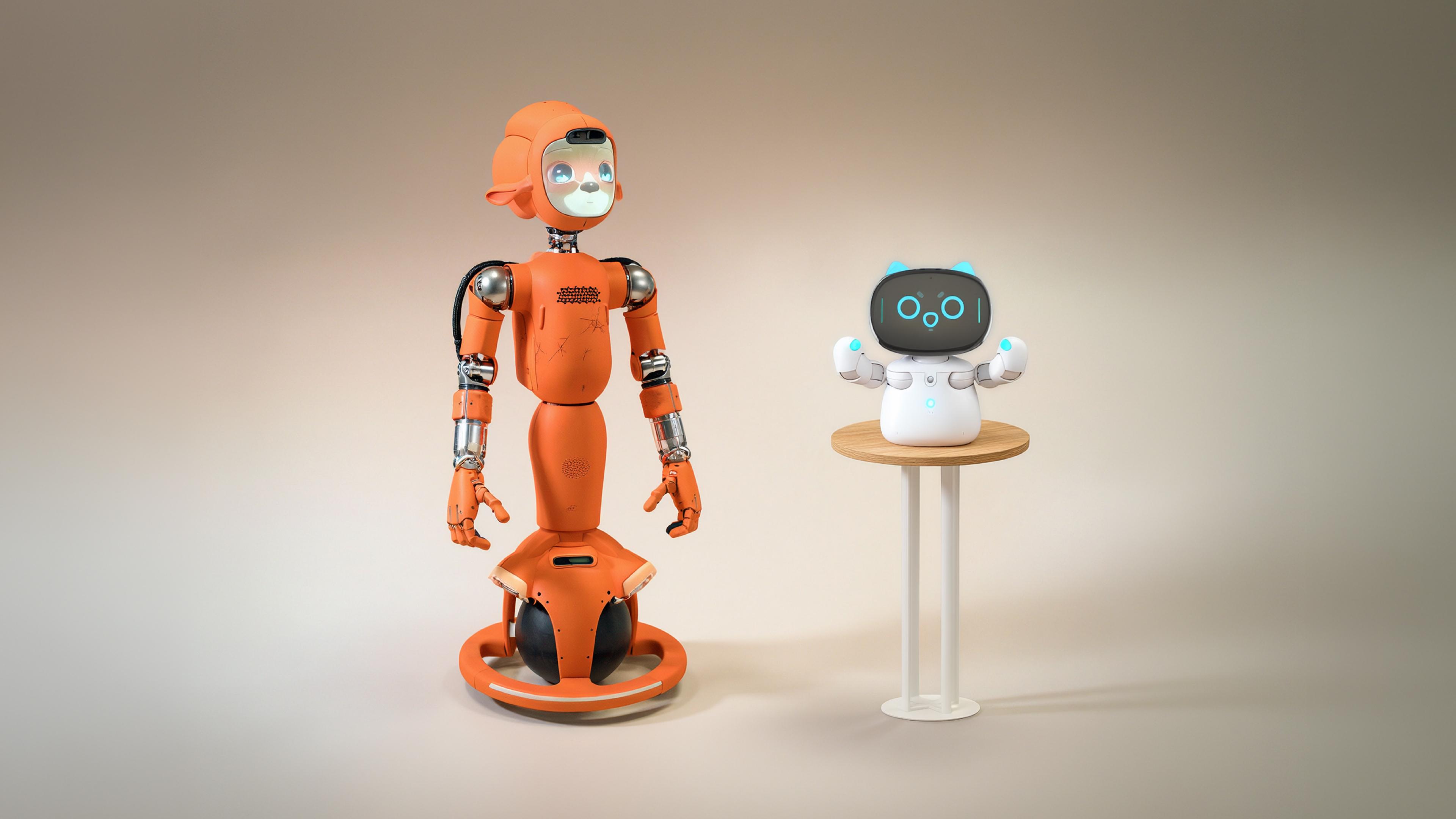
Mirokaï and NUWA Kebbi are both social interaction robots compared here on mobility, human–robot communication, programmable experiences, sensor capabilities and deployment.

October 27, 2026 by Business Desk Team
Introduction
Not all robots are designed for carrying boxes or doing industrial work. Others have a goal to make human encounters more attractive, informative and provide support in everyday service situations. This is the case for Mirokaï by Enchanted Tools and NUWA Kebbi.
Mirokaï provides expressive character design and independent navigation indoors, as well as the ability to handle objects in such settings as hospitals, hotels, airports and senior-care homes. NUWA Kebbi emphasizes interactive communication, entertainment, customer relations and programmable experiences. But the question is which robot will more naturally work for the desired service-not which appears more human.
At a Glance
| Metric | Mirokaï | NUWA Kebbi |
|---|---|---|
| Robot type | Mobile social service robot | Interactive companion, education and service robot |
| Best-fit use cases | Healthcare, senior living, hospitality, airports, retail and visitor guidance | Education, reception, customer engagement, companionship and interactive learning |
| Dimensions | Approx. 123 cm tall (published product information) | Exact dimensions depend on the model and generation |
| Weight | Approx. 29 kg (published product information) | Confirm the specific Kebbi model |
| Mobility | Self-balancing ball-based mobility; autonomous indoor navigation | Wheeled mobility, gestures and expressive body movements |
| Interaction | Multimodal AI, conversational interaction, expressive animated face and gaze | Voice interaction, expressive gestures, facial recognition and interactive applications |
| Manipulation / capacity | AI-assisted grasping and carrying for everyday service tasks; payload limit requires confirmation | Primarily communication, gestures and interactive tasks; no directly comparable payload figure established |
| Navigation / sensing | Environmental perception, scene understanding and adaptive indoor navigation | Camera-based perception and interactive sensing; autonomous navigation capabilities depend on model and application |
| Connectivity | Embedded cellular modem and Wi-Fi 6E | Wi-Fi and NUWA applications; connectivity requirements depend on the function |
| Charging / endurance | Autonomous docking and self-aligning charging; full runtime figures require confirmation | Battery runtime and charging details depend on the specific model |
| Distinctive capabilities | Naturalistic social interaction, autonomous mobility, object handling and service-oriented deployment | Programmable characters, educational content, coding tools, storytelling and interactive communication |
| Key limitation / caveat | Verify task-specific manipulation limits, deployment requirements and integration scope | Confirm the exact model generation, supported languages, software functions and network requirements |
Technical details depend on the generation and configuration of the product. Mirokaï and NUWA Kebbi are not replacements for all use cases. According to the producer of Mirokaï: autonomous navigation, perception of the environment and AI-assisted object handling; The producer of NUWA discusses conversational interaction, training and services.
How They Compare
Operational role: Mirokaï is optimized for public-facing locations, where its ability to welcoming visitors, give directions, answer questions and assisting with light service tasks can support staff. The NUWA Kebbi prioritises more interaction and communication, education, customer engagement and bespoke personalization. These priorities inform where in a location the robot would deliver the greatest impact.
Mobility and task execution: Mirokaï, by combining autonomous movement on a mobile base and AI enhanced grasping and manipulation, can be suitable for situations where moving between users and service points is part of the process. Kebbi, through wheeled navigation combined with expressive gestures and interactive applications, is suitable to support assisted activities and remote interaction. Neither of these are meant to carry out the tasks of the other without validating the required hardware and software.
Interaction and personalisation: Mirokaï promotes natural conversation, environment, expressive character design and contextual comments. Kebbi provides customisable personalities, voice interaction, learning games, storytelling and programming within the development ecosystem for NUWA. For a healthcare reception area, visitor guidance or hospitality environment Mirokaï mobile service features could be important. In a classroom, coding activity or interactive customer facing environment, application led relevance of NUWA Kebbi could be more appropriate.
Deployment & Integration: Mirokaï has been designed for passive autonomous charging and communications via cellular and Wi-Fi 6E. Kebbi has specific apps for programming, remote communication and content management. Buyers should evaluate network coverage, privacy, supported languages, existing software integrations, subscriptions to applications, and support prior to deployment.
Important Qualification
Mirokaï: This manufacturer is emphasizing on autonomous navigation, socialization and precise handling. Nonetheless, payload capacity, operating time and integration necessities are expected to be verified for the intended application. Its capabilities to pick up and carry objects do not demonstrate it as being adapted for harsh handling.
NUWA Kebbi: comes in multiple product generations and application configurations. Educational content, communication, languages and sensing features vary by model and market. It is helpful to specify the exact model-not just the family name-when asking about a product to determine what features are offered.
Both specs do not delineate an overall winner. Results must be compared by task, mode of operation, user profile and investment.
Summary
If your service involves autonomous indoor navigation, guiding visitors and opportunities for socialising or manipulating objects, Mirokaï is the right solution. If your service involves educational engagement, programmable interactions, conversation and guided learning, NUWA Kebbi is the most suitable.
Ultimately, choice should be driven by the end users of the robot, the task and environments in which it will be used, language support, connectivity, software package, service and maintenance availability. However, seeing a real workflow demonstration on-site is the best way to tell which platform performs better.
This comparison is based on ROBOT24.com market-research data records and manufacturer-reported specifications rather than controlled performance testing.
More articles on this topic
86 articles ReportRichtech DUST-E S vs. Gausium Phantas
 ReportEngineAI SE01 vs. AGIBOT RAISE A1ReportRichtech DUST-E S vs. KEENON KLEENBOT C20
 ReportRobint Rhino vs. OrionStar CleaniBot S55 Pro
 ReportNilfisk Liberty SC50 vs. PUDU CC1
 ReportHusqvarna Automower 305 vs. Robomow RK 1000
 ReportUnitree G1 EDU vs. Booster K1
 ReportDEEPRobotics LYNX M20 Pro vs. Unitree B2-W
 ReportECOVACS DEEBOT X8 PRO OMNI vs. eufy X10 Pro Omni
 ReportCleanfix S170 Navi vs. OrionStar CleaniBot K1
 ReportCleanfix S170 Navi vs. Nexaro NR 1700
 ReportReeman Nurse vs. Robotise JEEVES
BUSINESS NEWS WEEKLY LETTER
The Weekly Letter for Robotics Professionals, Summarizing the Most Important Industry Moves, Launches, Deals and Signals.