The Future of Robotics: 5 Trends Transforming the Industry in 2026
Robotics is entering a new era as AI, humanoids, connected systems, and human-robot collaboration transform industries and redefine the future of work.

July 28, 2026 by Carl
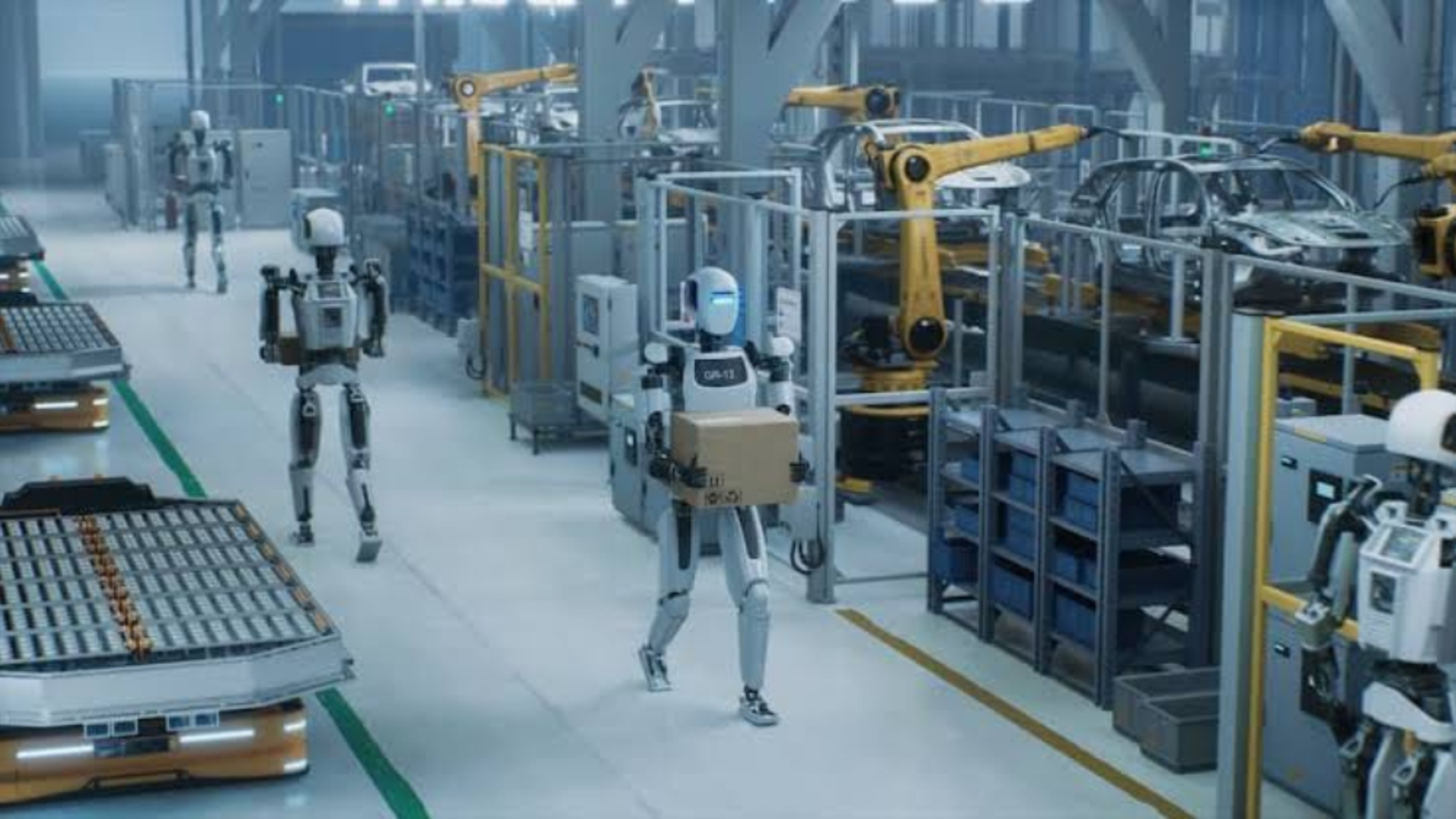
For decades, the idea of deploying robots has been mostly associated with super-controlled environments such as automotive factories and production lines. These robots are very well known to operate exceptionally when it comes to performing repetitive tasks. However, these machines depend heavily on programmed instructions and predictable surroundings. But now, the scenarios are changing. Thanks to Artificial intelligence (AI) and sensors, etc.
AI, machine learning, sensors, computer vision, and advancements in robotics software are all making robots capable of operating in unpredictable environments. Alongside, robots are entering a number of industries, including warehouses/factories and even healthcare, agriculture, logistics, and many more service operations.
The scale of adoption is already significant. As per the International Federation of Robotics (IFR), in 2024, around 542,000 industrial robots were installed globally. Yearly installations have remained above 500,000 units for four consecutive years. Now this shows that industrial automation is no longer a niche technology. Moreover, Asia alone saw 74% of new industrial robot deployments in 2024. This shows the region’s leading role in global adoption.
But here, it is worth mentioning that the next stage of robotics is not just about installing more and more machines. In fact, what matters more is that robots should be able to work smartly and connect with humans more safely. So, what are the things that would shape the future of robots? And how will these changes transform the way we work? Let’s find out!
AI is Making Robots More Capable
AI is indeed one of the most important parts of modern robotics. And that’s because artificial intelligence helps robots deal with information and uncertainty. One area where it is specifically useful is perception. For example, if a robot working in a warehouse needs to identify objects and figure out how to lift them up and place them on shelves. Now this is where AI comes into play. With the help of computer vision and AI models, robots will be able to process all the information rather than relying entirely on pre-programmed instructions.
AI can support decision-making, too. Let’s say an object suddenly appears in a robot’s way. Now AI is what will make the robot decide what to do according to the scenario.
Another area where AI proves to be super beneficial is natural-language interaction. New AI models, aka vision-language-action models, are being developed in order to connect vision, language, and physical interaction. These models are meant to help robots understand instructions and convert them into physical tasks.
But this technology is still in the process of development. For now, AI-powered robots are not capable of understanding and performing each and every kind of task. And their abilities depend on their hardware, training data, and surrounding environment.
Five Robotics Trends to Watch in 2026
IFR has identified 5 major trends shaping the robotics industry in 2026. Together, these trends show that the tech sector is now not limited to isolated machines only. In fact, it is moving towards more intelligent and connected systems.
AI-Powered Robots
Artificial intelligence is helping robots become more independent and capable of completing tasks with less human input. Analytical AI can study large amounts of data, identify patterns, and provide useful insights. In factories, this can help robots predict possible equipment failures, while in logistics, it can support path planning and resource allocation.
Generative AI is taking robotics beyond fixed, rule-based automation by helping robots learn tasks, create training data through simulation, and respond to natural language and vision-based commands. Agentic AI combines analytical AI with generative AI to support flexible decision-making and greater autonomy in complex environments.
IT Meets OT
Robots are becoming more flexible as Information Technology (IT) and Operational Technology (OT) increasingly work together. IT provides advanced data processing and analytics, while OT focuses on controlling physical machines and industrial processes.
Combining these areas allows robots to exchange information in real time, improve automation, and use data more effectively. This IT/OT convergence is an important part of Industry 4.0, helping connect digital systems with physical operations and allowing robots to respond more effectively to changing conditions.
Humanoids in the Real World
Humanoid robotics is developing quickly, with more companies exploring robots that can work in environments originally designed for people. The automotive industry has been an early adopter, while interest is now growing in manufacturing and warehousing.
However, humanoid robots must prove that they can perform reliably in real-world workplaces rather than remaining limited to prototypes and demonstrations. To compete with traditional automation, they must meet demanding requirements for cycle times, energy consumption, maintenance costs, safety, and durability.
Safe and Secure Robots
As robots become more common in workplaces and operate closer to people, safety and security are becoming major priorities. AI-driven autonomy makes robot safety more complicated because systems can make increasingly independent decisions, creating greater challenges for testing, validation, and human oversight.
At the same time, cloud-connected and AI-powered robots can face cybersecurity threats, including attacks on controllers and cloud platforms. Privacy is also a concern because robots may collect video, audio, and sensor data, while AI decisions can sometimes be difficult to explain.
Robots as Workplace Allies
Many employers are facing difficulties finding workers with the specialised skills they need. When positions remain unfilled, existing employees may have to work longer hours or take on additional responsibilities, increasing stress and fatigue.
Robotics and automation can help companies manage these challenges by handling routine, repetitive, or physically demanding tasks. A robot may handle heavy lifting or repetitive movement, while a human worker manages quality checks, complex decisions, or tasks that require flexibility.
This type of human-robot collaboration can reduce physical strain and allow employees to focus on more specialised responsibilities. However, involving workers in the adoption process is essential. When employees see robots as tools that support them rather than simply as replacements, cooperation and acceptance become easier.
The Real-World Challenge
Despite rapid progress, robots still face a major challenge: the real world is unpredictable. Factories and warehouses can be carefully organised, but objects may move, layouts can change, and unexpected situations can occur. A robot that performs perfectly in a controlled test may struggle when conditions change.
This is why advances in AI are important, but they are not a complete solution. Robots still need reliable hardware, accurate sensors, safe control systems, strong software, and extensive testing.
Another challenge is integration. Installing a robot is not always as simple as buying a machine and switching it on. Companies may need to redesign workflows, connect robots to existing systems, train employees, and establish maintenance procedures. As robotics becomes more advanced, the demand for skilled workers who can install, operate, program, maintain, and troubleshoot these systems is also likely to grow.
What Comes Next?
The future of robotics isn’t gonna be seen in the blink of an eye. In fact, the process would be gradual. This technology will develop through thousands of improvements in AI, hardware, sensors, software, connectivity, and system design. Industrial robots will continue to become more and more capable. Moreover, collaborative robots, aka cobots, will work more alongside humans.
AI-powered systems will become even better in terms of understanding their surroundings. And humanoid robots will be tested more in real-world environments. It’s not necessary that the most successful robots would be the ones that would be able to perform each and every task. The real test would be whether these robots can deliver consistent value in everyday environments.
More articles on this topic
60 articles ReportChina's Humanoid Supply Chain Moves Toward Industrial Production
 ReportChina Launches First National Standards for Humanoid Robots
 ReportCounterpoint Expects Work Applications to Drive 90% of Humanoid Shipments by 2030
 ReportUnitree’s 'Superman' Robot Claims to Outrun Usain Bolt
 ReportForeign Investors And Tech Executives Pay Up To $15,000 To Tour China’s Factories
 ReportCan Certified Robots Compete With China's Cheap Patrol Bots?
 ReportQuadruped Robots Are Becoming Big Business: Here’s Why The US Is Targeting Chinese Makers
 ReportHumanoid Robots Hit Mass Production
 ReportHow Robots Are Learning to Read Minds?
 ReportAre Humanoid Robot Videos Misleading Us?
 ReportHow Do Collaborative Robots Increase Workplace Safety?
 ReportHow to Train a Humanoid Robot for Hard Work
BUSINESS NEWS WEEKLY LETTER
The Weekly Letter for Robotics Professionals, Summarizing the Most Important Industry Moves, Launches, Deals and Signals.