The Hidden Data Problem Behind Humanoid Robots
The real problem behind the humanoid revolution is not the motors, not the sensors, and not AI models. The real problem is data. And there is a massive lack of it.

August 12, 2026 by Carl
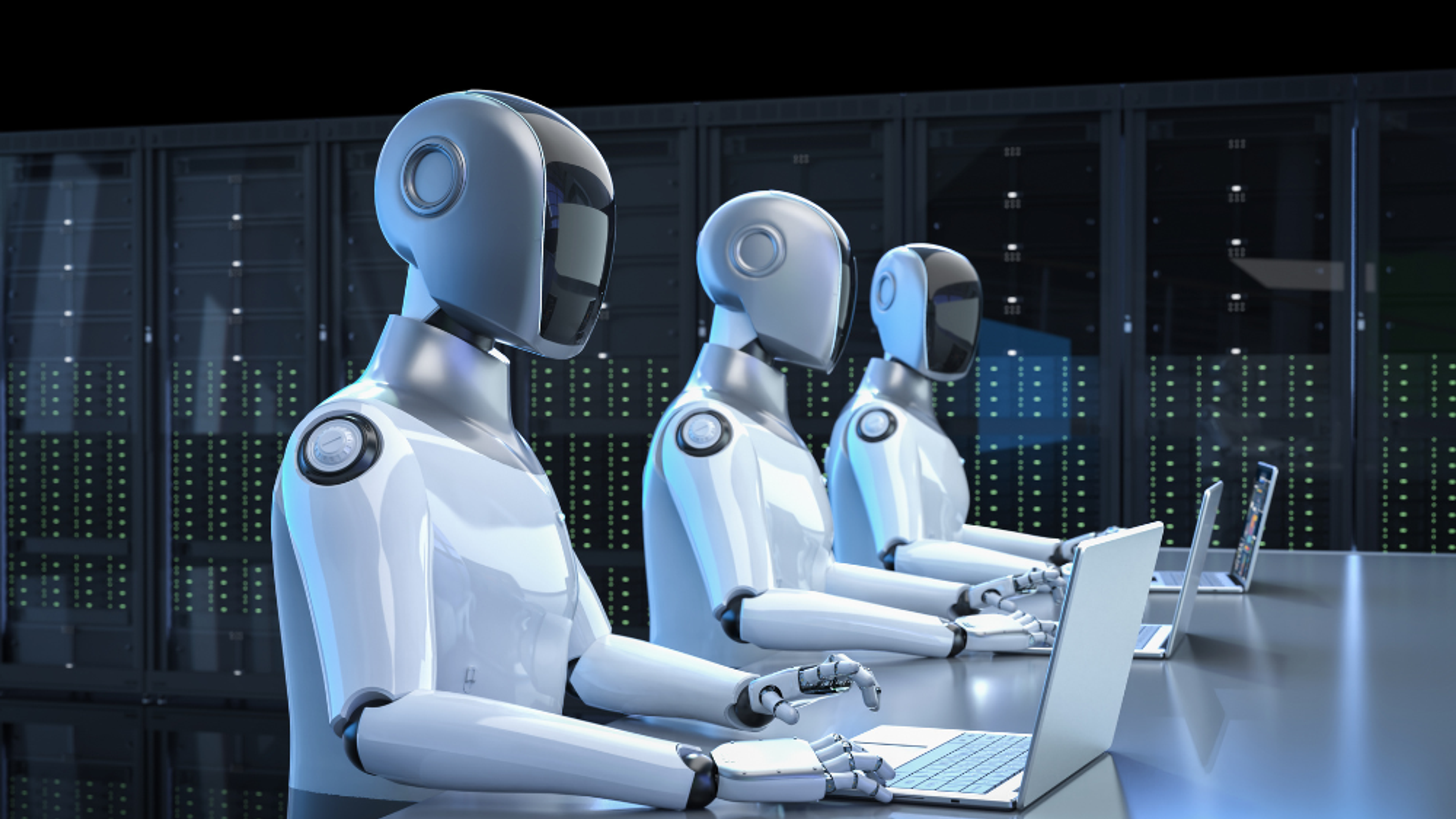
You must have seen the videos. A robot walks across a warehouse, picks up a package, flips it to scan the barcode, and places it on a conveyor belt. The robot does all this without making a mistake. It looks smooth. It looks ready. It looks like the future arrived early.
But here is another side of the picture too, and videos don’t show you that. It is all the effort that humans have put into making this possible. It is repetition and carefully recording movement data that took months or even years to make it happen. And you know what the reality is? Only a limited amount of data is available compared to what a robot needs. And this is the real problem behind the humanoid revolution. It is not the motors, not sensors, not AI models. The real problem is data. And there is a massive lack of that.
Why Data Matters More Than Hardware
Think about how robots work, and you may have circuits or gears in mind. You may think about complex programming. That used to be the right way to think about it. Not anymore.
Today’s humanoids learn the same way ChatGPT learned to write, by training on a huge amount of data.
Roboticists wanted to do something similar with physical movements. The idea was that if robots were given enough examples of humans picking things up, maybe robots could also learn to do these tasks.
Just as our language and words trained AI models, companies now believe that data on how people do different tasks will help improve robots.
There is just one problem. There is no internet-sized collection of data describing how humans move. The internet does not exist for movement. There is no giant database of millions of people picking up things or folding clothes. This is all recorded with exact joint angles and hand positions, along with force readings and camera angles. This is what a robot needs to learn from. That data has to be created from scratch. And creating it is slow, expensive, and, of course, a difficult process.
A robot can walk and lift boxes in a controlled warehouse. But things are not always predictable in a real facility. There can be an unexpected obstacle.
The important thing is whether the robot can adjust itself when these unexpected situations happen. That is what determines its real-world capability.
Demo vs. Reality
Here is a scenario that happens constantly in the robotics industry.
A startup builds a humanoid. They spend months training it to perform a pick-and-place task. In their lab, the robot does it perfectly. They film a video. The video goes viral. Investors are impressed.
Then the robot goes into a warehouse.
The floors are reflective. The lighting is different. The boxes have unfamiliar packaging. Some shelves are partially blocked. The robot fails. This happens not because its AI is broken, but because nobody trained it on those specific conditions.
It took the industry some time to understand this important point. When a robot enters the real world, the conditions are different. In these situations, the robot’s success rate can drop significantly.
This is not a rare case. It is the standard experience. According to recent research, the limitations of humanoids are less about AI and more about real-world conditions. This research identifies lack of data and sim-to-real failures as the main obstacles to deployment.
What Kind of Data Does a Robot Need?
This is where the data problem gets hard.
Training a language model is conceptually simple. You feed it text and make it learn patterns. Training a robot to interact with the world is completely different.
It requires synchronized data from cameras, depth sensors, LiDAR, joint encoders, force-torque sensors, IMUs, and fingertip tactile sensors.
Think about what that means for something as simple as picking up an egg.
- A robot needs to see the egg (cameras).
- It needs to know where its own hand is in space (joint encoders).
- It needs to feel how much force it is applying so it does not crack the egg (force and tactile sensors).
- It needs to know its own balance and orientation (IMU).
- All of these data streams have to be recorded simultaneously and perfectly synchronized.
Now multiply that across thousands of different objects and dozens of environments, along with different lighting, angles, and people handing things over in different ways.
And then there’s the two-handed problem. In many things humans do, both hands work together.
For robots, this kind of bimanual manipulation is difficult.
It needs to understand:
- How both hands should coordinate.
- How much force the hands should use.
- If an object slips or something goes wrong, how the robot should recover.
So the robot doesn’t just need data about the final position. It also needs data about the entire movement, coordination, and how to recover from mistakes.
The Simulation Trap
When researchers realized that data collection is very hard, many of them started using shortcuts. They started training robots inside computer simulations. The benefit of simulations is that they are faster than real time. You can generate millions of scenarios. And, of course, skip the use of expensive hardware.
But the problem is that the real world doesn’t work according to your simulations.
A simulation can never predict how different things will behave in the real world. That’s why robots trained in simulations can run into problems when they are deployed in the real world. They may even fall while walking. This is called the “sim-to-real gap.”
For humanoids, this gap is even bigger compared to wheeled robots or fixed arms. Because even a small error across their body can affect one another.
The Human Teachers Behind the Robots
Simulation alone isn’t enough. So the industry has started using a labor-intensive but effective solution. Humans train robots by showing them examples. This process is called teleoperation.
In this process, a human operator uses a VR headset or special controllers to remotely control the robot. They teach the robot how to perform different tasks. Every movement of the robot is recorded. The robot’s AI then learns from these recordings. Basically, the robot learns the technique the way the human performed the task.
When teleoperation is done properly, it provides high-quality data. The robot’s every movement and position, along with force readings and camera frames, can be recorded at the same time.
But the problem is that teleoperation is difficult to scale up.
A skilled teleoperator can produce roughly 5 to 50 episodes per hour, depending on how complex the task is. And as the operator gets tired, the quality of the data also starts to decrease.
A robot usually needs thousands of demonstrations to reliably learn a new skill.
So the problem is: one operator + one robot = only a few demonstrations per hour. At this speed, training robots at large scale becomes time-consuming and, of course, expensive.
China’s Data Factory Solution
This issue was addressed by China. They came up with an idea and hired thousands of workers so they can train robots. They established training centers, and the interesting thing is that many are backed by the government.
At a similar center in Hubei province, nearly 100 robots practice movements. It includes folding clothes and ironing, along with wiping the tables. And all of this is controlled by human operators.
At China’s largest humanoid training center, 100 robots started training in October 2025. One robot generates approximately 4 hours of training data every day. This means that 100 robots together can complete at least 12,000 data collection tasks every day.
In China, this work is happening at a national level. In 2025, more than 40 government-backed training centers were established. A center in Zigong alone can generate 3 million high-quality data entries every year.
The workers training these robots are also becoming a new type of professional. Fudi Luo, who was previously an art teacher, now spends her days on a factory line teaching robots.
Her simple point was: in the beginning, the robot doesn’t know anything, so a human has to control it. When the human’s movements generate data, the robot learns from that data. Later, it can perform the task on its own.
But this work is quite repetitive. A typical working day involves repeating the same movements for up to 8 hours. The robot doesn’t feel tired, but the human worker does.
China accounted for 90% of global humanoid shipments in 2025. This can double to 28,000 units in 2026.
How Much Does This Cost?
Collecting data is expensive in a way that surprises most people outside the industry.
According to the Robotics Center of Silicon Valley, the cost of high-quality teleoperation data has come down quite a lot. In early 2024, the average cost was around $340/hour. And that had dropped to about $118 per hour by early 2026. That’s definitely progress. But the problem is still pretty big. Just think about it: if a robot needs 10,000 demonstrations just to properly learn one skill. And each demonstration takes a few minutes, then collecting training data for just one skill could cost hundreds of thousands of dollars.
That’s also why the AI data annotation market is growing rapidly. In 2025, the market was worth $4.89 billion, and it is estimated to reach $17.1 billion by 2030. Within this market, robotics is becoming one of the fastest-growing segments.
In 2025, investors put more than $6.1 billion into robotics. A significant part of this investment is going toward building data infrastructure for robots and solving this data problem.
The Privacy Problem
One important thing that many people ignore is privacy. Have you ever thought about what will happen if a robot starts to take your data and share it with someone you don’t know?
When these robots are deployed in homes or at offices, they start to collect data, and this, of course, includes sensitive information too. They see your home and hear what you speak, along with observing your routine tasks. They build detailed maps of your living space. This data is shared back with the company that built those robots. This data is used to train the robots for future versions. But isn’t it scary? Of course it is.
One example is 1X Technologies’ NEO robot. This robot needs to be controlled by an expert through teleoperation to teach a new task. What does that indicate? This shows that an unknown person is controlling the robot in your home. So where is the privacy?
Tesla has also made it clear that its Optimus is still in the learning and data collection phase.
Legal frameworks are still not developed or are keeping up with the pace of technology. The existing laws for privacy are mainly created around app use. These are not for the autonomous robots that collect your sensitive information.
Legal experts say that if a company has to deploy a robot in your home, it has to deal with 20 different state privacy frameworks. And the problem is that none of them is designed specifically for robots.
So What’s the Take On That
Humanoid robots are real. They walk. They pick things up. And they are being deployed in factories. The hardware has gotten very fast.
And behind all this, there is a challenge that is usually ignored. These robots need a large amount of data to be trained. And the industry has not yet gotten the solution for that.
Behind every robot you see, there is a lot of effort that has been put in by the experts. Thousands of hours of human demonstrations and teleoperations are involved. These workers repeat the process or movements again and again until the robot learns it fully.
That is the reason the companies that build and train those robots will decide how capable these robots will become in the future. This future is not being built in labs only. It is also being built in centers where a person spends 8 hours a day teaching a robot how to fold a shirt. And interestingly, these trainers do all these movements patiently, over and over again.
More articles on this topic
60 articles ReportChina's Humanoid Supply Chain Moves Toward Industrial Production
 ReportChina Launches First National Standards for Humanoid Robots
 ReportCounterpoint Expects Work Applications to Drive 90% of Humanoid Shipments by 2030
 ReportUnitree’s 'Superman' Robot Claims to Outrun Usain Bolt
 ReportForeign Investors And Tech Executives Pay Up To $15,000 To Tour China’s Factories
 ReportCan Certified Robots Compete With China's Cheap Patrol Bots?
 ReportQuadruped Robots Are Becoming Big Business: Here’s Why The US Is Targeting Chinese Makers
 ReportHumanoid Robots Hit Mass Production
 ReportHow Robots Are Learning to Read Minds?
 ReportAre Humanoid Robot Videos Misleading Us?
 ReportHow Do Collaborative Robots Increase Workplace Safety?
 ReportHow to Train a Humanoid Robot for Hard Work
BUSINESS NEWS WEEKLY LETTER
The Weekly Letter for Robotics Professionals, Summarizing the Most Important Industry Moves, Launches, Deals and Signals.