What are Grocery Store Robots and How Do They Work?
From inventory scanning to floor cleaning, grocery store robots automate repetitive tasks while allowing employees to focus on customer service and higher-value responsibilities.

August 5, 2026 by Carl
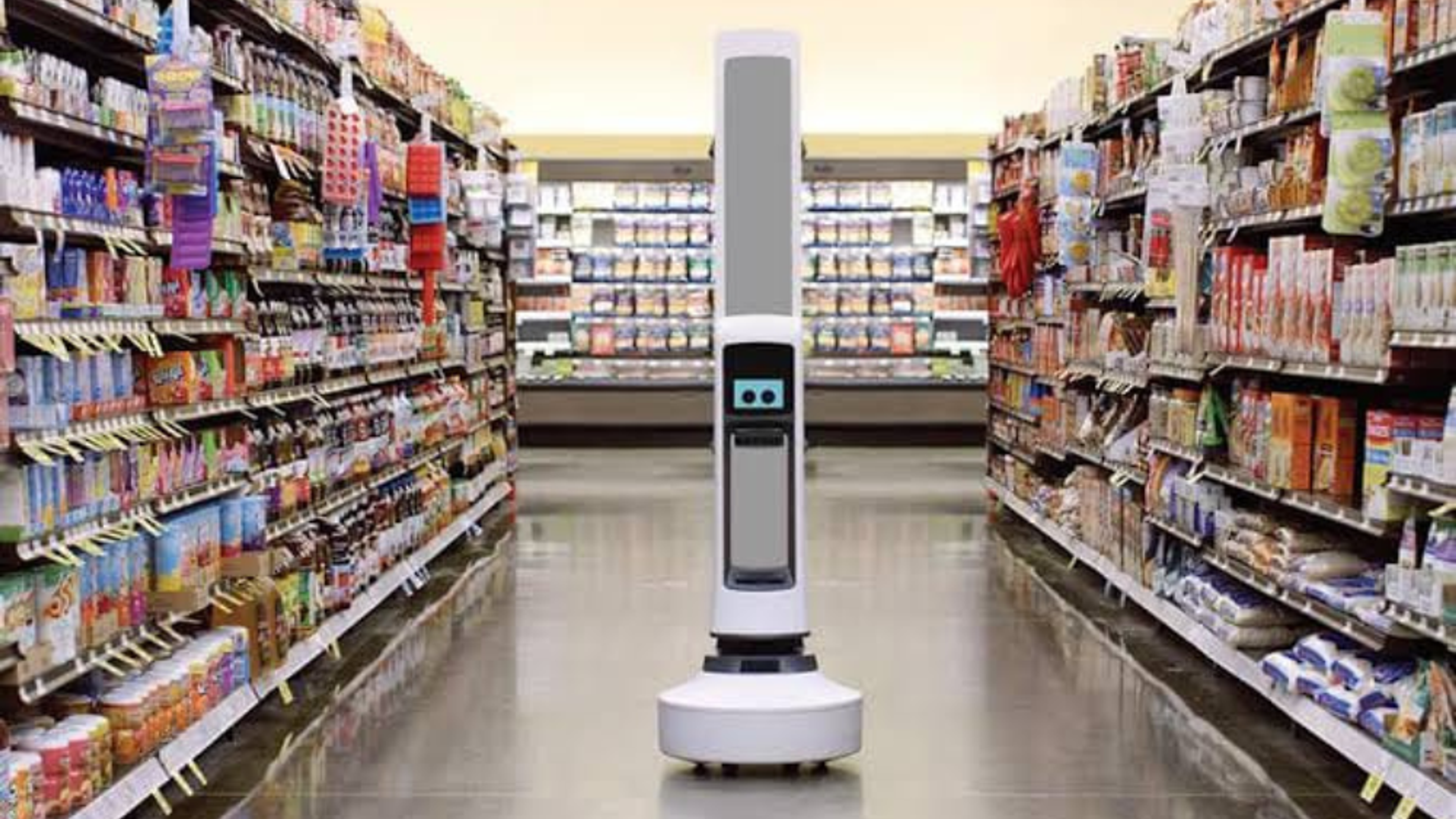
What if the next time you visit a grocery store, you are welcomed by a robot? Sounds interesting, right? Well, in today’s world, hundreds of grocery stores worldwide have actually deployed robots for a variety of purposes.
Customers always expect a smooth experience when they visit a grocery store. And to achieve that, it is very important for store owners to keep the shelves fully stocked and properly arranged. Moreover, they must prioritise store floors’ cleaning and providing the best customer service. However, while managing all this, store owners also need to control labor costs. As these challenges are growing, a number of retailers are turning to automation to improve efficiency.
Some of the examples include Marty the Robot looking for spills or other safety hazards at Stop & Shop or Giant. Meanwhile, the Tally robot is used to scan shelves and detect out-of-stock items or pricing errors. Some retailers also use Badger Technologies’ autonomous robot that assists with inventory monitoring and hazard detection so that the store runs smoothly.
However, one thing worth mentioning here is that these robots are not deployed to completely replace humans. Rather, these robots are designed to assist them. The tasks that are time-consuming and repetitive are performed by robots. Meanwhile, human workers focus more on performing responsibilities that require human judgment.
What are Grocery Store Robots?
Grocery store robots are autonomous or semi-autonomous machines that are designed to help with day-to-day retail operations. These robots can safely walk/move in stores and perform different types of tasks. They work alongside humans, making sure that they do not cause any kind of disruption for customers.
These robots can clean floors and transport inventory from one place to another. They can also help with order fulfillment and product promotion. Some of these robots are even designed to guide customers within the store. Each robot is built to automate a particular workflow. Deploying these robots improves stores’ productivity and helps maintain consistent quality.
Grocery store robots are not the same as those traditional robots that can only work in controlled environments. These robotic systems can operate in busy public places. They know how to make decisions in case a shopper or a shopping cart comes in their way.
How Do Grocery Store Robots Work?
Modern grocery store robots combine advanced hardware and intelligent software. Together, these 2 make the robots capable of performing tasks efficiently.
Artificial Intelligence
Artificial Intelligence (AI) is what makes the robot capable of understanding its environment. Rather than following fixed instructions, AI-powered robots can identify obstacles and make decisions accordingly.
Sensors and Cameras
There are many grocery store robots that have sensors and cameras installed. They help robots monitor their surroundings and detect shelves, walls, shopping carts, customers, and other obstacles.
LiDAR and Smart Navigation
A lot of grocery store robots use LiDAR (Light Detection and Ranging) technology. This technology uses laser pulses and creates a 3D map of the environment. LiDAR, when combined with intelligent navigation software, lets the robot figure out its exact location and plan the best possible routes.
Simultaneous Localization and Mapping (SLAM)
There are many autonomous grocery robots that use Simultaneous Localization and Mapping (SLAM) technology. SLAM allows robots to make a digital map of the store and track their location. Thanks to this technology, robots can continue performing their respective tasks even if the store’s layout changes or if the items get shifted to another place.
Cloud Connectivity and Fleet Management
Many robotic systems connect to cloud-based management platforms. Using a centralized dashboard, store managers can monitor a robot’s performance and schedule tasks accordingly.
Then comes fleet management software. This technology comes in handy when there is more than one robot working in a store at the same time. The software coordinates the robots’ activities so that there are no issues even when the store is crowded.
Why Grocery Stores are Adopting Robotics
There is not a single reason why grocery stores are opting for robots. Rather, there are many. First things first, the labor shortage. Store owners are having a hard time finding employees who perform repetitive tasks. Moreover, the online shopping trend has also increased nowadays. This trend requires fast order fulfillment and efficient internal workflows. Deploying a robot for this purpose surely speeds up the process.
Customers also prefer those grocery stores that are always clean and tidy and have properly stocked shelves. To fulfil all these expectations while keeping labor costs under control, most retailers opt for robots.
Robots help overcome all these challenges and perform tasks more consistently. They also reduce workload and allow human employees to focus more on customer satisfaction.
Types of Grocery Store Robots
Grocery stores around the globe use different kinds of robots. One robot can’t perform all types of tasks. In fact, each robot is designed for a particular set of activities.
Autonomous Floor-Cleaning Robots
Autonomous floor-cleaning robots, as the name suggests, are responsible for the store’s cleaning. They sweep/scrub and vacuum the floor throughout the day. Now you must be wondering that these robots might disrupt customers. But that’s not actually true. Thanks to the sensors and navigation technologies. These robots move safely around customers and maintain cleaning standards of the stores.
Internal Transport and Delivery Robots
Internal transport and delivery robots carry items from one place to another within the grocery store. These robots automate the repetitive transportation tasks. This reduces unnecessary walking for employees, along with quickening the process of restocking.
Promotional and Customer Engagement Robots
Promotional robots interact with the shoppers. These robots show digital advertisements and highlight ongoing discounts in the store. They also prove to be very beneficial when it comes to introducing newly launched products. And if a customer needs guidance to find a particular section of the store, these robots do guide them, too. Since these are easily moveable, this feature helps the promotions appear more visibly to the customers. Overall, these robots make the shopping experience way more engaging and interesting.
Inventory Monitoring Robots
Inventory monitoring robots scan store shelves using cameras and computer vision. They check if shelves need to be restocked or if there are any pricing errors. These robots provide real-time inventory data. This data helps employees restock the shelves as soon as possible. Doing so significantly improves customers’ shopping experience.
The Bottom Line
Grocery store robots have become a major part of modern retail. These robots are very helpful when it comes to automating tasks like inventory monitoring or floor cleaning, order fulfillment, or transportation of products from one place to another. Rather than replacing human employees, grocery store robots let them focus on other important duties that require human skills.
As AI keeps advancing, the future of grocery store robots seems even brighter. With improvements in technologies including computer vision and predictive analytics, robots will be able to do each and everything way more efficiently. A lot of retailers are expected to deploy connected fleets of robots that will jointly perform different store operations in a better way.
For grocery retailers, deploying robots isn’t just about adopting new technology. In fact, it’s a step forward to make more accurate and customer-focused stores. All those businesses that are investing in automation today have a higher chance of seeing an improvement in productivity and a higher possibility of overcoming operational challenges.
More articles on this topic
60 articles ReportChina's Humanoid Supply Chain Moves Toward Industrial Production
 ReportChina Launches First National Standards for Humanoid Robots
 ReportCounterpoint Expects Work Applications to Drive 90% of Humanoid Shipments by 2030
 ReportUnitree’s 'Superman' Robot Claims to Outrun Usain Bolt
 ReportForeign Investors And Tech Executives Pay Up To $15,000 To Tour China’s Factories
 ReportCan Certified Robots Compete With China's Cheap Patrol Bots?
 ReportQuadruped Robots Are Becoming Big Business: Here’s Why The US Is Targeting Chinese Makers
 ReportHumanoid Robots Hit Mass Production
 ReportHow Robots Are Learning to Read Minds?
 ReportAre Humanoid Robot Videos Misleading Us?
 ReportHow Do Collaborative Robots Increase Workplace Safety?
 ReportHow to Train a Humanoid Robot for Hard Work
BUSINESS NEWS WEEKLY LETTER
The Weekly Letter for Robotics Professionals, Summarizing the Most Important Industry Moves, Launches, Deals and Signals.