What Does It Take to Deploy Humanoid Robots in the Real World?
Humanoid robots could transform industries, but their success depends on reliable performance, dexterity, safety, efficient energy use, and economic value.

July 23, 2026 by Carl
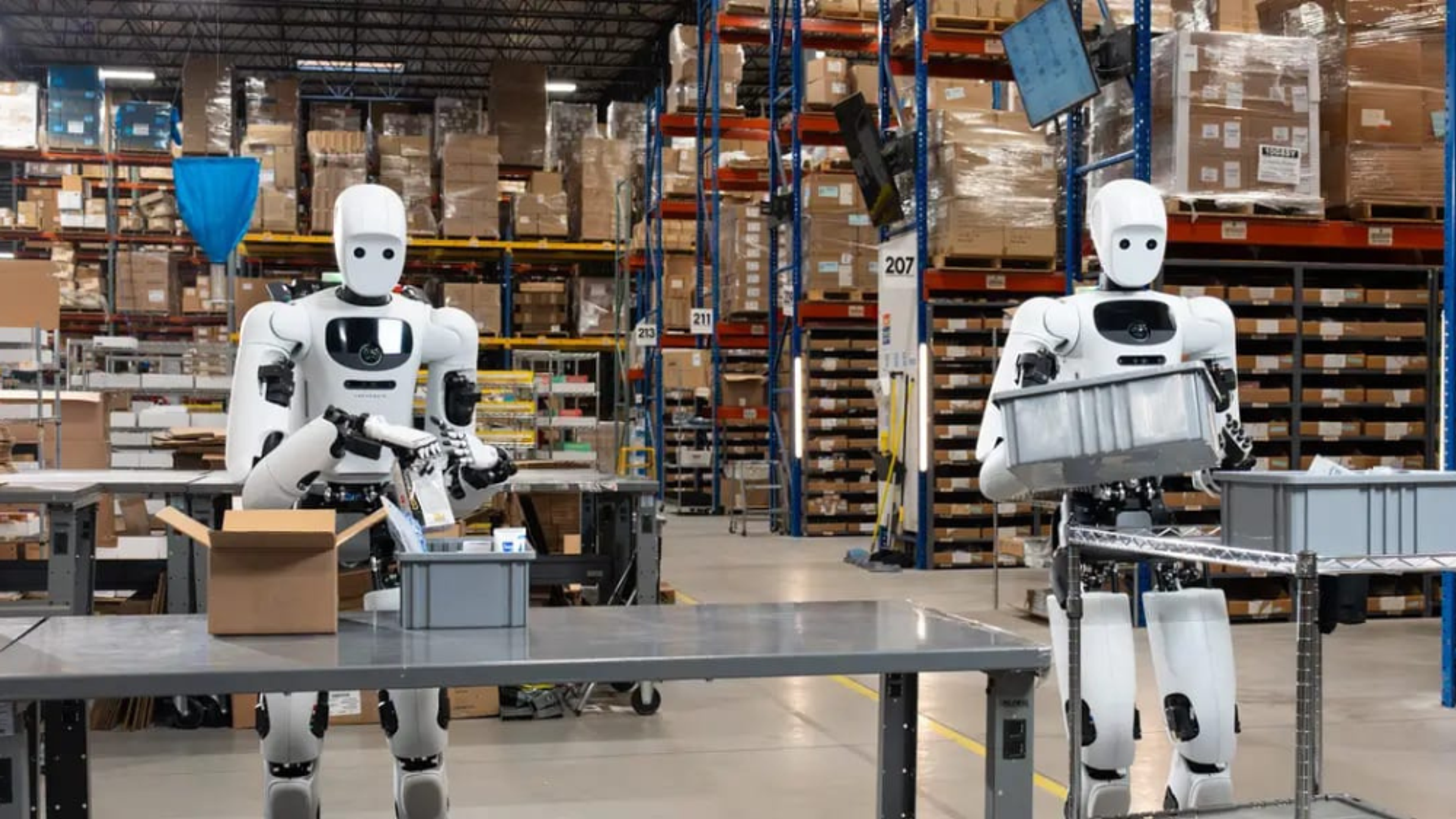
There was a time when the idea of deploying humanoid robots sounded sci-fi. But now the concept has moved way beyond research laboratories, and a number of big companies have actually started deploying these robots in their factories/warehouses.
Tech giants are developing robots that can walk and handle different kinds of objects. These robots can also understand instructions and perform tasks in environments that were actually built for us humans. However, there’s a major concern here. Simply demonstrating that a robot can perform or even complete a particular task is one thing. But proving that it can do that on a daily basis and that too safely/reliably and economically is a completely different thing.
That’s exactly why the next stage of humanoid robotics will not be defined by impressive demonstrations only. In fact, it would depend on whether these machines can become dependable tools that have the ability to solve real business problems. And in order to make it possible, industries need to overcome challenges involving artificial intelligence, hardware, safety, energy, reliability, manufacturing, and economics.
From Demos to Useful Machines
The biggest shift in humanoid robotics is moving from what a robot can do once to what it can do consistently. The robot must be able to repeat the task thousands of times, deal with unexpected situations, recover from errors, and continue operating without frequent human intervention.
This is specifically crucial in factories as well as warehouses. And that’s because these are the places where even a minor downtime can cause significant financial consequences. Reliability, battery life, maintenance costs, and consistent performance are therefore becoming just as important as AI capabilities. The International Federation of Robotics has highlighted reliability and efficiency as key requirements for humanoids competing with established automation technologies. The industry must prove that humanoids are not simply technologically possible but commercially useful.
AI Must Understand the Real World
Traditional AI works mainly with digital information. Humanoid robots face a bigger problem. Wondering what that is? Well, they need to understand as well as physically interact with the real world. And we are all well aware of the fact that there are tons of variations in each and every field in the physical world. A robot needs to recognize the objects and its surroundings. It is also supposed to maintain balance and respond to changes accordingly. Moreover, it must also understand that the same instruction can require different actions as per the environment.
For example, “move this box” sounds simple. But the robot must determine which box the person means, understand where it should go, identify the safest route, grasp it correctly, avoid obstacles, and release it without damaging the contents.
This is where physical AI and vision-language-action models are becoming increasingly important. The goal is to create systems that connect perception, reasoning, and action rather than relying entirely on pre-programmed instructions. NVIDIA’s current robotics ecosystem, for example, emphasizes workflows that combine data collection, simulation, model training, evaluation, and deployment to help bridge the gap between AI development and physical robots. However, better AI alone will not solve every problem. Robots still need reliable sensors, actuators, computing hardware, and mechanical systems capable of executing decisions accurately.
Dexterity Remains a Major Challenge
Walking is one of the most visible features of a humanoid robot, but hands may ultimately be more important. Human environments contain an enormous variety of objects. People pick up fragile packages, turn small knobs, open doors, use tools, and handle objects that were never designed specifically for robots. Humanoid robots therefore need advanced hands and whole-body control. They must be able to apply the right amount of force, adjust their grip, and coordinate their arms, hands, torso, and legs.
Research into dexterous manipulation is increasingly focused on learning from human demonstrations, teleoperation, simulation, and reinforcement learning. However, building systems that can generalize these skills for unfamiliar objects and situations is still a major research challenge. The real breakthrough will come when robots can learn new physical tasks without requiring engineers to manually program every movement.
Safety Must Come First
It is worth noting that a humanoid robot that operates alongside humans is way more different than the one that operates inside a controlled industrial cell. Humanoids are expected to share spaces with workers, navigate changing environments, and potentially operate near moving equipment. This creates a demanding safety problem.
A safe humanoid must understand where people are, predict their movements, detect unexpected obstacles, and respond appropriately when something goes wrong. Safety also needs to exist at multiple levels—from mechanical design and emergency stops to sensors, software, AI decision-making, and cybersecurity.
Improved Batteries and Hardware are Essential
Humanoid robots require significant energy to move their bodies, maintain balance, process sensor data, and perform physical tasks. That creates a practical limitation. A robot that spends a large portion of its working day charging is unlikely to deliver enough value for many industrial customers.
The industry therefore needs better batteries, more efficient motors, lighter materials, improved power management, and more efficient computing. At the same time, robots must become durable enough to withstand repeated movements and physical stress.
Scaling Humanoid Production
Building a handful of advanced prototypes is one thing. However, manufacturing thousands or even millions of reliable humanoid robots is something totally different. The industry will need standardized components, dependable suppliers, automated production processes, quality control systems, and efficient repair networks. Every robot also needs to be consistent. If 2 machines are built to perform one task, they must behave in a predictable manner. Plus, their maintenance requirements should also be similar.
The wider robotics industry already provides a foundation for this expansion. Sources suggest that over the past few months, hundreds and thousands of industrial robots have been installed globally. However, humanoid robots introduce an additional complexity. And that’s because these types of robots combine mobility, manipulation, sensing, and AI into a single platform.
The Economics Must Make Sense
A very important question that arises here is whether companies are actually saving money by deploying humanoids. Although a humanoid robot can be flexible, this flexibility is not something that guarantees strong business growth, right? Humanoids will prove to be super beneficial where their human-like form will provide a genuine advantage. Especially in those places that are already designed for humans and where changing infrastructure would be expensive.
Simulation Can Speed up Progress
We all know that training robots in the real world is super expensive as well as slow and possibly dangerous, too. And that’s where simulation makes the difference. So what simulation does is it provides a way to expose robots to thousands or millions of scenarios before they face these in reality. Now this approach, of course, saves a lot of cost as well as time.
The industry is increasingly combining simulation with real-world demonstrations and robot data. This creates a development loop where robots learn in virtual environments and are then tested in the real-world. And then the data generated is used to improve future models. The more the simulations will feel like the real world, the quicker the developers will be able to move from experimentation to deployment.
The Path Forward
Humanoid robots won’t enter the real world in the blink of an eye. In fact, the path forward is gonna be gradual and will be carried out step by step. For now, factories and warehouses are starting points for these robots, where they can start with repetitive tasks or the ones that are physically demanding. And as these robots’ reliability will improve, they’ll be able to perform even more complex tasks.
The data generated over time through successful deployment will prove to be super beneficial for improving AI models. This will, of course, help the robots perform more and more tasks. The idea here is not just to develop lots of human-like robots. In fact, the goal is to create such machines that are reliable and can be trusted in human environments.
More articles on this topic
60 articles ReportChina's Humanoid Supply Chain Moves Toward Industrial Production
 ReportChina Launches First National Standards for Humanoid Robots
 ReportCounterpoint Expects Work Applications to Drive 90% of Humanoid Shipments by 2030
 ReportUnitree’s 'Superman' Robot Claims to Outrun Usain Bolt
 ReportForeign Investors And Tech Executives Pay Up To $15,000 To Tour China’s Factories
 ReportCan Certified Robots Compete With China's Cheap Patrol Bots?
 ReportQuadruped Robots Are Becoming Big Business: Here’s Why The US Is Targeting Chinese Makers
 ReportHumanoid Robots Hit Mass Production
 ReportHow Robots Are Learning to Read Minds?
 ReportAre Humanoid Robot Videos Misleading Us?
 ReportHow Do Collaborative Robots Increase Workplace Safety?
 ReportHow to Train a Humanoid Robot for Hard Work
BUSINESS NEWS WEEKLY LETTER
The Weekly Letter for Robotics Professionals, Summarizing the Most Important Industry Moves, Launches, Deals and Signals.