What Happens When a Humanoid Robot Goes Offline?
Robots are no longer just props in movies. Now they are working in warehouses and factories. You will see them cleaning houses and serving in restaurants.

August 13, 2026 by Carl
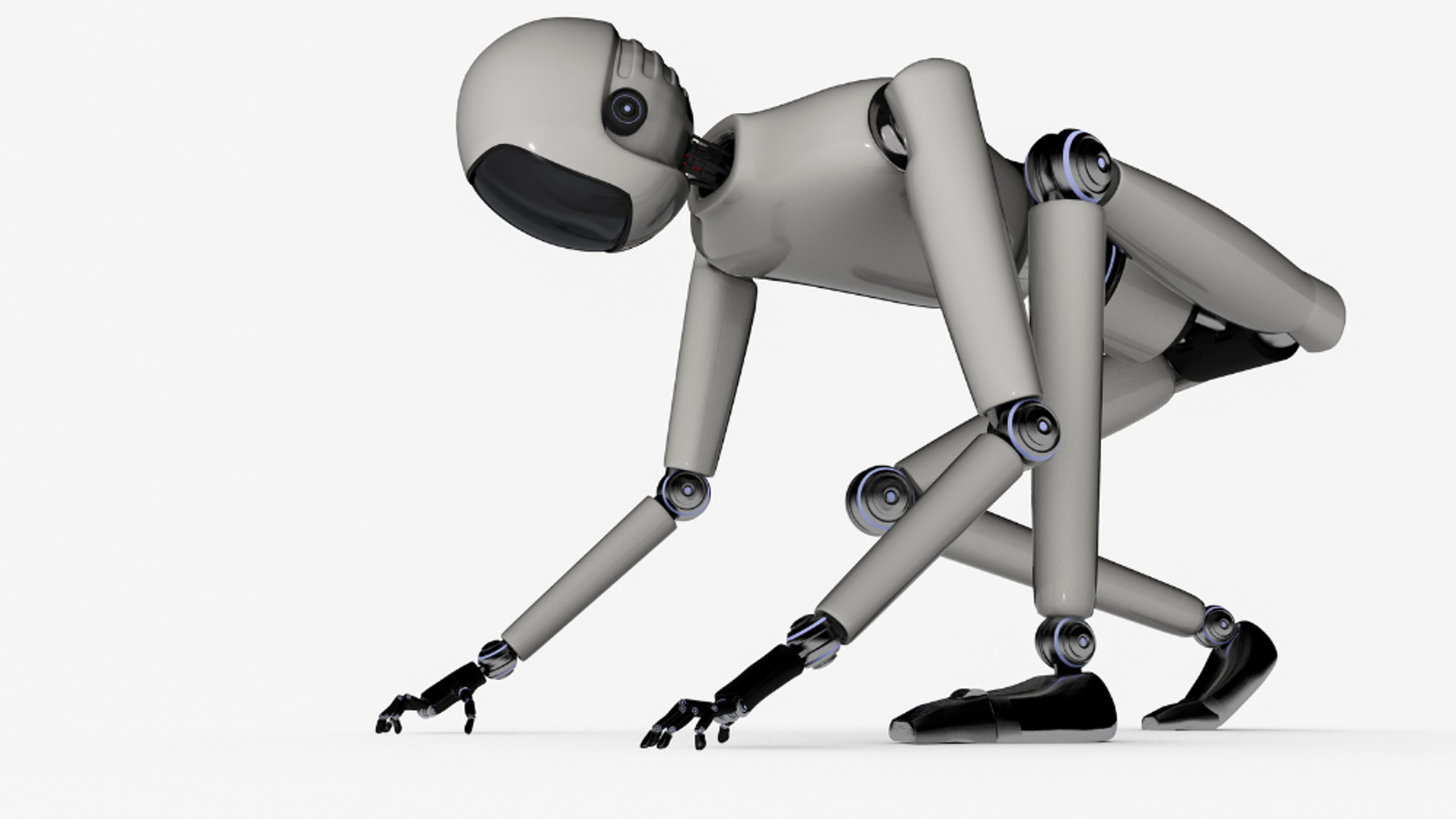
Robots are no longer just props in movies. Now they are working in warehouses and factories. You will see them cleaning houses and serving in restaurants. Big names like Tesla and Figure AI are now making the machines that can walk on two legs and follow instructions. But there are many questions that must be addressed fully. Among those questions is: what happens when one of these suddenly goes off?
It may sound simple for a normal person. You may think that it will stop just like any other machine, but that is not the case. This is something different. You might think that, just like a phone when its battery dies, the robot will simply stop. If a humanoid goes offline, it is something dangerous and complicated. Let’s see how.
Why It’s a Big Deal for Humanoids
A regular robot that works in a factory just freezes soon after it loses power. This is acceptable because it is bolted to the floor. On the other hand, humanoids are different. They usually have to carry objects and walk around. When they lose power, they usually don’t have anything to hold up. Because of that, a robot can’t manage itself and falls.
Research on safe-stoppability makes this clear. A humanoid doesn’t act like a fixed industrial robot. It cannot simply cut power if an emergency happens. If an abrupt power cut occurs, the robot loses balance and falls. This may hurt the people nearby and, of course, damage the machine itself.
A humanoid needs constant power just to stand still. Its brain is continuously sending signals to several joints and motors to keep the body balanced. The moment that stops, gravity takes over.
Ways a Humanoid Can Go Offline
Think about a robot going offline. Your first thought might be that the battery has run out. No, this is not the only case a humanoid can go offline. There are many ways in which a robot can suddenly stop working.
1. Battery Running Out
This one is the most common issue. Most robots can only run for 2 to 4 hours on a single charge. Agility Robotics’ Digit runs for about 90 minutes before it needs a recharge. It also works in Amazon warehouses. There, it is operated in 30-minute intervals to manage its battery life. No current humanoid can work a full 8-hour shift without stopping to recharge.
When the battery gets critically low, a robot should slowly move to a safe resting position. But if it runs out of power suddenly mid-task – say, while carrying something heavy – the results can be messy.
2. Software Crash
It is widely known that the software on which robots run is extremely complex. They use AI to see their surroundings and plan accordingly. This also helps them make decisions. If any part of this software crashes, the outcome can be terrible. It can make the robot freeze or behave differently.
The current safety standards for robots say that if this occurs and a robot loses its connection, it must move itself into a safe state first. For example, if a robot gets jammed suddenly or loses its arm, it must make itself safe first. But not all robots are designed like this. They cannot handle crashes on their own.
3. Lost Internet or Cloud Connection
Lost connection is another major issue. Many robots depend on cloud servers, which help them think and make decisions. If a connection is lost or a server goes down, the robot won’t be able to process the information. It will not follow the commands. And above all, it will lead to serious coordination problems.
Some environments create Wi-Fi connection delays of over 180 milliseconds. This is long enough to cause a wrong move.
Some companies are working on private 5G networks specifically for robots to cut that delay down to 10-20 milliseconds.
4. Emergency Stop (E-Stop)
This is intentional. Every humanoid is supposed to have an emergency stop button. A human supervisor can hit it if something goes wrong.
But here is the tricky part. On a normal factory machine, hitting the stop button just cuts the power. On a humanoid, that would cause it to collapse. So engineers have to design special “safe stop” routines. That means a robot has to keep some power so that it can bring itself to a stable position before shutting down.
Tau Robotics is a company that works in home services. They have robots that perform various tasks. They handle this problem by having human technicians who monitor the robots all the time. If anything goes wrong, the technicians trigger the safety mode. This makes the robot lie down on the floor in a controlled way.
What Physically Happens When It Falls?
Falls are a serious problem in robotics labs. Engineers have been testing what happens when robots fall. And the results are not good enough.
Recent experiments have revealed a lot. If something bad happens, unprotected robots suffer cracked body panels and damaged circuit boards, along with broken joints after just one or two falls. With special protective materials, robots survive more than thirty consecutive falls without serious damage.
This tells us something important. Falling is still a real danger. Manufacturers are figuring out how to handle it.
What Happens to the Work?
When a humanoid stops mid-task, whatever it was doing just stops there. If it was carrying boxes from one place to another, those boxes may drop. If it was assembling something, that work may need to be redone. If you think that these robots act just like smartphones, where your progress is automatically saved, then you are wrong. Humanoids don’t work that way.
If they were performing a complex job and a crash happens, there is no way to tell them to pick up exactly from where they left off, at least not yet. So what is the solution? Just like other things, a human operator needs to step in and reset everything.
This is one of the reasons companies running robots in real facilities still keep human supervisors nearby at all times. The technology is impressive, but the backup plan is still a person.
Remote Takeover
Some companies have found an unusual solution. When the robot gets confused, or something goes wrong, a human operator takes over remotely.
1X Technologies ships its product with a feature called “Expert Mode.” The CEO openly admitted that early buyers must accept that human teleoperators will be involved. These are the real people wearing VR headsets sitting somewhere in California. They sometimes take control of the robot inside your home. At launch, the robot is around 60-70% autonomous. In simple words, roughly one-third of the robot’s work may still be handled remotely by a human.
For now, it seems like a smart workaround. Because when a robot fails to perform a task, a human operator steps in to help. But this is not the ultimate solution. It also raises certain other questions. Like, if a human remotely controls a robot inside your home, what will happen to your privacy? Also, if the robot company shuts down, what will happen to the robot? These are questions, along with several others, that need proper answers.
What If the Entire Company Shuts Down?
This is a question that is not asked enough.
Right now, robots mostly depend on their manufacturer’s servers. If a company goes bankrupt or shuts down those servers, the robots can stop working entirely – even if the hardware is in perfect condition.
The robot industry is already going through a shakeout in 2025 and 2026. Many smaller companies that raised a lot of money early are now struggling. Industry observers have noted that companies with stalled funding and poor sales are maintaining slow operations while waiting for the end. As the industry matures, more closures are expected.
If a company closes, customers who paid $20,000 or more for a robot could be left with an expensive machine that no longer works. And of course, there will be no way to get support.
Privacy and Security
There is another kind of “going offline” that is worth knowing about. This is not a crash, but a hack or a forced shutdown by a government.
In July 2026, the US government took major action by banning new imports of foreign humanoids due to security concerns. The Federal Communications Commission cited that internet-connected robots could collect sensitive data and send it to servers overseas.
A security researcher earlier discovered a backdoor in a popular robot’s firmware. This backdoor would automatically start every time the robot was turned on.
The robot connected to servers in China. And if someone had the right access key, they could completely control the robot remotely. The most concerning part was that such vulnerable robots were also found operating inside major U.S. universities.
Humanoids with cameras and microphones are just like mobile surveillance devices. If they go online to send data to places they should not, or if someone hacks them, the consequences go way beyond a software crash.
How Engineers Are Trying to Fix These Problems
The good news is that engineers are actively working on all of this. Here is what some of the smarter solutions look like:
Safe-fall systems: Robots are being designed with soft protective materials and better fall detection. So when a fall happens, damage is minimized.
Better battery management: Some robots now support autonomous battery swapping. The robot walks itself to a charging station and swaps its battery without human help.
Safe-stop routines: Instead of cutting power instantly, robots are programmed to go through a safe shutdown sequence. It includes crouching and lowering arms, along with sitting down slowly before fully turning off.
Edge AI: Instead of relying on cloud servers for every decision, newer robots are being built to do more thinking on board. This means they can keep working even if the internet connection drops.
Minimum risk defaults: A software bug or a connection loss can happen anytime. Safety standards being written require that if a robot encounters anything unexpected, it must default to the safest possible action. This includes stopping all movement and waiting for a human to check the situation.
The Stability Problem Has Not Fully Solved
There is a deeper issue that all of this connects to. Humanoid robots are hard to keep upright.
Unlike a wheeled robot that stays stable when it stops, a walking humanoid is always actively balancing. It is constantly using power and computing resources just to stand still. Any interruption to that constant calculation can cause it to tip.
One creative solution comes from a French company called Enchanted Tools, which makes a robot called Mirokai. It moves on a ball instead of feet, but has a ring around the base near the ground. If it loses power, it tips slightly, but the ring catches it before it fully falls.
Engineers are working on different solutions to solve this problem. So, researchers are definitely taking this issue seriously. But there is still no universal solution.
According to one safety expert, if a robot suddenly loses power, it can lose its dynamic stability. That means it may not be able to maintain its balance and can fall.
And for a two-legged robot, maintaining balance when the power suddenly goes out is one of the hardest problems.
What This Means for Normal People
Thinking about purchasing a robot? Here are a few things that you must know before that.
- You must know who is monitoring the robot. Because right now, even most responsible companies have human operators on standby.
- You must ask what will happen if the robot suddenly goes off or if something bad happens. Ask specifically about the safe-stop behaviour.
- One of the most important aspects is privacy. You must ask about the data, because humanoids have cameras to collect a lot. So ask about where that data is stored and with whom it will be shared.
- What will happen if the company shuts down? Because if you go for a subscription-based robot that depends on servers, your investment will always be at risk.
- Do not forget to ask about battery life. If the battery only has 2 hours of runtime and it has to work for 10 hours, it will have to charge again and again. That means a lot of downtime.
So What’s the Take On That
A robot going offline is not as simple as other equipment or machines. There is a lot behind the scenes. It touches physics, software design, battery and security, along with business models and even geography. It may seem funny to someone when a robot falls to the ground. But if this fall is over someone or damages something, it can be disturbing.
The fact cannot be ignored that this technology is actually impressive. But the safety systems for these robots are still in their development stage. Engineers know all this. They are still writing the safety standards. And the most honest companies will always tell you that it is best to have a human nearby in case something bad happens.
The robots are getting smarter day by day. The safety standards are improving gradually. But right now, it is honest to say that when a humanoid goes offline, the most reliable backup system is still a human.
More articles on this topic
60 articles ReportChina's Humanoid Supply Chain Moves Toward Industrial Production
 ReportChina Launches First National Standards for Humanoid Robots
 ReportCounterpoint Expects Work Applications to Drive 90% of Humanoid Shipments by 2030
 ReportUnitree’s 'Superman' Robot Claims to Outrun Usain Bolt
 ReportForeign Investors And Tech Executives Pay Up To $15,000 To Tour China’s Factories
 ReportCan Certified Robots Compete With China's Cheap Patrol Bots?
 ReportQuadruped Robots Are Becoming Big Business: Here’s Why The US Is Targeting Chinese Makers
 ReportHumanoid Robots Hit Mass Production
 ReportHow Robots Are Learning to Read Minds?
 ReportAre Humanoid Robot Videos Misleading Us?
 ReportHow Do Collaborative Robots Increase Workplace Safety?
 ReportHow to Train a Humanoid Robot for Hard Work
BUSINESS NEWS WEEKLY LETTER
The Weekly Letter for Robotics Professionals, Summarizing the Most Important Industry Moves, Launches, Deals and Signals.