What’s Happening in Warehouse Robotics Right Now
If you manage a warehouse, you must know where this technology stands. Once you understand this, you can make a smart choice about spending where it matters most.

July 24, 2026 by Carl
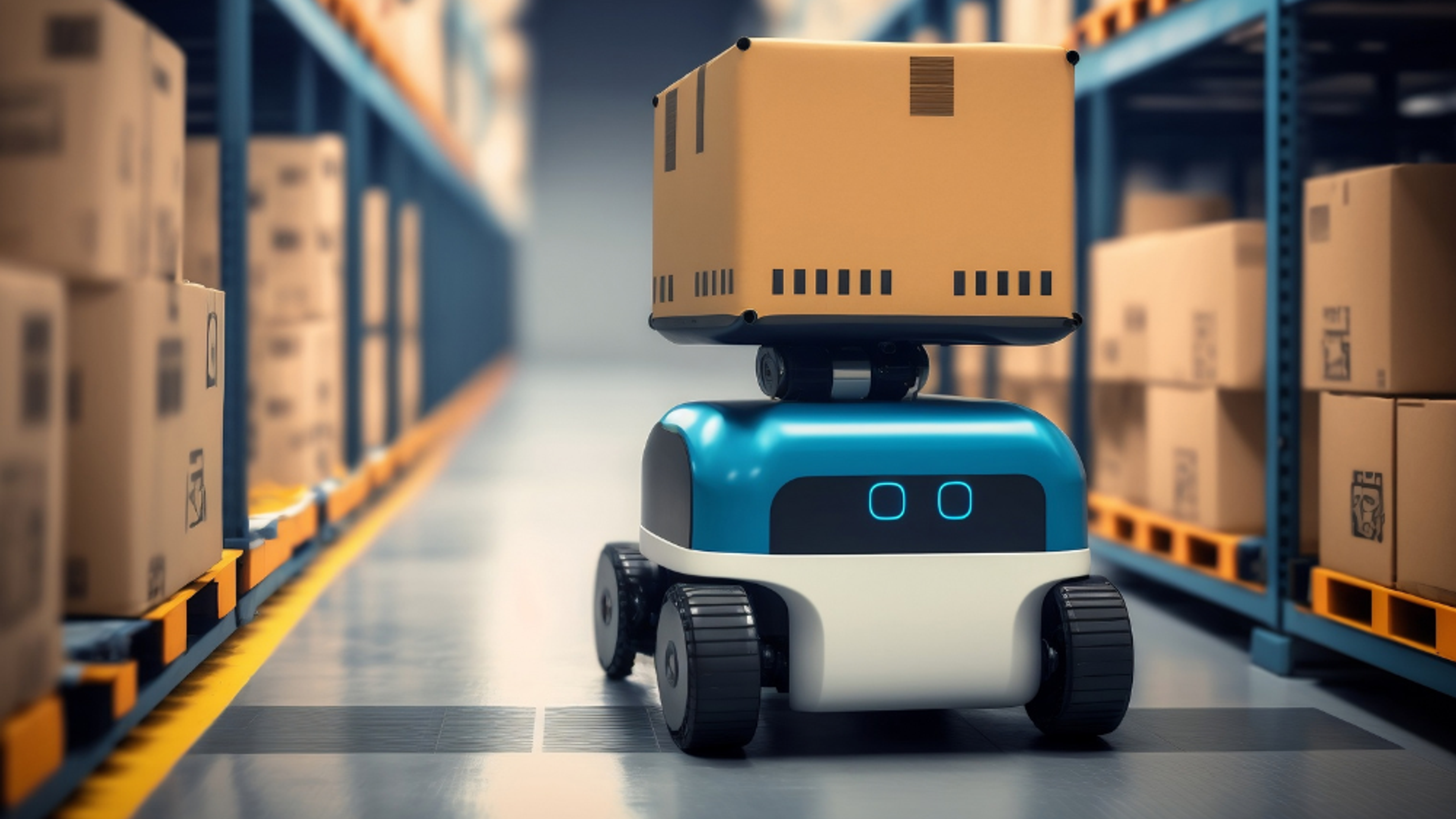
Walk into a modern warehouse. Does it feel the same as it was 10 years ago? Certainly not. Robots are not rare now. You will see them almost everywhere. And the things they can do now have grown increasingly.
If you manage a warehouse, then you must know where this technology stands. Once you understand this, you can make a smart choice about spending where it matters the most rather than making an expensive mistake.
From Standalone Machines to Connected Systems
Long ago, warehouse robots were only supposed to perform a single task. For example, in the past, a palletizing robot was only meant to handle one type of box. And that was all it needed to perform. This was considered a complete solution. But things are changing now. They don’t work that way.
Today, managers do not rely on robots that only perform one task. They think broadly and see what a robot can do one, two, or even 10 years from now. This approach is now more important than the robot itself.
A robot is more than a physical entity. The software it has, the AI that helps it work, and all the connected systems are now as important as the robot itself. These robots are now considered an integrated solution instead of an isolated machine.
The warehouse robotics market is growing fast. From around $9.3 billion (2025), it is expected to nearly triple to over $24 billion by 2031. Worker shortage and the increase in product variety are the two most important reasons behind it.
The Technologies Driving This Change
Several things are behind it.
Vision Software and Sensing
Modern warehouses have got much better eyes. Thinking what that means? That means the systems nowadays use modern cameras, sensors, and LiDAR that all work together and can see their surroundings a lot better than ever. They can easily detect if a forklift is moving nearby, notice a tote has shifted its position, identify an object in the path, and see a product that has never been seen before.
This vision system is directly embedded into the physical AI system of the robot. This makes it able to see all this in real time and make decisions accordingly. Warehouses are in motion constantly. So a robot that cannot handle all this quickly becomes a liability rather than a benefit.
End Effectors
End effectors are the hands of a robotic arm. This is the part that actually holds something. With them, robots can pick almost 70-80% of products in warehouses with much speed and accuracy.
A lot of advancements have been made to end-effector technology. This includes shape-shifting materials, sensors, along with improvements in linear actuators and magnetic tools. That means a single robot can now handle a wide range of products without needing to be reprogrammed.
AI-powered end effectors can even self-adjust, but that is based on the weight and shape of the product. This makes them useful in environments where SKUs keep changing. This is especially helpful for e-commerce companies. Because they need to deal with thousands of different products that are packaged in different kinds of ways.
Humanoid Robots
Humanoid robots are getting a lot of attention. The idea is simple. If a warehouse is built for humans, these robots can easily be deployed there without any major redesign.
Agility Robotics’ robot, Digit, moved more than 100,000 totes in a commercial environment at a GXO Logistics facility in Georgia. The company later deployed Digit robots in Texas to handle fulfillment operations for Mercado Libre, which is an e-commerce platform.
That means the broader market is still moving more toward practical automation. Analysts at IDTechEx believe 2026 and 2027 will be the years when humanoid robots will start to make an impact in logistics, partly due to successes in the automotive industry. However, widespread use will depend on the cost. If a robot has a low price and can handle basic tasks, it is expected that interest will rise.
Automated Storage and Retrieval Systems
AS/RS might not get the same flashy press coverage as humanoid robots. But they are among the most effective systems in use today. These are grid-based or shuttle-based systems. They automatically store and retrieve products within a warehouse. Many people do not realize that these are robots too. They are very good at what they do.
If used with robotic pickers, these systems can deliver the highest order accuracy. Grandview Research estimated that the global AS/RS market will grow at around 8% annually between 2025 and 2030.
Autonomous Mobile Robots
AMRs are robots that can move through a warehouse on their own. For many warehouses, AMRs are their very first introduction to robotics, because simpler versions are relatively easy to deploy.
But AMRs have come a long way. They are now capable of handling tasks that used to be considered too unpredictable. Unloading and loading trailers, for example, was long considered a job only humans could do. Today, AMRs can do it. AMRs have been shown to triple order-processing speed during peak periods. And goods-to-person systems that use AMRs can cut average pick paths by up to 60%.
Five Things to Get Right Before You Invest
All of this technology is exciting, but buying robots and getting value out of them are two very different things. See the practical considerations that should guide any robotics investment.
1. Start With Problem, Not the Technology
It is tempting to look at a shiny new robot and start thinking about where to put it. Resist that urge. First, figure out exactly what the bottleneck is in your operation, whether that is throughput speed, order accuracy, worker safety, or something else. Is the process broken? Sometimes automating a bad process means doing the wrong thing more consistently. Fix this first, then automate it.
2. Design For Integration From the Start
A robot that cannot talk to your Warehouse Management System (WMS) or Warehouse Execution System (WES) or to your other robots and devices is not going to solve your problem. It might even create a new bottleneck somewhere upstream or downstream. So integration needs to be part of the plan from the start.
3. Test For the Hard Days
An ideal setup is almost impossible in a warehouse. A lot of things will keep exposing weaknesses in your system. It can be a seasonal change, a spike in order volume, or a change in the size or type of a product.
Seasonal spikes can push warehouse volume by 500%, which makes flex labor models expensive. This further increases the importance of automation. But for that, the automation system must be strong enough to handle these shifts. So what you need to think is, if there is a sudden rise in orders, how will the system work? Will the robot be able to manage if the size or type of the products changes? And most importantly, whether the system will be able to expand if needed in the future.
4. Think Long-Term, Not Just About the Payback Period
Short-term ROI matters. You need to justify the capital expense. But the best automation investments are ones that improve over time along with helping you make better decisions. Do not limit your options too early. For example, do not automatically assume a new distribution center is out of reach just because it seems expensive. A full business case might surprise you.
5. Keep Your People in the Picture
Warehouse automation makes people confused. And that is completely okay. The workers must be involved in these projects. They must be told about everything before all the decisions. Ergonomics should be considered during the design phase. That means considering how robots are set up and knowing which tasks will be tough for human workers. Both robots and humans work best when the system is designed for both, not for one.
The Bottom Line
The landscape of warehouse robotics in 2026 has changed from what it was ten years ago. It has gone many steps away from a single-task machine to a fully integrated larger system.
Robots are gradually becoming more capable of performing advanced tasks. The need of the hour is to spend the money in the right direction. It is not about chasing the technology blindly. It is all about choosing the best one that fits your needs.
Robots are not the future anymore. They are the present. Companies that use them as a necessary part of their businesses are getting the advantage of it. Those who are still waiting for adoption are falling behind.
More articles on this topic
60 articles ReportChina's Humanoid Supply Chain Moves Toward Industrial Production
 ReportChina Launches First National Standards for Humanoid Robots
 ReportKUKA Taps TD SYNNEX to Expand Mobile Robot Sales in Europe
 ReportCounterpoint Expects Work Applications to Drive 90% of Humanoid Shipments by 2030
 ReportUnitree’s 'Superman' Robot Claims to Outrun Usain Bolt
 ReportForeign Investors And Tech Executives Pay Up To $15,000 To Tour China’s Factories
 ReportCan Certified Robots Compete With China's Cheap Patrol Bots?
 ReportQuadruped Robots Are Becoming Big Business: Here’s Why The US Is Targeting Chinese Makers
 ReportHumanoid Robots Hit Mass Production
 ReportWarehouse Robots: Has The Predicted Shakeout Actually Started?
 ReportHow Robots Are Learning to Read Minds?
 ReportAre Humanoid Robot Videos Misleading Us?
BUSINESS NEWS WEEKLY LETTER
The Weekly Letter for Robotics Professionals, Summarizing the Most Important Industry Moves, Launches, Deals and Signals.