Why Humanoid Robots Struggle With Everyday Objects
Robots can perform plenty of impressive tasks. They walk, talk, recognize and even do a few household tasks like cleaning or picking up things.

August 20, 2026 by Carl
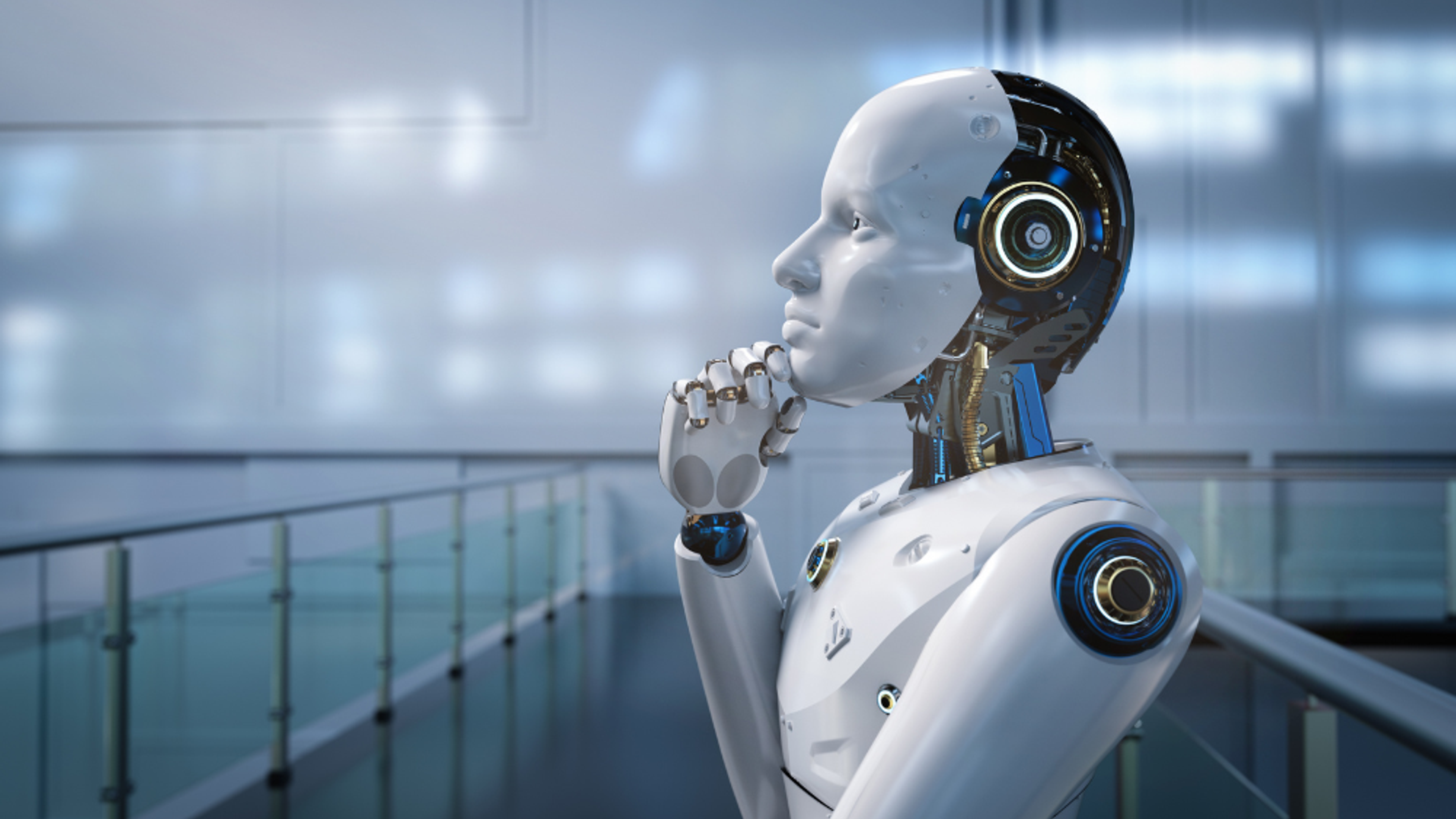
Robots can perform plenty of impressive tasks. They walk, talk, recognize and even do a few household tasks like cleaning or picking up things. These types of things make quick headlines, and everyone gets impressed.
You see news everywhere, and social media goes wild over that. Then after that hype, you think for a while: can this robot actually do my work? Is it able to perform the task the way I do? Things change when you think that way. There is a gap between what we see online and what happens in reality. And there are several reasons for that gap.
Hype vs. Reality
At CES 2026, humanoids were everywhere. A large number of companies appeared there. And most importantly, several big companies showed demos of their robots doing dishes and laundry. Some displayed their robots walking through living rooms. This looked amazing because there wasn’t anything that could stop you from being impressed, at least apparently.
But here is the main thing that most people or regular users ignore. Most of the demos performed by these robots were conducted in perfectly organized rooms, where the lighting was okay, and the surfaces were flat. And above all, a few robots were also controlled by human operators. So what does that indicate? It shows that we are still far away from deploying these robots in our daily lives fearlessly.
According to a Stanford University Report, robots only succeed at about 12% of real household tasks. It includes things like folding laundry and washing dishes, along with picking up objects. That’s an 88% failure rate. Not in extreme conditions, but in ordinary homes doing normal things.
So why is something as simple as picking up a glass of water so hard for a machine that costs $20,000?
1. Robots Don’t Feel What They Touch
Think about how you pick up an egg. You don’t crush it. You don’t drop it either. You apply just the right amount of pressure without even thinking about it. That’s because your fingers are loaded with millions of tiny nerve endings that send signals to your brain.
Robots don’t have that, at least not yet.
Most robots today use cameras to see objects and then try to grab them. But sight alone isn’t enough. When you grab something slippery, your fingers automatically tighten. When you hold something fragile, they loosen. Robots can’t do this.
Researchers have been working on this. In June 2025, scientists published a study showing a robotic hand called the F-TAC Hand. It covers 70% of its surface with high-resolution touch sensors. That’s a real breakthrough, but it’s still a research prototype, not something in a commercial robot.
For most humanoids on the market right now, touch is still very limited. And without good touch, handling everyday objects is very difficult.
2. The World is Unpredictable
In a lab, everything is neat. Objects sit in the same place. The lighting is perfect. The floor is clean. The robot has been trained on this setup.
But what about real homes? They are completely different.
Your kitchen has random objects. Dishes are stacked in different ways daily. A bag of chips on the counter is floppy. A wet glass is slippery. Your cat might walk across the floor mid-task. The lighting changes all day long.
Humanoids are trained to handle specific situations. When something unexpected shows up, they fail.
This is called the edge case problem. As one former robotics executive pointed out, a warehouse alone can present thousands of edge cases. Objects in weird orientations, things stuck together, spilled liquids or unfamiliar shapes – all are examples of edge cases. Each one needs either a pre-programmed fix or intelligence. And current robots don’t have either.
Laundry is a perfect example. Folding one shirt on a flat table? Some robots can do that. But real laundry means sorting fabrics, untangling clothes, handling delicate materials, noticing stains and dealing with clothes that get dropped or fall off the edge. That is a completely different challenge, one that even the best robots today can’t handle without help.
3. Robot Hands Are Still Far Behind Human Hands
A human hand has 27 bones and over 30 muscles. It has a complex set of tendons and nerves. It can do things like thread a needle, peel a banana, hold a slippery glass or catch a falling pen.
Robot hands are nowhere near that level yet.
Most commercial robots have hands. They can grip objects in a few basic ways. They work fine for picking up boxes or pushing buttons. But when you need them to perform a precise movement, they fail to do so.
Even walking is still a work in progress. Many robots weigh between 50 and 150 pounds. When they lose balance and fall, it’s a serious problem. A robot falling on a person can cause injury. Engineers are still spending a lot of time keeping these machines upright and safe.
4. AI Has Learned Language Better Than Physics
Here is something that might surprise you. The same AI that can write an essay and have a conversation with you can’t pick up a cup without knocking it over.
Why? Because language follows rules. Words and sentences have patterns. AI is very good at learning patterns from text. But the physical world doesn’t follow neat rules. Every object behaves differently depending on its weight, shape, texture, temperature and how it’s positioned. And there is almost no limit to the number of combinations a robot might face in a home.
Training a robot to handle tasks requires a different kind of learning. Companies try two main approaches:
- Demonstration: Humans wear VR headsets and control robotic arms to show the robot what good behavior looks like. This works, but it’s slow and expensive.
- Simulation: Robots practice tasks millions of times in virtual environments. This is faster, but there is a gap – what works in a simulation often doesn’t work the same way in reality.
This is one reason robot vacuums became successful while humanoids haven’t. A robot vacuum solves one simple problem. And that is cleaning the floor. Humanoids are trying to solve everything at once, and that’s a much harder job.
5. Battery Life Runs Out Too Fast
Here is a problem that doesn’t get talked about enough. Most robots can only run for 90 minutes to 2 hours on a single charge. Industrial tasks often require 8 to 20 hours of continuous work.
That means even if a robot could do your laundry perfectly, it might run out of battery halfway through.
This isn’t just about inconvenience. It’s about economics. A factory that needs a robot to work a full shift can’t have it stop every 90 minutes. And in a home, a robot that keeps needing to stop and charge isn’t saving you time.
Battery technology is improving. But it is one of the bottlenecks holding robots back from being useful.
6. Safety is Still a Big Unknown
Humanoids are designed to work next to people. That sounds great in theory. But a 150-pound machine with moving arms operating near children or elderly people is a safety challenge.
Unlike factory robots that stay behind a cage, humanoids move freely. If they misjudge the force they’re applying, the results can be dangerous. There are no set safety standards for these robots operating in homes.
That’s why even companies with impressive demos include warnings in their instructions. For example, they may say to keep children away from the robot or not let the robot handle hot or sharp objects.
These warnings tell us something. The technology is still not fully mature. A robot may look impressive in a demo, but there are still limitations and risks.
7. New AI Models Are Changing the Picture
Despite all this, robotics is improving quickly.
One important development is the rise of VLA models. In simple words, these models connect a robot’s vision, human instructions and physical actions together.
Before, a robot might have needed a separate system for every small task. But VLA models help robots understand what they are seeing and what physical action they should take next.
Google DeepMind’s recent robotics models are one example. Its 2026 Gemini Robotics 2 system is designed to control different types of robots.
The system is built to handle tasks like planning, movement, carefully handling objects and adapting to changing environments.
The company has also demonstrated robots doing household-style tasks, such as cleaning and organizing rooms.
Figure has also shown similar progress. In its Helix 02 demonstrations, robots work in cluttered rooms and handle different objects like clothes, books, headphones, chairs and trash.
But these demonstrations don’t mean that the problem has been solved. They simply show that the industry is moving from controlled tasks toward real-world work.
So What Can They Do Right Now?
To be honest, we can’t say that robots are useless. They are still performing much better than their earlier versions. They are making gradual progress, especially in controlled settings.
In factories, robots are very good at picking up boxes and shifting them from one place to another. Likewise, they feed assembly lines and perform repetitive tasks extremely well. In staged environments, they can even open doors, carry items, fold T-shirts and load and unload dishwashers. Some of these robots are being sold for around $20,000 with monthly subscription options for home use.
The progress is real. And robots are getting better at recognizing objects and understanding instructions, along with learning from demos. However, there is still a large gap that needs to be filled. This matters because homes are messy and a robot must understand what it needs to do when a situation changes from what it was taught in a demo.
What Needs to Change
Progress in humanoid development is being made, but still, we are far away from getting perfection, just like human hands. To get that perfection, several areas of technology need to improve.
The first thing is touch sensors. This is where the priority must be given. The robots need to feel properly whether an object feels hard or soft. They must also understand whether an object is slippery, heavy or lightweight.
Then there is training data. Robots need a lot of training data. Researchers must make sure that this data does not come from clean or organized labs only. It must also come from homes or everyday tasks where situations are always unpredictable.
AI also needs to become more adaptable. That means if a robot faces something unexpected, it must cope with the situation like a human does. Instead of falling apart or freezing, it must understand the situation, adjust and respond accordingly.
Batteries, no doubt, also need attention. They must be long-lasting so that robots can work for long hours, especially at workplaces where there is usually more than an 8-hour shift.
And last but not least, the safety rules. What we need are clear robotic rules, especially for those that operate around people or in our homes.
Some experts are very hopeful that this is not far away and will happen within a few years. The robots will become part of everyday life without any worry. On the other hand, some think that we are still more than 10 years away from achieving all this. And honestly, the truth lies somewhere in between all this. Because it depends on which specific tasks you are asking the robot to perform.
More articles on this topic
60 articles ReportChina's Humanoid Supply Chain Moves Toward Industrial Production
 ReportChina Launches First National Standards for Humanoid Robots
 ReportCounterpoint Expects Work Applications to Drive 90% of Humanoid Shipments by 2030
 ReportUnitree’s 'Superman' Robot Claims to Outrun Usain Bolt
 ReportForeign Investors And Tech Executives Pay Up To $15,000 To Tour China’s Factories
 ReportCan Certified Robots Compete With China's Cheap Patrol Bots?
 ReportQuadruped Robots Are Becoming Big Business: Here’s Why The US Is Targeting Chinese Makers
 ReportHumanoid Robots Hit Mass Production
 ReportHow Robots Are Learning to Read Minds?
 ReportAre Humanoid Robot Videos Misleading Us?
 ReportHow Do Collaborative Robots Increase Workplace Safety?
 ReportHow to Train a Humanoid Robot for Hard Work
BUSINESS NEWS WEEKLY LETTER
The Weekly Letter for Robotics Professionals, Summarizing the Most Important Industry Moves, Launches, Deals and Signals.