Why Industrial Robots Need Smarter Vision Systems
From mining to logistics, industrial robots are becoming smarter through AI-powered vision systems that support real-time awareness and faster decision-making.

August 12, 2026 by Carl
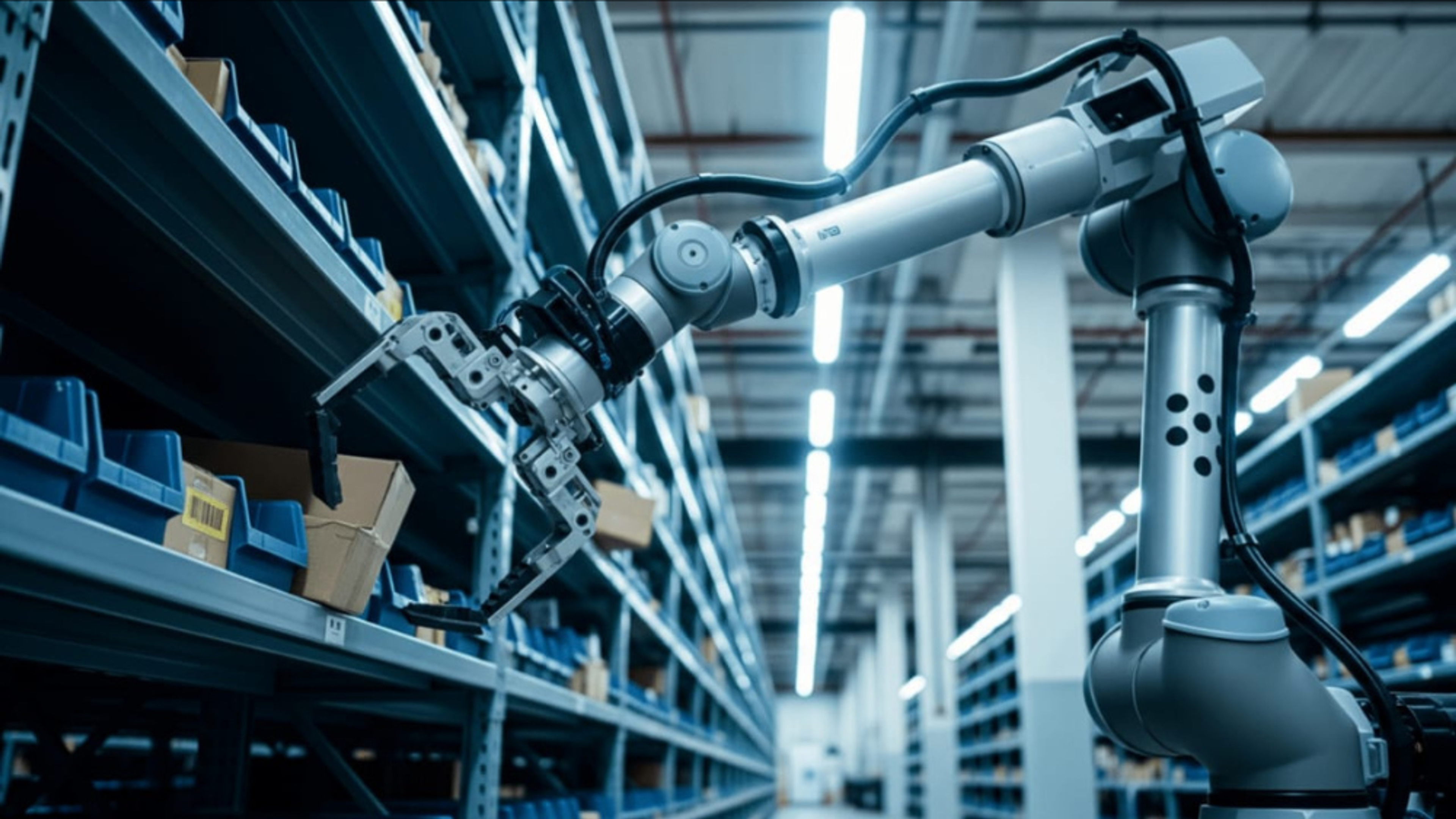
For many years, automating robots meant making them capable of operating with little to no human intervention. Whether it’s a factory robot that assembles products or an autonomous haul truck that is supposed to follow a fixed path each time, success was measured with one simple question. And that was: could the machine operate safely on its own? Today, the answer to this question has been found to some extent. And now the conversation has shifted from autonomy to intelligence.
In today’s world, modern industrial machines are not expected to simply move from one place to another. In fact, they are expected to understand their surroundings and identify obstacles. Not only that, but they are also expected to predict what might come their way in the next moment and then make decisions accordingly.
This evolution is transforming a number of industries such as mining and construction, and even agriculture, logistics, and manufacturing. At the center of this transformation are advanced vision systems. These systems combine artificial intelligence (AI), computer vision, LiDAR, radar, and cameras. All these systems come together to give machines something they lacked before. And that is situational awareness.
Beyond Traditional Automation
Traditional automation, no doubt, works exceptionally well when it comes to environments where each and every movement is planned beforehand. For example, factory robots perform repetitive tasks thousands of times in a very efficient way. And that’s because their surroundings hardly ever change. However, when it comes to other real-world industrial sites, environments are rarely predictable.
Let’s understand this with a few examples:
- A construction site’s layout may not be the same every day.
- Mining roads change as excavation progresses.
- Agricultural fields keep changing depending on the weather or condition of the crops.
And along with all these changes, there are heavy machinery and workers too that keep moving and might end up coming into a robot’s way. Now, in such a situation, simply following a fixed path is not enough. In fact, autonomous machines need to analyze their surroundings and adapt to the changing scenarios.
Why Perception Matters
There was a time when GPS was considered a foundation of autonomous navigation. So, basically, a GPS tells the machine its exact location and then helps it follow the route that is already planned for it. No doubt the GPS does its job with the most accuracy. But do you think that’s enough? Well, simply knowing its exact location is not all that a robot needs to be fully automated.
A GPS can’t tell a robot if a worker is walking across a haul road. Likewise, if there is debris or any other obstacle, that might cause serious disruption, but again, GPS can’t signal the robot to stop or change its way. Now this is where perception makes the difference.
To understand robots’ surroundings, modern perception systems use sensors and AI. Cameras identify people and vehicles or equipment, while LiDAR creates 3D maps of the environment. Meanwhile, radar keeps detecting objects even if it is raining or the vision is not quite clear due to fog or dust. All these technologies, when combined, make the robot super efficient and safe around humans.
Real-World Deployments
Autonomy at this level isn’t experimental anymore. In fact, it is running in production across a number of industries.
Mining
Caterpillar’s fleet of autonomous haul trucks has safely moved more than 11 billion tonnes of material and traveled over 380 million kilometers across active mine sites. These trucks combine AI, machine learning, computer vision, LiDAR, radar, and edge computing to process sensor data in real time.
Agriculture
John Deere’s second-generation autonomy kit, unveiled at CES, uses 16 individual cameras arranged in pods to give its 9RX tractor a full 360-degree view of the field. It combines computer vision and AI with GPS to understand its surroundings and measure depth in order to drive on its own.
Logistics and warehousing
The shift towards opting for smarter robots is not limited to open terrain only. Logistics/warehouses are also bringing in this technology. Amazon’s warehouse robot fleet passed 1 million units in 2026. The company’s new Vulcan robot is the first Amazon robot with a sense of touch. It uses force feedback and vision to handle around 75% of the items in a typical fulfillment order.
Ports and Maritime Operations
The same approach is helping ports become smarter. At Singapore’s Tuas Port, the world’s largest fully automated terminal, AI manages automated guided vehicles and vision-guided cranes. It coordinates hundreds of vehicles at the same time. This helps prevent collisions and improves route planning.
Energy
Australia’s national science agency, CSIRO, has been testing autonomous AI-powered robots equipped with LiDAR, RGB, and thermal cameras to inspect and maintain large-scale solar installations. This reduces the need to send workers across large areas of solar panels. It also lowers costs and improves safety.
Construction
Beyond Caterpillar’s work in construction, Bedrock Robotics is also bringing AI to excavators. The company says it has the largest supervised AI excavation project in the industry. On a 130-acre construction site with Sundt Construction in the U.S. Southwest, its AI-powered excavators have already moved more than 65,000 cubic yards of dirt. Just like autonomous mining trucks, these excavators must understand their surroundings. They need to recognize dirt piles, moving trucks, and changing work patterns instead of simply following the same path every day.
Perception in Harsh Environments
Industrial worksites expose autonomous machines to conditions that are far more difficult than public roads. Mining operations generate constant dust and vibration. Construction sites frequently change as work progresses. Agricultural machines must operate through mud, uneven terrain, heavy rain, and intense sunlight.
These environments create challenges that ordinary automotive sensors were not designed to handle. If cameras become obscured by dust or visibility suddenly drops because of heavy rain, perception cannot simply stop working. Reliable autonomous systems require industrial-grade sensors that continue operating under extreme temperatures, constant vibration, and limited visibility.
Instant Decisions on Site
Fast decision-making is equally important. Many industrial sites operate in remote locations where network coverage is unreliable. Waiting for sensor data to travel to a cloud server and back could introduce delays that compromise both safety and productivity.
Edge computing solves this problem by processing information directly on the machine. This allows autonomous equipment to recognize nearby workers, monitor surrounding vehicles, identify unexpected obstacles, and respond immediately without relying on internet connectivity.
The result is faster reactions and more reliable operation, even in remote mines or large construction projects where continuous communication cannot always be guaranteed.
Better Vision Means Better Productivity
Safety is often the first advantage people associate with autonomous machines, but intelligent perception also delivers significant operational benefits. Unexpected downtime remains one of the biggest expenses on industrial worksites. Even a brief interruption can delay production schedules, increase operating costs, and affect project timelines.
Machines that simply stop whenever they detect something unusual can become overly cautious, reducing efficiency. Modern AI aims to solve this by evaluating situations instead of reacting blindly. Rather than treating every object as an immediate hazard, advanced perception systems estimate movement, predict possible outcomes, and choose the safest response. They either slow down, change course, or stop altogether.
This ability to make context-aware decisions allows autonomous equipment to maintain productivity without compromising safety.
Upgrading Existing Fleets
One of the biggest barriers to industrial autonomy is cost. Mining companies, construction firms, and logistics operators often invest millions of dollars in heavy equipment that remains in service for decades. Replacing entire fleets simply to gain autonomous capabilities is rarely practical.
Instead, many companies are adopting hardware-agnostic autonomy platforms that can retrofit existing equipment with AI software and advanced perception systems. This approach allows organizations to modernize gradually while protecting previous investments. The strategy also gives operators greater flexibility to upgrade sensors as technology improves instead of becoming locked into a single hardware ecosystem.
So, What’s Next?
Autonomous movement is no longer the biggest technical challenge. The real breakthrough lies in enabling machines to understand the world around them with the same awareness that experienced human operators develop over years of work.
That is why sensor fusion has become the industry’s preferred approach. Cameras provide rich visual detail. LiDAR measures distance with remarkable accuracy. Radar continues working when dust, smoke, rain, or fog reduce visibility. Together, these technologies create a more complete and reliable picture than any single sensor could provide on its own.
As AI continues to improve, industrial machines will become even better at predicting risks, adapting to changing environments, and making informed decisions without waiting for human intervention.
More articles on this topic
60 articles ReportChina's Humanoid Supply Chain Moves Toward Industrial Production
 ReportChina Launches First National Standards for Humanoid Robots
 ReportCounterpoint Expects Work Applications to Drive 90% of Humanoid Shipments by 2030
 ReportUnitree’s 'Superman' Robot Claims to Outrun Usain Bolt
 ReportForeign Investors And Tech Executives Pay Up To $15,000 To Tour China’s Factories
 ReportCan Certified Robots Compete With China's Cheap Patrol Bots?
 ReportQuadruped Robots Are Becoming Big Business: Here’s Why The US Is Targeting Chinese Makers
 ReportHumanoid Robots Hit Mass Production
 ReportHow Robots Are Learning to Read Minds?
 ReportAre Humanoid Robot Videos Misleading Us?
 ReportHow Do Collaborative Robots Increase Workplace Safety?
 ReportHow to Train a Humanoid Robot for Hard Work
BUSINESS NEWS WEEKLY LETTER
The Weekly Letter for Robotics Professionals, Summarizing the Most Important Industry Moves, Launches, Deals and Signals.