Why Robotic Welding Matters in 2026?
Robot welding isn’t the future anymore. It is happening now. And shops that adopt it will be better prepared for what comes next.

July 23, 2026 by Carl
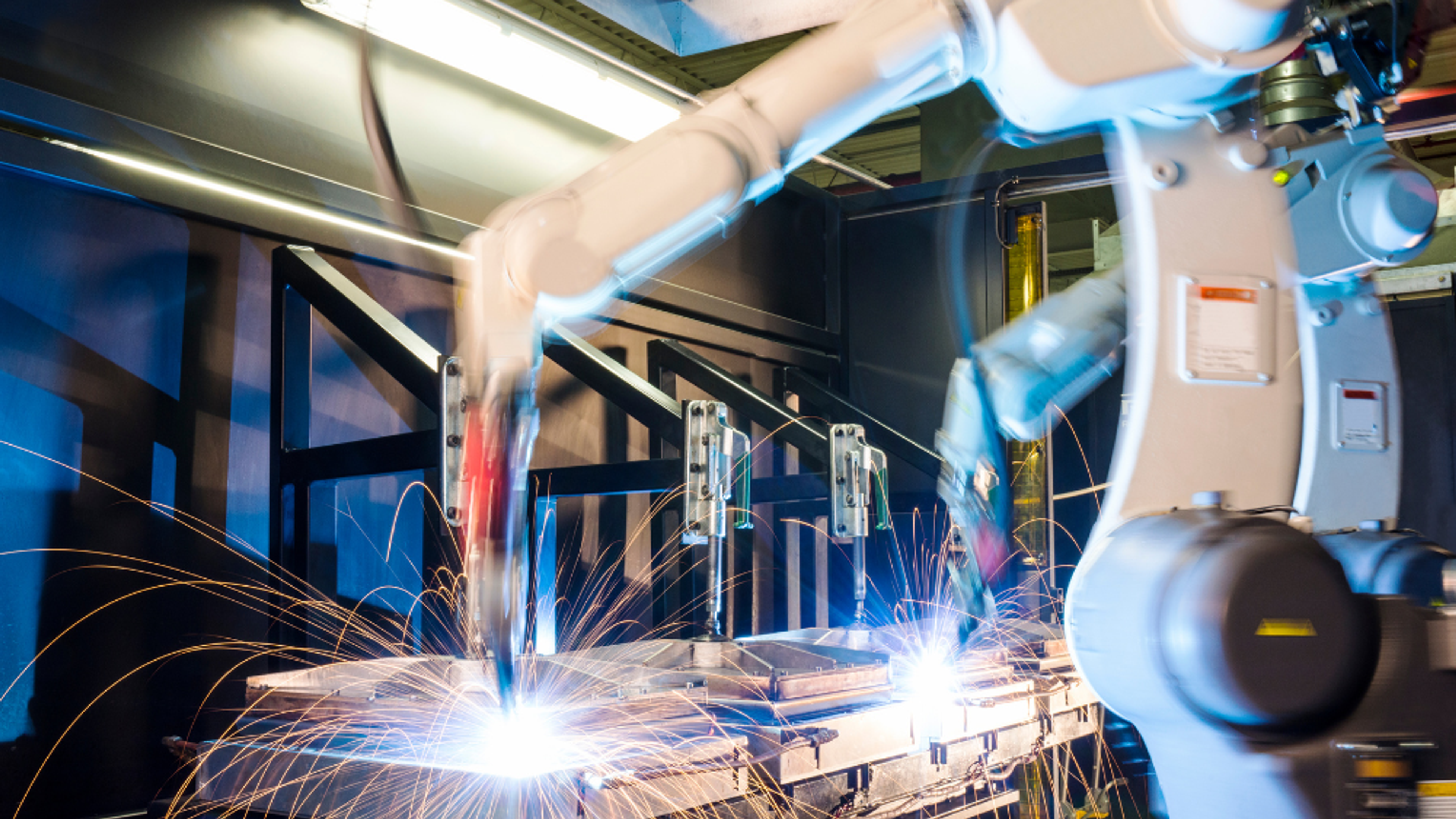
The manufacturing industry has changed a lot. The work that was done in days can now be completed within hours. All thanks to the latest technology that has made it possible. And one of the biggest innovations in the welding industry is the use of robotic arms. This allows the robots to perform welding tasks with much accuracy and speed. This technology is now widely used in various other sectors like car manufacturing, construction, heavy machinery manufacturing, aerospace, etc. This helps in making strong welds with minimum errors.
Robotic welding is very helpful as it not only reduces errors but also cuts the cost spent on labor. In 2026, it is now a practical and affordable solution for shops that need consistency in their work.
One interesting thing is that many manufacturers noted that robotic systems have helped them improve their precision. It has helped them get bigger projects that they never imagined handling before.
What is Robotic Welding?
So what exactly is robotic welding? Basically, it is an automated process that is performed by robots. Here, the robots are programmed to perform welding tasks. Depending on the job, robots can use different methods. The most common one is arc welding. This process makes use of an electric arc to join the metal pieces together.
The system mainly includes a robot, a power source, a torch, a wire feeder, sensors, safety equipment, etc. This is mainly performed by robots. However, a human operator monitors the work and makes adjustments if needed.
Manufacturers who use robotic arc welding see almost 50% fewer defects. This leads to higher profit margins and fewer complaints from customers.
Moreover, advanced sensors are used in robotic welding. This, along with the use of AI, can make adjustments in real time. This results in consistent welding, and each welding cycle exhibits minimal variability.
Robots take charge of the whole task. So, the process that involves toxic fumes and hot metal is performed by robots and keeps the workers safe. These robots also come with safety features. They have emergency stop buttons and a design that reduces the risk of getting injured at the workplace.
How Robotic Welding Works
This process follows a structured sequence that makes use of AI and sensors. It starts by placing the metal parts in the correct position. The robot is already programmed with the welding path and speed. All the other settings are also predefined.
Once this process starts, the robot keeps moving the welding torch. This is done on a planned path. An electric arc is formed between the welding wire and metal. Now the heat melts the metal. This allows the pieces of metal to join together. Once it cools down, the metal connection gets strong.
One thing worth mentioning here is that each weld created is almost identical to another. Why? Because the robot follows the same path. However, some modern robots make use of cameras and sensors along with a vision system. It detects small changes and adjusts the welding path automatically.
The Welding Worker Shortage is Real
Manufacturers all around the world are facing a shortage of welding workers. The American Welding Society estimates that there will be a shortfall of around 360,000 welders by 2027. And this problem is not limited to the U.S. only; even Europe and China are dealing with the same issue.
Meanwhile, factories still have to keep up with orders. Demand isn’t slowing down. So shops are stuck in a tough spot. They need to produce more. But the people who make that possible are getting harder to find.
There’s another problem too. A welder and a robot programmer are two different jobs. Finding someone who understands both is close to impossible for most shops.
So what’s happening? Experienced welders spend chunks of their day doing setup and programming work instead. That’s not a great use of their skills. And it slows everything down.
Welding automation isn’t new. Big car factories have been using it for decades. But for small and medium-sized shops, it was never a realistic option.
Traditional robots came with a long list of requirements:
- You needed dedicated staff engineers
- You had to build out safety infrastructure
- Programming a new job could take weeks
For a smaller shop, that didn’t make sense. If it takes longer to set up the robot than it does to just weld the part by hand, why bother?
So the divide stayed in place. Large factories could justify the cost. Everyone else kept doing things manually.
AI Changes the Whole Equation
This is where things get interesting. AI has broken the barriers that have kept small shops out of automation. Cobots can now work directly in shops without needing long programming work beforehand. They work in a different way. Instead of getting instructions for every weld, they are explained the job at a general level. The rest they figure out on their own.
The system does not start from scratch. Instead, it is already trained for a variety of tasks. The operator just gives it a direction, and AI handles the rest of the details. This is completely different from old-school automation, where there was a need for deep programming knowledge.
Now, when people hear that robots are doing the welding jobs, they think that humans will get replaced. But that isn’t the case. People need to understand that robots will only be used in places where there is a shortage of skilled labor. Also, when productivity is compromised, manufacturers have to take steps to tackle the problem.
Plus, these robots mainly perform tasks that require repetition. Suppose a worker spends hours doing the same job again and again; it is best to hand over this job to a robot. A human can supervise it or spend time on quality checks and other matters that require human input.
So What’s the Final Take?
Robot welding is no longer an option that only big factories can opt for. It has become an important part of modern manufacturing work.
The welding robot market is valued at $11.49 billion in 2026. This is expected to reach $18.23 billion by 2035. Aren’t these numbers amazing? It shows that this type of growth isn’t accidental. There is something behind it that is constantly putting pressure. And what is that? Of course, the shortage of labor and consistent quality work, which is almost impossible for humans to deliver at a large scale.
Looking at the technological side, it is clear that things are moving fast. Now, in 2026, AI is no longer an optional feature. It is built into the core operating system directly. The new robots that are coming into the market now use real-time adaptive control along with sensors and cameras. These features help the robots detect distortions and adjust the speed. And of course, this level of precision wasn’t possible a few years ago.
And above all that, welding automation is finally accessible for small businesses too. Earlier, only large businesses or big factories used them. But now even small businesses can opt for cobots that require zero coding knowledge to operate. It is so much more interesting and encouraging for small businesses.
There are now over 4.6 million robotic units operating in factories worldwide. This is a 9% increase from the year before.
Robot welding isn’t the future anymore. It is happening now. And shops that adopt it will be better prepared for what comes next.
More articles on this topic
60 articles ReportChina's Humanoid Supply Chain Moves Toward Industrial Production
 ReportChina Launches First National Standards for Humanoid Robots
 ReportCounterpoint Expects Work Applications to Drive 90% of Humanoid Shipments by 2030
 ReportUnitree’s 'Superman' Robot Claims to Outrun Usain Bolt
 ReportForeign Investors And Tech Executives Pay Up To $15,000 To Tour China’s Factories
 ReportCan Certified Robots Compete With China's Cheap Patrol Bots?
 ReportQuadruped Robots Are Becoming Big Business: Here’s Why The US Is Targeting Chinese Makers
 ReportHumanoid Robots Hit Mass Production
 ReportHow Robots Are Learning to Read Minds?
 ReportAre Humanoid Robot Videos Misleading Us?
 ReportHow Do Collaborative Robots Increase Workplace Safety?
 ReportHow to Train a Humanoid Robot for Hard Work
BUSINESS NEWS WEEKLY LETTER
The Weekly Letter for Robotics Professionals, Summarizing the Most Important Industry Moves, Launches, Deals and Signals.