Why Smarter Robots Need More Than Better Hardware
Chinese company X Square Robot wants robots to work in homes and offices, doing all the tasks perfectly where nothing is arranged properly.

July 7, 2026 by Carl
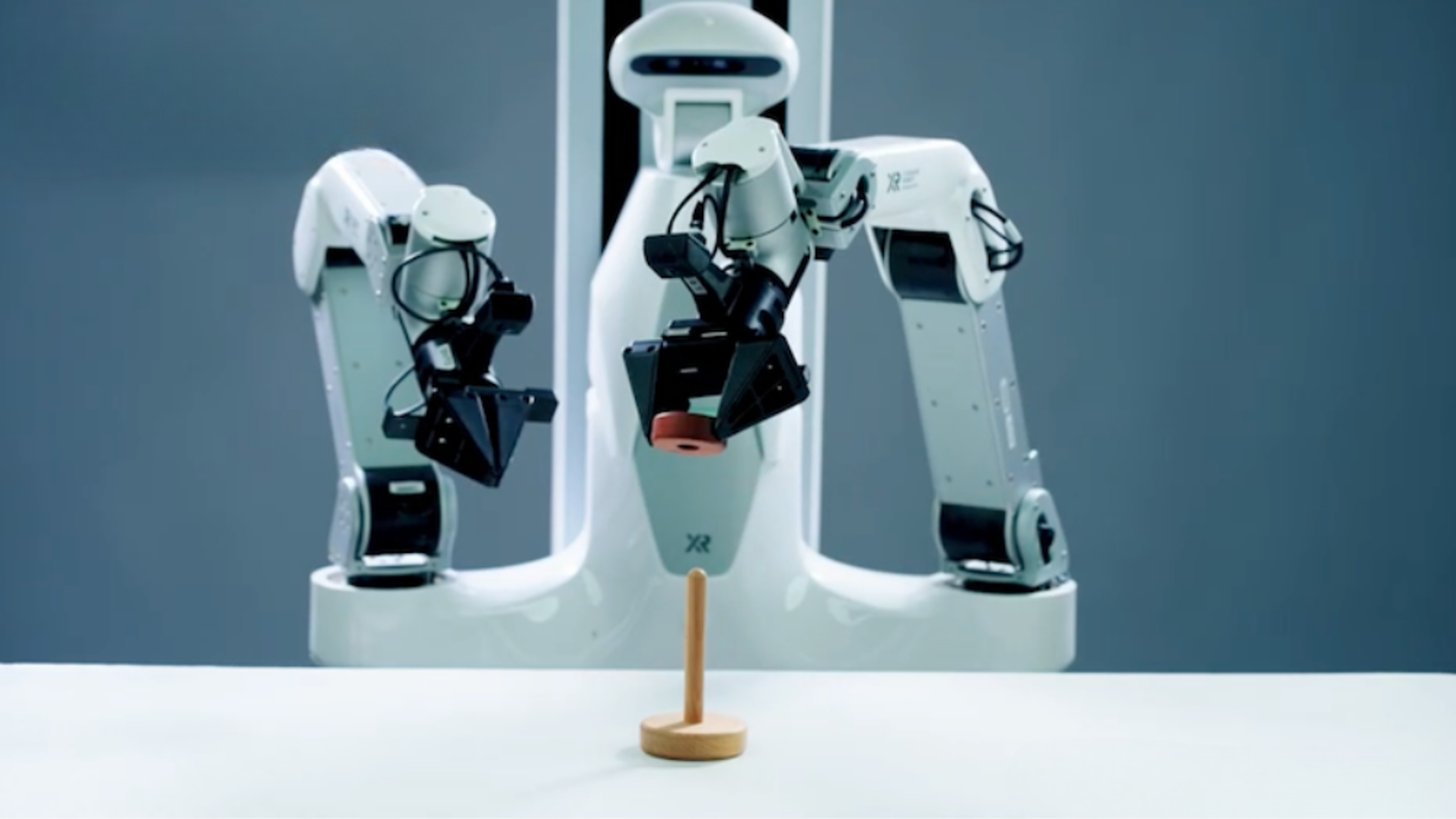
Whenever news comes of a new robot or a new task that it has unlocked, you love to watch it, don’t you? Companies love to show off their tricks. You can see robots doing backflips and running through obstacles. You will even see them dancing in front of cameras. All this looks very impressive. But don’t you think it’s high time to move beyond that?
This is what the Chinese company X Square Robot is trying to achieve. They want robots to work in homes and offices, doing all the tasks perfectly, where nothing is arranged properly. They want robots to work in those unpredictable situations.
Wang Qian, the founder and CEO of X Square Robot, said that, as far as hardware is concerned, the robot industry has already solved many of the problems. They can walk. They can use their hands and even control force well. But what is still missing is real intelligence.
“The hardware is largely there. The real bottleneck is the brain.”
Because X Square Robot is very committed to addressing this issue, they released three tools over the last few weeks to fill the gap:
- WALL-OSS-0.5: This is a VLA (Vision-Language-Action) model. It combines all three to teach a robot.
- WALL-WM: This helps robots understand how the physical world works.
- XRZero-G0: This is a cost-effective system for collecting data without an actual robot.
Does Pretraining Teach Robots Skills?
There are certain questions that can come to anyone’s mind. When a robot is trained on a large amount of data, does it actually learn something worthwhile? Does it only get warmed up? Or does it need more specific training to perform a specific task?
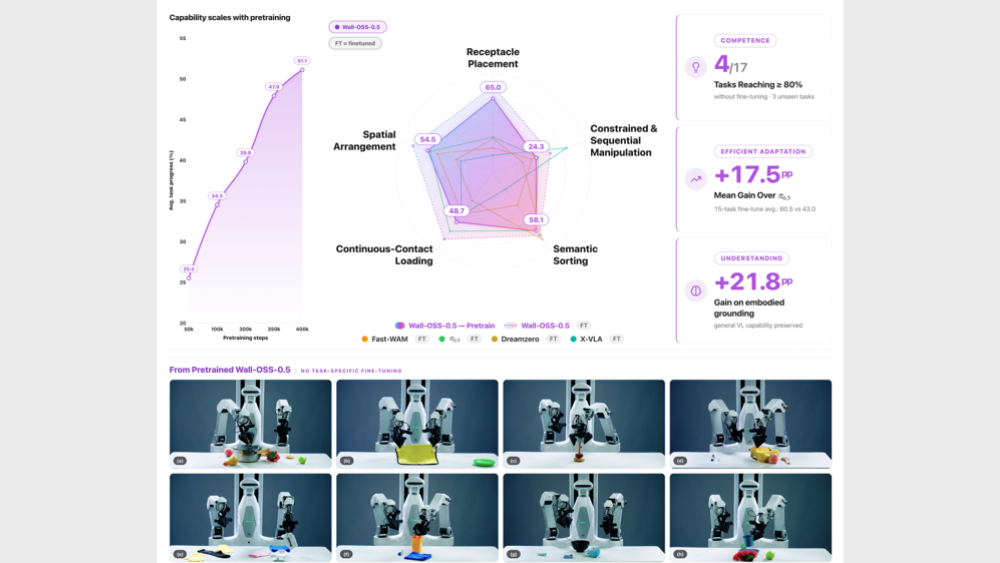
Well, this is what X Square Robot is really after. They built WALL-OSS-0.5 to test this. They tested it to check whether a robot is able to perform specific tasks after pretraining rather than training it for a specific task. After that, they tested it on 17 real-world tasks. And you know what the results were? It actually performed very well. It did very well in sorting objects and stacking rings. Not only this, but it even handled bendable items, which are normally difficult for machines.
So what do you think made that possible? The company calls this method “gradient-bridged” training. Usually, robot systems have separate vision and control systems, but WALL-OSS-0.5 combines them all. Think of language models that turn words into tokens; a similar thing happens with WALL-OSS-0.5. It changes physical movements into tokens. This model trains action tokens along with language and image data, all at the same time.
Interestingly, the company found that training the robot to act didn’t just improve its physical skills. It also made the model better at understanding what it was looking at. In other words, teaching a robot to move around and touch things seemed to sharpen its ability to see and understand the world too.
Teaching Robots to Understand Cause and Effect
Wall-OSS-0.5 proved that pretraining can give robots real ability. But X Square Robot says copying actions isn’t enough on its own.
Most current robot systems can repeat movements they’ve seen before, but they don’t really grasp cause and effect. So when something unexpected happens, they often get stuck. They don’t know how to adjust.
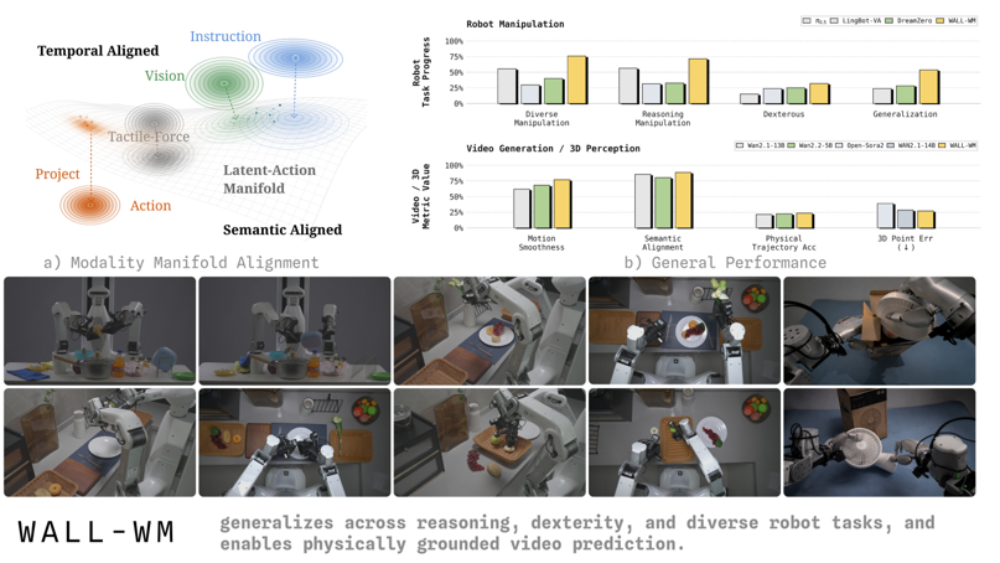
This is the problem WALL-WM is meant to solve. Instead of learning fixed sequences of movement, WALL-WM focuses on physical events, actions like reaching for something, grabbing it, lifting it, and setting it down. Rather than treating vision, language, and movement as separate systems, WALL-WM links them all around these real-world events.
The goal is for robots to do more than just follow a script. X Square Robot wants robots that can predict what will happen next, understand how objects and forces behave, and change their plan when something doesn’t go as expected. The company says this is a step toward robots that learn from experience, the same way people slowly get better at tasks through practice.
Solving the Data Problem
Even the smartest model needs good data to learn from. And collecting that data is one of the hardest parts of building smart robots. Recording real robots performing thousands of tasks takes a lot of time, money, and effort.
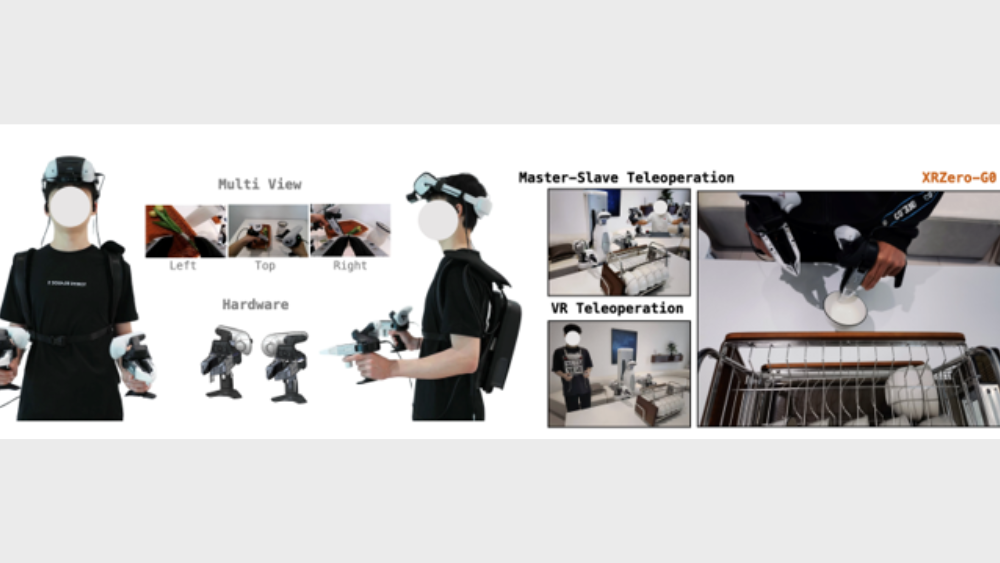
X Square Robot’s solution is XRZero-G0, a system that combines special hardware and software to gather training data without needing a real robot for most of it. It uses wearable devices, cameras placed from multiple angles, automatic quality checks, and testing on real robots to make sure the data holds up.
In their tests, the company discovered something surprising: mixing ten “robot-free” demonstrations with just one real robot demonstration produced results almost as good as using real robot data the whole time. This could make training robots far cheaper and faster in the future.
X Square Robot has also shared more than 2,000 hours of data covering around 3,000 different tasks, making it available for other researchers working in this field.
Putting it All Together
These three releases address the same challenge in different ways. WALL-OSS-0.5 sees whether it is enough to only pretrain a robot to give it working skills. WALL-WM makes the robots understand the physical world. XRZero-G0 addresses the cost and difficulty of gathering training data in the first place.
So overall, what does that mean? You can say that these three form a full working system, covering data, understanding the physical world, and the models robots use to act. These three are built to move embodied AI forward.
Wang is very hopeful and says that the industry is much closer to a breakthrough moment than most people realize. He also said that the most challenging part is not moving the bodies of robots. The actual struggle is to teach them how to understand the world and adapt accordingly.
More articles on this topic
60 articles ReportChina's Humanoid Supply Chain Moves Toward Industrial Production
 ReportChina Launches First National Standards for Humanoid Robots
 ReportCounterpoint Expects Work Applications to Drive 90% of Humanoid Shipments by 2030
 ReportUnitree’s 'Superman' Robot Claims to Outrun Usain Bolt
 ReportForeign Investors And Tech Executives Pay Up To $15,000 To Tour China’s Factories
 ReportCan Certified Robots Compete With China's Cheap Patrol Bots?
 ReportQuadruped Robots Are Becoming Big Business: Here’s Why The US Is Targeting Chinese Makers
 ReportHumanoid Robots Hit Mass Production
 ReportHow Robots Are Learning to Read Minds?
 ReportAre Humanoid Robot Videos Misleading Us?
 ReportHow Do Collaborative Robots Increase Workplace Safety?
 ReportHow to Train a Humanoid Robot for Hard Work
BUSINESS NEWS WEEKLY LETTER
The Weekly Letter for Robotics Professionals, Summarizing the Most Important Industry Moves, Launches, Deals and Signals.