ExRobotics Brings Inspection Robot for Hazardous Industrial Sites
ExRobotics claimed that its robot can handle safety inspections inside toxic environments where it is too dangerous for humans to enter.

June 24, 2026 by Carl
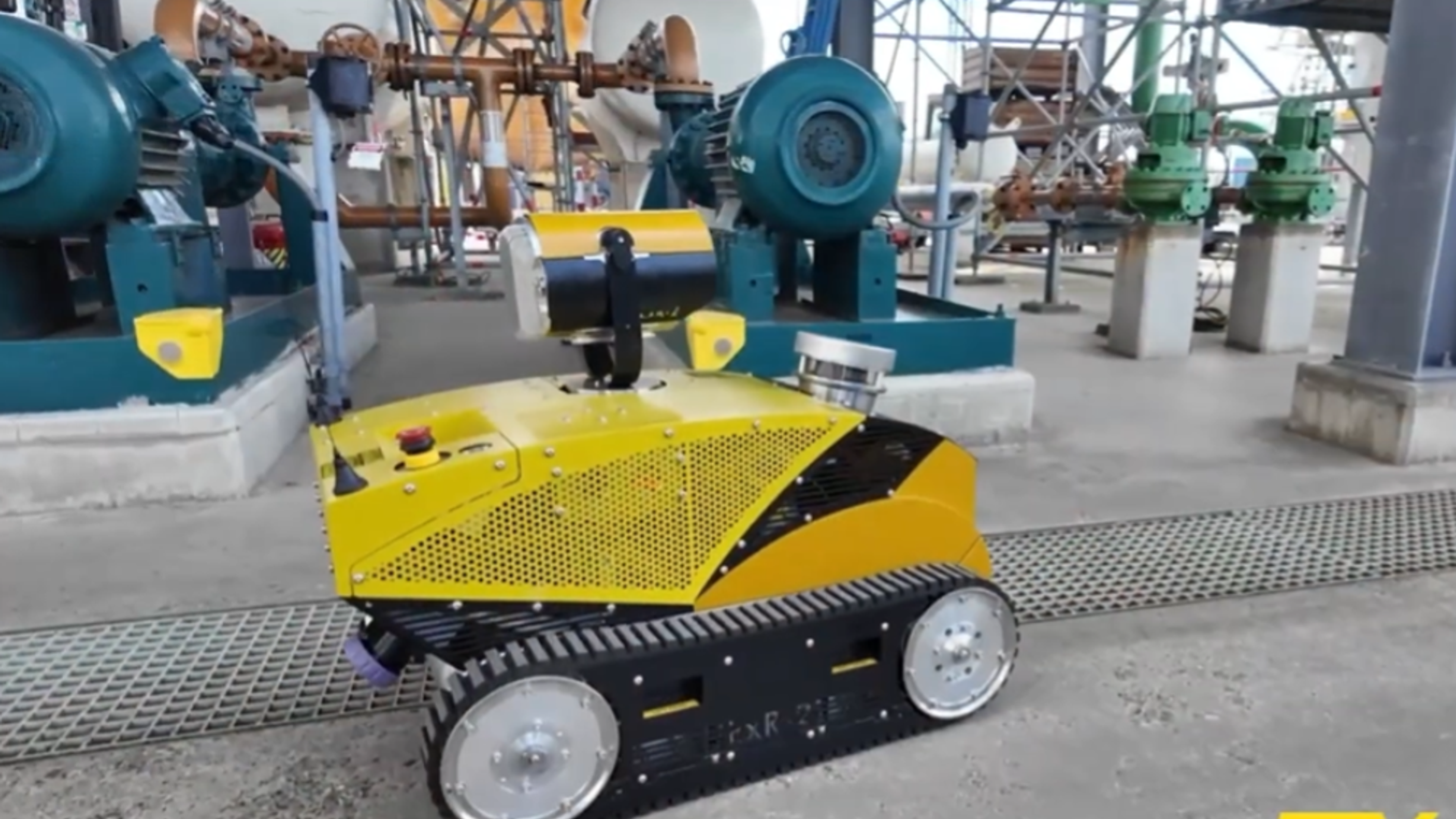
Industrial facilities always require inspection. This is to make sure that everything is working perfectly fine. However, the safety of workers remains a major concern. So how can this risk be minimized? More and more companies are now looking for ways to handle critical inspection tasks. And who does this better than robots? A Dutch robotics company has solved this problem and has just launched its latest robot that can work inside dangerous environments.
ExRobotics is a Netherlands-based company. They brought their robot to the North American market on June 23, 2026. ExR-2.5 was shown for the first time at the Energy Drone & Robotics Summit in Houston, Texas.
The company claimed that this robot can handle safety inspections inside toxic environments where it is too dangerous for humans to enter.
The Problem It’s Trying to Solve
Everyone knows that the energy sector is facing serious challenges. The two main causes that come at the top are as follows:
The very first concern is the shortage of workers. Experts have already warned that there will be a shortage of 40,000 skilled workers this year alone. Even worse, surveys show that nearly 62% of people in their 20s and 30s don’t want to work in this sector. So what do these stats indicate? Well, they show that once the older workers retire, there will not be enough young people to replace them.
Another concern is unplanned downtime. This can cost companies a huge amount of money because when equipment fails unexpectedly, it costs companies a lot. Data shows that downtime can cost those industries around 11% of their total revenue, which, of course, is huge. You can think of its importance from the fact that a medium-sized oil and gas industry, if shut down for a few days, can result in a loss of more than $5 million.
Want to avoid disasters? It is ideal to catch the problems earlier. Regular safety checks are very important, but sending workers into those unhealthy places again and again also raises other concerns. This is a problem ExRobotics says their robots are available for.
What ExR-2.5 Can Do
There are two ways in which ExR-2.5 does its duty. It can either be controlled by someone or go on its own to collect the safety data. Not only this, but this robot comes with several other tools that are built in.
It listens for gas leaks. The robot uses acoustic imaging sensors. It picks up high-frequency sounds that human ears would miss. These sounds can point to gas leaks much earlier than a visual check ever could.
It watches for heat problems. A built-in thermal camera scans equipment. It looks for unusual heat patterns. This often signals that something is about to break/fail.
It captures detailed visuals. The robot closely examines valves, gauges, pipes, and other signs of damage with the help of its high-resolution camera.
It tracks environmental conditions. Sensors keep an eye on surrounding conditions that could be dangerous in explosive environments.
The robot moves on its own using built-in navigation systems that help it avoid obstacles. When it’s done, it rolls back to its charging dock and gets ready for its next round. Operators can also take manual control and guide it remotely from anywhere.
ExRobotics says the robot has already completed thousands of missions for major energy companies like Shell, Repsol, BP, etc.
A Safety Certification That Matters
One of the biggest selling points of this launch is that the ExR-2.5 carries a UL certification – specifically under a standard called UL 6260.
This certification was given by UL Solutions. It is a safety science company based in Northbrook, Illinois. To earn it, the ExR-2.5 had to go through tough testing to prove it wouldn’t spark a fire or explosion in environments where flammable gases might be floating around.
Testers looked at the robot’s battery and electrical systems. This was done to check how they behaved both under normal use and when something went wrong.
Wesley Kwok, a vice president at UL Solutions, said that working in hazardous locations creates unique challenges for robots, and having a recognized certification gives operators confidence that the technology is safe to actually use on-site.
ExRobotics points out that as more companies look at automation to deal with worker shortages, this kind of certification is becoming a key requirement – not just a nice bonus.
Who’s Selling It
Now, those who might be interested in this robot want to know where to see it or purchase it. Well, MicroWatt is handling all the sales for ExR-2.5 across North America. MicroWatt’s CEO, Shawn Coffey, said that they want to make sure that the partnership brings actual benefits for the customers. He said that they want to give customers access to technology along with local support. The goal here is simple, which is to reduce risk and increase the work efficiency of industrial operators.
More articles on this topic
235 articles ReportWhat it Really Costs to Own a Personal Assistant Robot at Home
 ReportA Little Company, Courtesy of a Robot
 ReportA Humanoid Walks into a New York Park
 ReportRailway Inspection Robots Search for Defects in Tracks
 ReportChina's Humanoid Supply Chain Moves Toward Industrial Production
 ReportCompanionship now comes with a Charging Cable
 ReportCould a Robotic Guide Help Blind Travelers Navigate Public Spaces?
 ReportThis Robot Finds Cracks and Fixes Them
 ReportXPENG's IRON Humanoid Adapts to Changing Human Gestures in Real Time
 ReportRobots Are Learning to Sort Clothes for Textile Recycling
 Report110 Humanoid Robots Set Guinness World Record With Synchronized Dance
 ReportScientists Teach Humanoid to Climb Ladders and Survive Falls
BUSINESS NEWS WEEKLY LETTER
The Weekly Letter for Robotics Professionals, Summarizing the Most Important Industry Moves, Launches, Deals and Signals.