From Factories to Homes: How Robots are Assisting at Construction Sites
Promise Robotics’ agreement with D.R. Horton highlights a growing range of construction jobs for robots, from manufacturing components to building walls and tracking progress.

October 15, 2026 by Nisha
Before a home takes shape on a building site, some of its construction work can begin inside a robotic factory.
That is the model behind Promise Robotics' new multi-year agreement with D.R. Horton, America's largest homebuilder by volume. Announced on October 13, the deal will provide robotic manufacturing capacity supporting more than 1,250 homes, making D.R. Horton the first major US homebuilder to use the company's production platform.
The pilot joins several other initiatives that demonstrate how robots can be used throughout the construction process. While some are being used to produce building elements away from the site, others are making walls, drill holes for building services, or gathering data so construction teams can track progress.
Beginning at the Factory
Promise Robotics' Factory-as-a-Service platform adapts to a builder's existing home plans, converting them into manufacturing layouts and robot instructions. It links the manufacturing and factory operation with home installation at the construction site.
It is appealing for D.R. Horton because it provides access to automated production capacity without having to create and run its own factories. The builder is seeking a quick cycle , additional capacity and a leaner, more predictable operation. Promise frames its system as a solution to labor shortages.
Building walls on site
ICON's Vulcan robotic 3D printers in Georgetown, Texas, produced wall systems for the 100-home Genesis Collection at Wolf Ranch, a development by Lennar and Bjarke Ingels Group in 2025. The homes are approximately 1,500 to 2,100 square feet.
Australian company FBR is building walls along with robots. Their Hadrian X robot stacks the blocks and glues them together with a special type of glue.
Preparing buildings for services
Hilti’s Jaibot is drilling holes for mechanical, electrical, and plumbing installations using a digital drilling plan is Sweden. Construction crew members identify the machine's location and operate it, while the drills move automatically inside its reach. According to Hilti, this allows crews to shift away from strenuous overhead drilling and stay involved in positioning and guiding.
Checking the work as it progresses
Robots can also give team members, the band of the team, the assurance of what is happening all along a site as it is evolving.
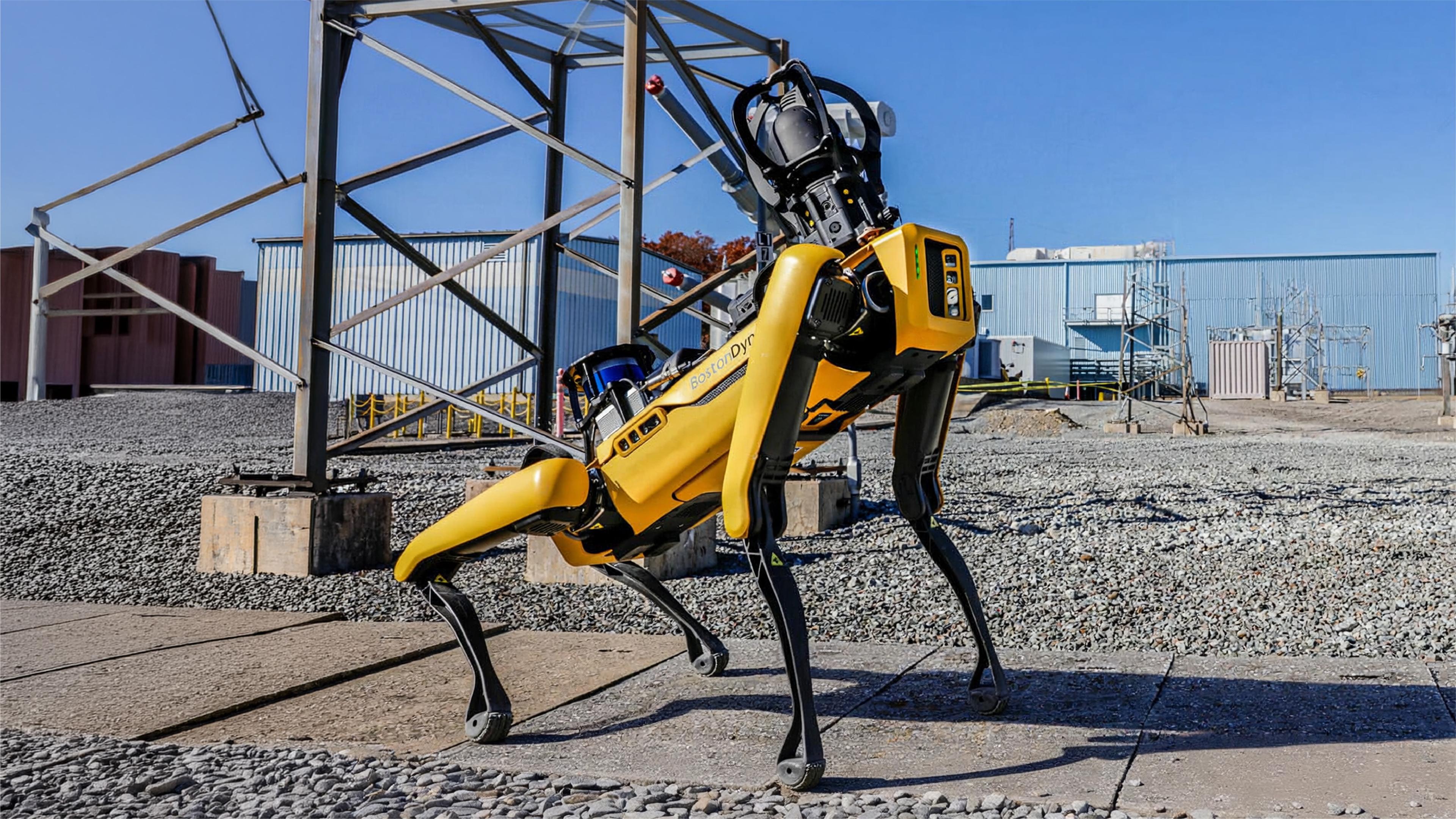
During a February 2020 trial at London’s Battersea development, Foster + Partners used Boston Dynamics’ Spot to scan progress of the construction site. Spot prowled the abandoned building with its scanning tools; it dodged fallen debris and uneven surfaces. The scans were then cross-referenced against the digital models of the building to determine how far along the project was and to see if what was built was consistent with the initial design.
More articles on this topic
235 articles ReportWhat it Really Costs to Own a Personal Assistant Robot at Home
 ReportA Little Company, Courtesy of a Robot
 ReportA Humanoid Walks into a New York Park
 ReportRailway Inspection Robots Search for Defects in Tracks
 ReportChina's Humanoid Supply Chain Moves Toward Industrial Production
 ReportCompanionship now comes with a Charging Cable
 ReportCould a Robotic Guide Help Blind Travelers Navigate Public Spaces?
 ReportThis Robot Finds Cracks and Fixes Them
 ReportXPENG's IRON Humanoid Adapts to Changing Human Gestures in Real Time
 ReportRobots Are Learning to Sort Clothes for Textile Recycling
 Report110 Humanoid Robots Set Guinness World Record With Synchronized Dance
 ReportScientists Teach Humanoid to Climb Ladders and Survive Falls
BUSINESS NEWS WEEKLY LETTER
The Weekly Letter for Robotics Professionals, Summarizing the Most Important Industry Moves, Launches, Deals and Signals.