How Humanoid Robots Can Help People with Disabilities
There are over a billion people in the world who cannot perform their daily tasks as we normally do. For them, this is a challenge. This is where the humanoids come in.

August 11, 2026 by Carl
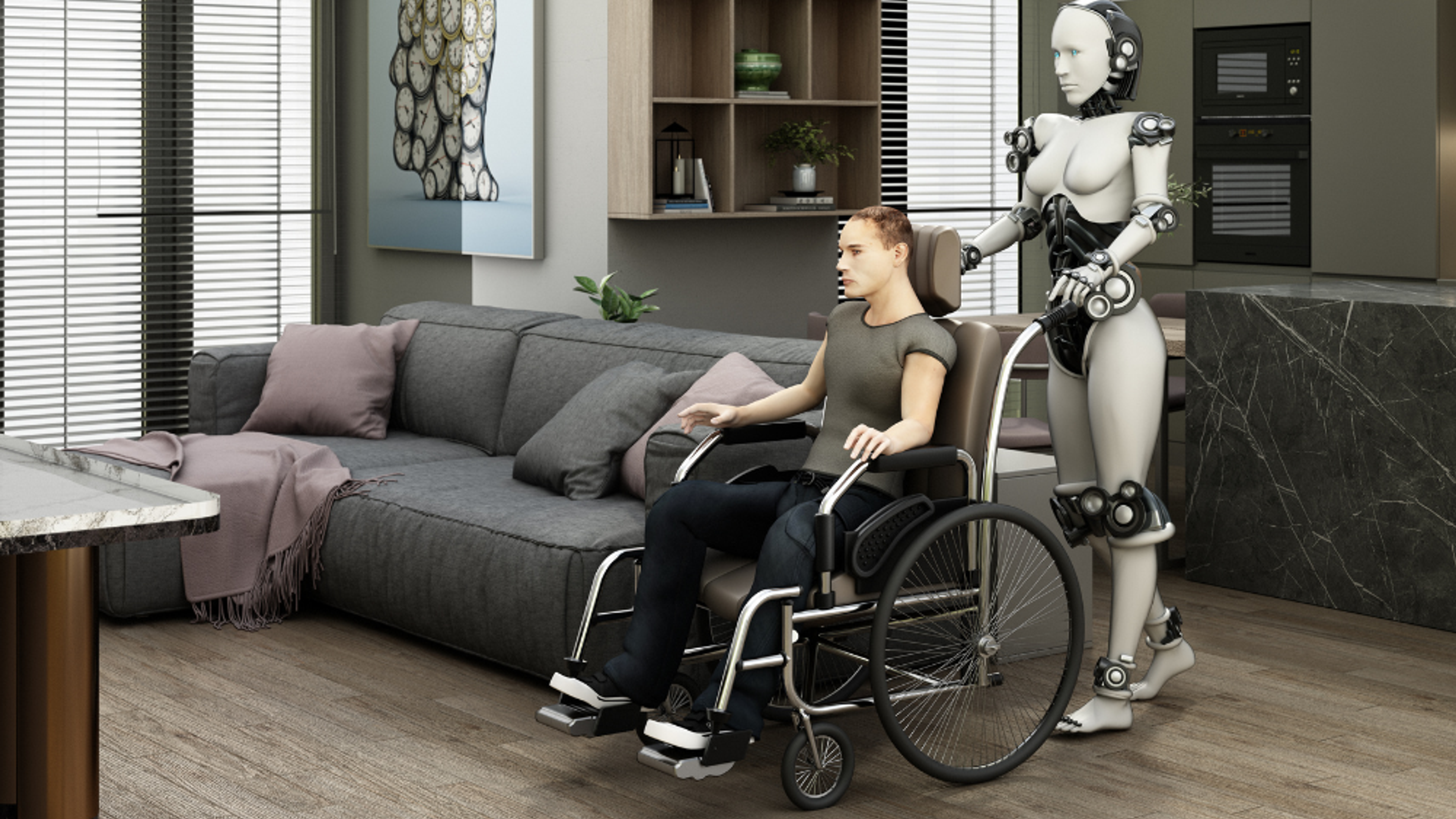
Think about what your morning looks like. You wake up, get dressed, make breakfast, grab your keys, and head out. Simple, right? Can you imagine doing this if your arms aren’t moving, your legs aren’t working properly, or your brain doesn’t process the information as it must? Do you know that there are over a billion people in the world who cannot perform their routine tasks as we normally do? For them, this is a constant challenge.
This is where the humanoids come in. These are the robots that look like humans, and they can prove to be a most useful tool here.
How Big is This Problem?
According to the World Health Organization, around 1.3 billion people live with some form of significant disability today. That’s about 1 in every 6 people on earth.
And here’s one thing that makes this situation even more urgent. There are nowhere near enough caregivers to help all these people. A scoping review published in Taylor & Francis found that the world could face a shortage of 5.7 million nurses by 2030.
Besides this, a study on home robotic acceptance also mentions WHO projections. According to this, there could be a shortage of up to 10 million healthcare workers globally by 2030.
So we have more people who need help. And only a fewer people to give that help. That’s a serious gap. And humanoid robots are one of the most exciting solutions on the table right now.
1. Helping with Daily Tasks at Home
For disabled people, the hardest part of the day isn’t something very dramatic. Instead, it’s the small things that become difficult. For instance, picking up a phone that has fallen on the floor, opening a jar, reaching for something placed on a high shelf, or preparing a simple meal.
Humanoids can help with many things. They can help with finding objects and doing household chores. There are many personal care tasks that a robot can perform for an elderly person. In a study, users said that they would like to have a robot that can cook food for them, open the door, and assist them with bringing and carrying objects. They also said they would love to have a robot that can make an emergency call when needed. But the interesting thing is that most of the users wanted the robots to stay away from their privacy or personal activities.
2. Giving People Their Legs Back
One of the most useful developments in this space is the powered exoskeleton. It is a wearable robotic suit that straps onto the body and moves the user’s legs.
Wearable exoskeletons can help people with spinal cord injuries move around. These devices wrap around the legs and pelvis. They have motors built into the hips, knees, and ankles to replicate natural walking movement.
One of the best examples is ReWalk. The ReWalk Exoskeleton provides people with hip and knee movement. It helps them stand up, walk, turn, and even climb stairs. It is designed for daily use at home, at work, and in the community. In April 2025, Lifeward launched the newest version, ReWalk 7, across the US.
The numbers behind it are quite remarkable. Compared with walking in normal shoes, an exoskeleton increased walking speed by 9%, while users used 17% less energy. It was almost like taking off a 20-pound backpack.
The global market tells its own story. The exoskeleton market was worth $590 million in 2025. It is expected to reach $1.79 billion by 2033.
3. A Robotic Arm When You Need One
There are some people who can walk, but their hands or arms show limited activity. So, for all those people, robotic arms are one of the best inventions.
Commercially available robotic arms (Jaco and iARm) attach directly to the user’s electric wheelchair. They already give people the ability to grip and handle objects. Some specialized robots (Neater Eater) also help users eat their meals independently.
German Aerospace Center introduced the MAYA in 2025. It is a robotic arm. The system is still in its early stages. But it shows that AI-driven robotic arms could handle a much larger part of the work that caregivers currently do.
ETH Zurich researchers went a step further. They built a robot that was completely controlled through mouth joystick inputs and voice commands. This system won first place in the Cybathlon Assistance Robot Race in 2024 and completed four everyday tasks faster than any other entry.
4. Helping Blind and Low Vision People
Losing your sight doesn’t mean losing your independence. It does mean the world wasn’t designed with you in mind. Most streets and transit systems assume you can see.
Robots are starting to change that. Now robots are being used to support blind and low-vision people in their daily lives.
Researchers have also developed hybrid wheel-leg guide robots to assist blind and elderly people.
A paper suggested deploying humanoids along with autonomous shuttle systems. The purpose is to assist blind travellers or wheelchair users with onboarding. The driverless transport system is becoming common day by day. So it is the right time to introduce robots here too. Put simply, what humans were supposed to perform earlier, now robots will do that. They will assist the passengers just like humans do.
5. Helping Deaf Communicate
Communication is a basic human need. For people who are deaf or hard of hearing, a lot of the world’s systems were simply built without them in mind.
According to a study, robotics has real potential to improve communication for deaf people. Robots can help through educational programs and emotional support. They can also help with direct communication.
One promising direction is sign language. Researchers have programmed robots like TEO to perform sign language. And users responded positively to this kind of help.
The idea for the future is that a robot could convert what people are saying into sign language in real time. Think of a classroom or meeting. Here, the robot can sit beside a deaf person. It can keep translating the conversation into sign language, without drawing everyone’s attention to itself.
This kind of technology is still being developed, but the basic technology needed for it is already there.
6. Supporting People with Autism
Children and adults with autism often find social situations overwhelming. Faces can be hard to read. Social rules feel unpredictable. And therapy sessions can be stressful.
That’s where robots bring you an advantage. They’re completely consistent and predictable.
A study was conducted in 2025. This showed a surprising result. The children who were trained by robots improved their social recognition. Children who participated practiced perspective-taking and joint attention. Another group that was trained by humans showed no improvement. The traditional therapy group also showed the same results. The researchers confirmed that these improvements were not because of the structure of the sessions; instead, they came from the presence of robots.
The reason it works makes intuitive sense. A robot never gets frustrated and never changes tone without warning. It is always ready to help and try again. For many children, that consistency is exactly the thing they need to build real confidence.
7. Helping People with Dementia
Dementia and Alzheimer’s take away a person’s memories. Those people have a hard time managing their lives. More than 11 million unpaid caregivers were supporting those people in 2020 alone. This burden sometimes costs caregivers their own health. Robots are now stepping in to support both patients and caregivers.
At the University of Denver, a humanoid “Ryan” was built. It was specifically designed for people with early-stage dementia or depression. According to RoboZaps, 6 older adults were given 24/7 access to Ryan for 4 to 6 weeks. They said that they enjoyed talking to it and felt happier. But they also said that talking to the robot was not the same as talking to a person.
A 2025 study showed that humanoid robots programmed to deliver mindfulness-based stress relief therapy could improve mood and cognitive engagement in dementia patients.
China launched a major eldercare pilot program. This requires companies and research institutes to deploy at least 200 robots to 200 families for six-month trial periods. The program targets the full range of elder care needs. This includes daily tasks, rehabilitation, psychological support, and companionship.
What’s Holding This Back?
It would be dishonest not to talk about the challenges. Because there are real ones.
Cost, of course, is the biggest one. The eldercare robot market sits at $3.14 billion in 2025. An individual robot may cost you somewhere around $6,000 and can reach more than $100,000. This is huge, and most families can’t afford it. Also, insurance doesn’t cover it. So it is very important to keep the cost in range for everyone. Otherwise, this service will only be for the people who are already privileged.
Privacy is another concern. Robots with cameras and microphones are constantly collecting data. But it is still not clear where and how this data is stored, and who can access it. A 2022 bioethics paper adds that when a robot lives in someone’s home, it inherently sees into personal spaces. They monitor movements, routines, and even the behavior of visiting family members.
User autonomy is a firm line that must not be crossed. A robot must never override a user’s decision. The person must always consent to having robotic help.
Technical readiness will still take some time. Current robots are not yet ready for widespread physical assistance in homes. Personalization and adaptability still need significant work.
And then there’s also the “uncanny valley” problem. Basically, when a robot tries to look like a human but doesn’t look like one, people can feel uncomfortable.
Studies show that people accept robots more easily when it looks like a machine, rather than looking too much like a human. People also feel more comfortable when the work the robot does is safe and doesn’t unnecessarily interfere with their personal space.
Robots Won’t Replace Human Care – They’ll Support It
One thing is very important to mention here: no one wants to replace the caregivers. This is not the motive behind building this technology.
RoboZaps’ reporting on eldercare captures the consensus view well. Robots handle the routine stuff like medication reminders and basic monitoring, along with companionship. So that human caregivers can focus their limited time on what only humans can do. This includes real conversation and emotional presence, along with nuanced care decisions.
The real thing is that there aren’t enough caregivers to meet the demand.
Robots don’t replace humans. Instead, they make the work of the caregivers who are already there a little easier, so they have some time to breathe and can do their jobs better.
What’s Coming Next?
Progress in this field is really happening very quickly. Researchers are working on robots that can:
- Detect before a person falls and help them in time.
- Guide blind people through unfamiliar buildings.
- Understand and interpret sign language in real time.
The OpenExo exoskeleton is also making this research more accessible to developers who previously couldn’t afford the cost of working in this field.
Because now there is better technology and AI, every new generation of robots is getting more capable than the previous one. And of course, with every passing day, it is also becoming more affordable.
More articles on this topic
60 articles ReportChina's Humanoid Supply Chain Moves Toward Industrial Production
 ReportChina Launches First National Standards for Humanoid Robots
 ReportCounterpoint Expects Work Applications to Drive 90% of Humanoid Shipments by 2030
 ReportHealthcare And Care Robots: Which Companies Are Building Robots For Hospitals, Clinics, Elderly Care?
 ReportTiny Robots Can Soon Dissolve Kidney Stones In A Jiffy
 ReportUnitree’s 'Superman' Robot Claims to Outrun Usain Bolt
 ReportForeign Investors And Tech Executives Pay Up To $15,000 To Tour China’s Factories
 ReportCan Certified Robots Compete With China's Cheap Patrol Bots?
 ReportQuadruped Robots Are Becoming Big Business: Here’s Why The US Is Targeting Chinese Makers
 ReportHumanoid Robots Hit Mass Production
 ReportHow Robots Are Learning to Read Minds?
 ReportAre Humanoid Robot Videos Misleading Us?
BUSINESS NEWS WEEKLY LETTER
The Weekly Letter for Robotics Professionals, Summarizing the Most Important Industry Moves, Launches, Deals and Signals.