Humanoid Launches KinetIQ Ascend to Improve Robot Dexterity
London-based robotics company Humanoid has introduced KinetIQ Ascend. It is basically a new kind of Reinforcement Learning (RL) approach.

July 6, 2026 by Carl
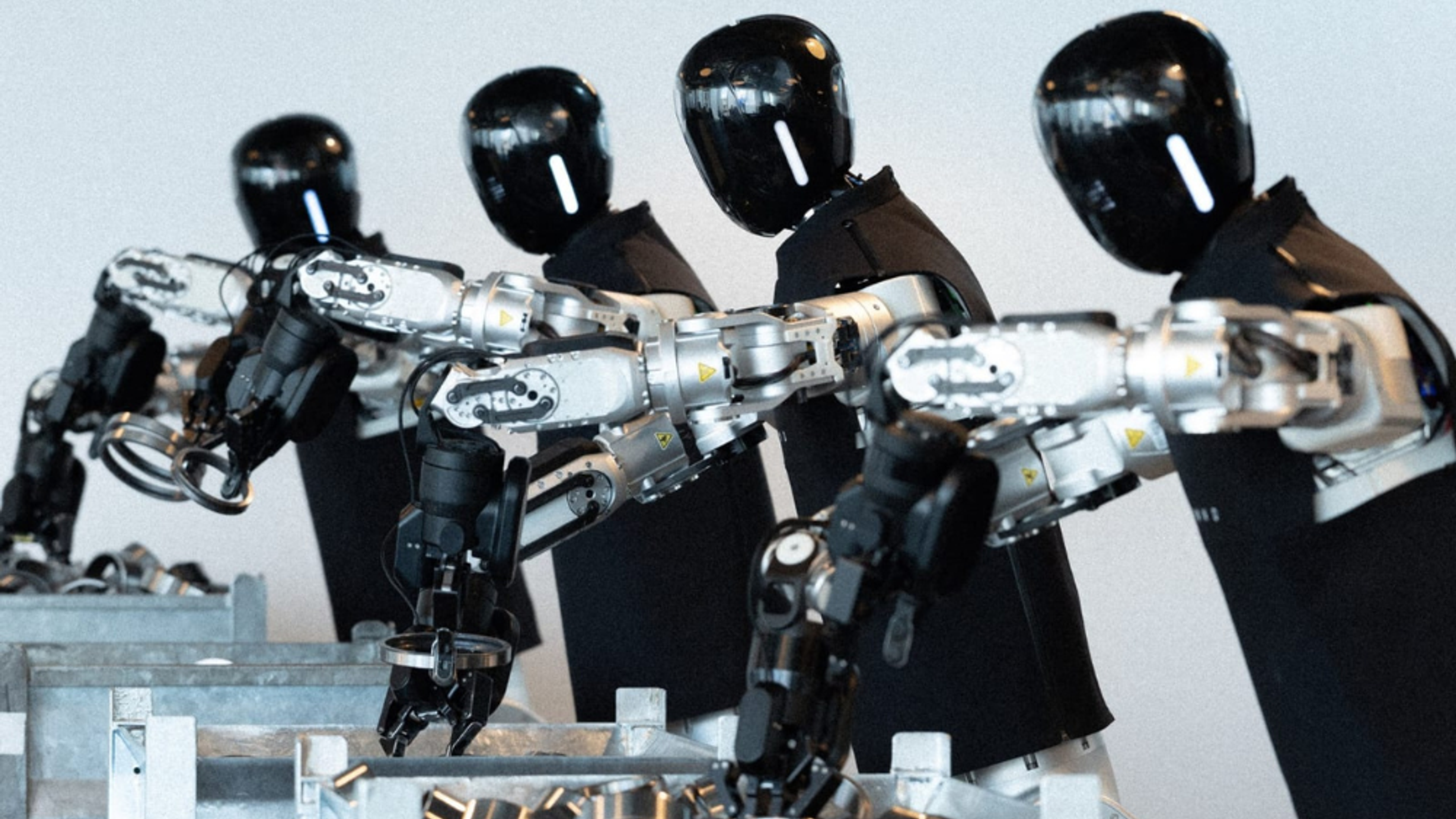
London-based robotics company Humanoid has introduced KinetIQ Ascend. It is basically a new kind of Reinforcement Learning (RL) approach. The purpose of launching this approach is to make robotic manipulation much better and to achieve human-level dexterity in robots. As per the company, this system is designed to deliver up to 99.9% manipulation reliability at human speed and beyond. This step is indeed considered to be yet another major milestone in deploying humanoid robots in industrial environments.
The announcement is built on Humanoid’s proprietary KinetIQ AI framework. This framework is what powers the company’s humanoid robots. It is worth noting that this technique is not like traditional imitation learning, where robots learn simply by copying human demonstrations. In fact, KinetIQ Ascend enables robots to learn through trial-and-error methods. Yes, you read it right! You must have heard about the fact that humans learn from their mistakes. Well, the same approach is now applied to humanoid robots, too. And this is what makes robots capable of improving their skills through their own experiences.
The company said that KinetIQ Ascend represents a shift in how robot capabilities are developed. Now there’s no need to spend months in order to collect data and to fine-tune each and every task manually. In fact, now engineers can begin with a basic behavior and allow reinforcement learning to optimize it into a deployment-ready skill.
Humanoid Tests KinetIQ Ascend in Industrial Applications
Humanoid demonstrated this technology in a variety of industrial manipulation tasks. In a machine-feeding application, a robot picked up steel bearings from a bin and placed them onto a conveyor. This process increased the throughput by 42%. And more importantly, the robot operated at 1.5 times the speed of the human demonstrations it originally learned from.
In another test, a robot handed over stuff from a cluttered tote to a person. And in this test, the throughput increased by a whopping 85%. Also, the success rate of the task increased from 80% to 98%.
Humanoid didn’t stop testing this approach there. In fact, the company tested this technology in an even more complex two-arm tote-handling task. But the results were astonishing. During this task, the throughput more than doubled, and success rates rose from 78% to 99%. Only a few days of training led to about 20 times fewer failures.
The company also reported that robot performance improved predictably as training time increased, drawing comparisons to how large language models become more capable with additional computing power and data. Humanoid believes this scaling trend suggests the approach could eventually reach 100% reliability.
Beyond improved performance, the research revealed two notable findings. Optimizing only the most difficult part of a workflow enhanced the performance of the entire task, while robots also demonstrated the ability to generalize what they had learned to previously unseen objects.
Humanoid said the long-term goal is to build a “capability factory,” where deployed robots continuously improve through real-world experience. In the future, corrections made by human supervisors could automatically become training signals, allowing entire robot fleets to learn collectively and accelerate the development of new skills.
Founded by Artem Sokolov in 2024, Humanoid has grown to more than 250 engineers and researchers across offices in London, Boston, Vancouver, and San Diego. The company is aiming to become the world’s leading general-purpose industrial humanoid robotics company within two years.
The latest AI breakthrough follows Humanoid’s recent manufacturing expansion. In May, the company announced a partnership with Bosch and Schaeffler to scale production of its HMND robots. “For Humanoid, this agreement is a critical step on the roadmap connecting proof of concept and large-scale deployment,” said founder Artem Sokolov. Earlier this year, the company also revealed a phased binding agreement with Schaeffler that could see 1,000 to 2,000 humanoid robots deployed across the manufacturer’s global facilities by 2032.
More articles on this topic
235 articles ReportWhat it Really Costs to Own a Personal Assistant Robot at Home
 ReportA Little Company, Courtesy of a Robot
 ReportA Humanoid Walks into a New York Park
 ReportRailway Inspection Robots Search for Defects in Tracks
 ReportChina's Humanoid Supply Chain Moves Toward Industrial Production
 ReportCompanionship now comes with a Charging Cable
 ReportCould a Robotic Guide Help Blind Travelers Navigate Public Spaces?
 ReportThis Robot Finds Cracks and Fixes Them
 ReportXPENG's IRON Humanoid Adapts to Changing Human Gestures in Real Time
 ReportRobots Are Learning to Sort Clothes for Textile Recycling
 Report110 Humanoid Robots Set Guinness World Record With Synchronized Dance
 ReportScientists Teach Humanoid to Climb Ladders and Survive Falls
BUSINESS NEWS WEEKLY LETTER
The Weekly Letter for Robotics Professionals, Summarizing the Most Important Industry Moves, Launches, Deals and Signals.