Inside Lightberry’s $39,990 Bet on a more social humanoid
A humanoid robot does not have to spend its day moving boxes, welding car parts or working on a factory floor. Lightberry is betting it can do something else: talk to people.

September 7, 2026 by Nisha
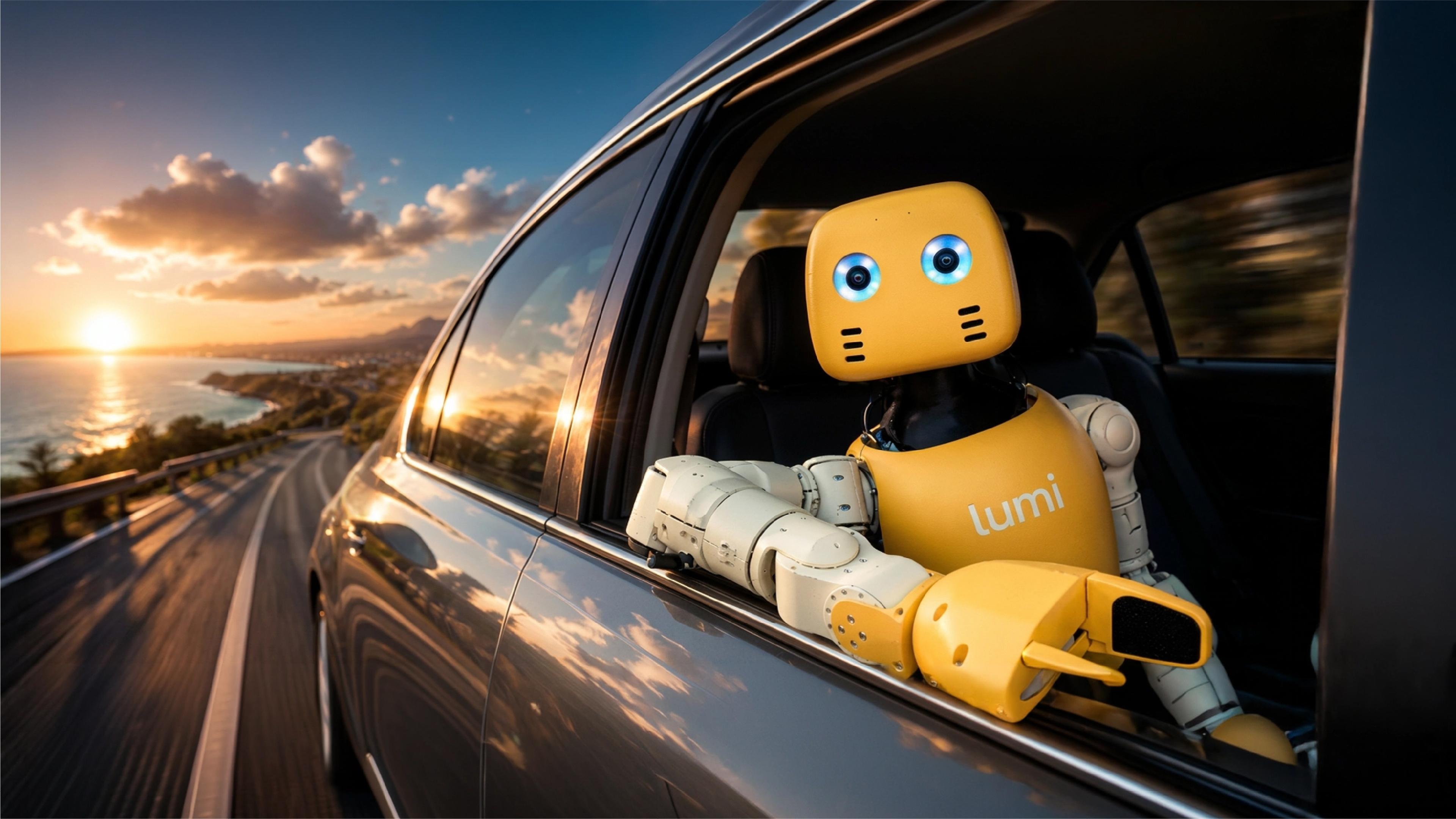
San Francisco – Lightberry, the San Francisco startup has opened reservations for Lumi, a humanoid robot built with human interaction at the center of its pitch. Lightberry lists the robot at $39,990 and says it is scheduled to ship in 2026.
According to Lightberry, Lumi is designed to hold conversations, answer questions, tell stories, take photos, look up information, entertain crowds and guide people.
Rather than making conversation a secondary feature on a robot built mainly for physical work, Lightberry is making it a central part of Lumi's appeal.
That could make the robot a fit for places such as events, showrooms and public venues, where answering questions, providing information or engaging visitors may matter more than lifting heavy objects.
The software is a part of the pitch
Lumi is not a humanoid that Lightberry has built entirely from scratch.
The company says it combines its own sensors and software with a G1-compatible body. The robot stands about 1.3 meters tall, weighs roughly 40 kilograms and has 34 degrees of freedom.
Much of what makes Lumi different, however, sits in the software.
Through the Lightberry SDK, customers can connect external tools and create new behaviors. The company also says Lumi's personality, voice, knowledge and movements can be customized using natural-language interaction.
Lightberry is also positioning the robot as something customers can use without having to build the entire robotics stack themselves. The company says Lumi is designed to work out of the box, with customers able to customize its behavior to suit their needs.
Lumi also has a rounded body and bright yellow finish, giving it a more character-driven look than the industrial robots that dominate much of the robotics industry.
Lightberry lists stereo cameras, a beamforming microphone array and an NVIDIA Jetson Thor computer with 64 GiB of memory. The 421 Wh battery is rated for about 2.5 to 3.5 hours of operation.
A different market for humanoids
Lumi's pitch is ultimately less about replacing a worker and more about putting a robotic presence into a human-facing environment.
A robot that can answer a visitor's questions, take a photograph or entertain a crowd has a very different value proposition from one designed to move parts around a factory. That could open another lane for humanoid robots, particularly in places where interacting with people is part of the job.
Lightberry says the robot is scheduled to ship in 2026 and has launched '100 Founder Edition’ Lumis and is being offered through reservations.
More articles on this topic
235 articles ReportWhat it Really Costs to Own a Personal Assistant Robot at Home
 ReportA Little Company, Courtesy of a Robot
 ReportA Humanoid Walks into a New York Park
 ReportRailway Inspection Robots Search for Defects in Tracks
 ReportChina's Humanoid Supply Chain Moves Toward Industrial Production
 ReportCompanionship now comes with a Charging Cable
 ReportCould a Robotic Guide Help Blind Travelers Navigate Public Spaces?
 ReportThis Robot Finds Cracks and Fixes Them
 ReportXPENG's IRON Humanoid Adapts to Changing Human Gestures in Real Time
 ReportRobots Are Learning to Sort Clothes for Textile Recycling
 Report110 Humanoid Robots Set Guinness World Record With Synchronized Dance
 ReportScientists Teach Humanoid to Climb Ladders and Survive Falls
BUSINESS NEWS WEEKLY LETTER
The Weekly Letter for Robotics Professionals, Summarizing the Most Important Industry Moves, Launches, Deals and Signals.