KAIST Humanoid Robot Shows Off Moonwalk at South Korea's Physical AI Event
KAIST has showcased a humanoid robot performing a moonwalk and moving objects, highlighting advances in physical AI and real-world robotics.
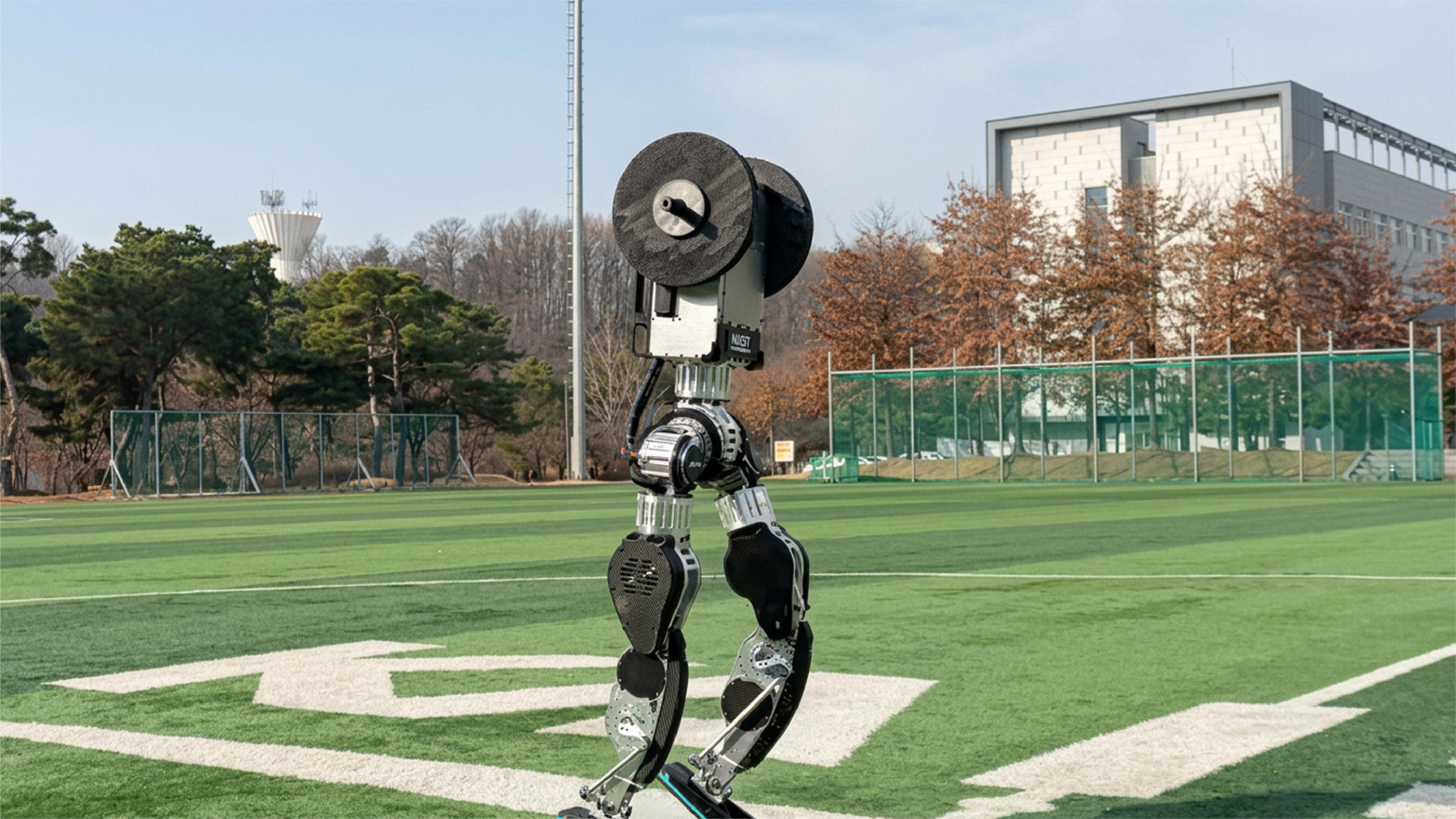
It was a humanoid robot that had all eyes on it at a South Korean technology event, first for its rendition of Michael Jackson’s moonwalk and then to put on display the way it can employ its whole body in moving and carrying things.
The product of work by researchers from the Korea Advanced Institute of Science and Technology (KAIST) made an appearance at Physical AI Korea 2026 on October 13 at the Daejeon campus of the university. Under Hae-Won Park, a mechanical engineering professor, the team showed off a humanoid with the ability to coordinate its actions for physical tasks.
The audience went up in raptures as the robot opened the demonstration by moonwalking in reverse across the stage. After that, it set about relocating large letters to form the word KAIST. The robot did not stick to one pattern of motion but would alter its posture to suit what it was doing: using legs and torso to push certain objects and bending the knees to raise others.
In a sense, the showing was an insight into KAIST’s physical AI research, aimed at making machines that can comprehend their environment and have dealings with the real world. While other AI is concerned with processing information, physical AI marries the software to a robotic system able to move, sense and do work.
There were other technologies on offer from KAIST in the way of medical applications, machine navigation and wearable robots. In one instance, university President Choongsik Bae was seen in a robotic suit put together by the team of Kyoungchul Kong; the system gathered data for health and activity assessment as it aided his movements.
Bae took the opportunity to talk of the need for AI that is not confined to the digital realm. In an official statement from KAIST, he was quoted as putting stress on the wider application of physical AI in various industries, not just in the making of humanoids. Plans are in place for the university to see its technology find use in manufacturing, logistics, healthcare and the like. To that end, KAIST is forging industry ties and supporting startups and education to bridge the gap between robotics research and the commercial side.
All the same, while the humanoid put in an attention-grabbing performance, it left open the question of how dependable it would be in undertaking such tasks in less controlled circumstances. There was no word from KAIST on when one might expect to see a commercial version or any hard figures on its performance.
Then again, for KAIST, the point of the event was not simply to have a robot dance. It was to put forward the case for a more general approach to building machines that can get on with useful work in the physical world.
More articles on this topic
235 articles ReportWhat it Really Costs to Own a Personal Assistant Robot at Home
 ReportA Little Company, Courtesy of a Robot
 ReportA Humanoid Walks into a New York Park
 ReportRailway Inspection Robots Search for Defects in Tracks
 ReportChina's Humanoid Supply Chain Moves Toward Industrial Production
 ReportCompanionship now comes with a Charging Cable
 ReportCould a Robotic Guide Help Blind Travelers Navigate Public Spaces?
 ReportThis Robot Finds Cracks and Fixes Them
 ReportXPENG's IRON Humanoid Adapts to Changing Human Gestures in Real Time
 ReportRobots Are Learning to Sort Clothes for Textile Recycling
 Report110 Humanoid Robots Set Guinness World Record With Synchronized Dance
 ReportScientists Teach Humanoid to Climb Ladders and Survive Falls
BUSINESS NEWS WEEKLY LETTER
The Weekly Letter for Robotics Professionals, Summarizing the Most Important Industry Moves, Launches, Deals and Signals.