RoboParty Takes Open-Source RP1 Humanoid to Southeast Asia
RoboParty is bringing its open-source RP1 humanoid to Southeast Asia, giving researchers access to its hardware designs and software tools.
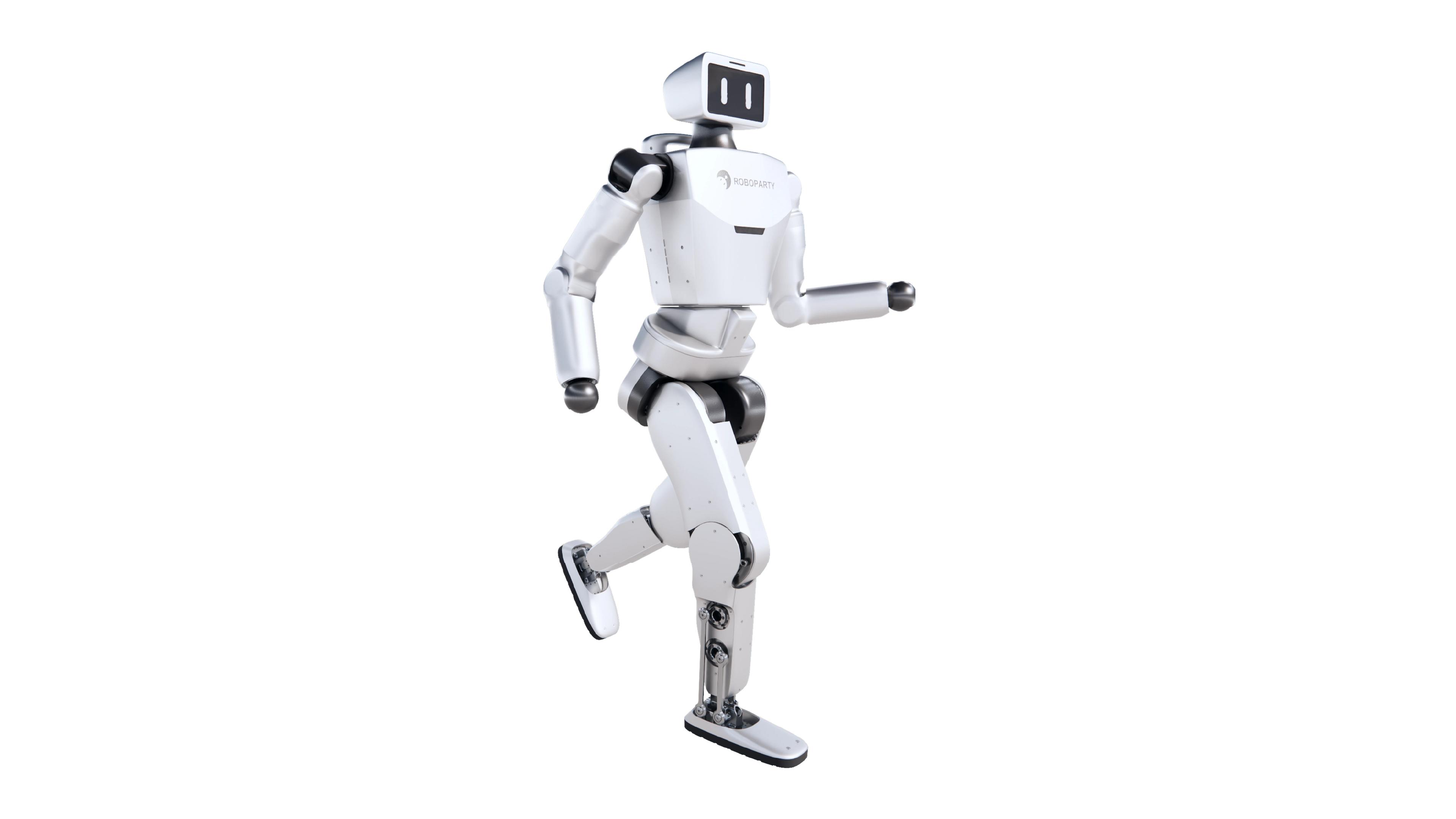
With the launch of its RP1 humanoid platform in Southeast Asia, RoboParty is putting a robot made for artificial intelligence development and customization within reach of the region’s developers and universities. The Chinese robotics firm made the regional introduction on October 15 and published a press release to that effect the next day. It is not as though this is the first time the robot has been seen; RP1 had its global debut at IROS, the International Conference on Intelligent Robots and Systems, back in September 28.
In the form of ROBOTO 01, the RP1 is an open-source humanoid of the full-stack variety. Researchers can make what changes they like to the hardware, software and the mechanics of its motion.
A Humanoid Designed for Developers
RoboParty describes an open architecture for the RP1 that extends from mechanical designs and electronic systems to the ROMOMO actuator modules it has put together in house, as well as to AI training frameworks and simulation tools.
The idea is to let researchers have at systems that are normally hard to tamper with so they can see how various components influence performance and put their own algorithms to work.
For its part the company states that the RP1 is equipped with joint actuators and a real-time motion-control system good for 160 newton-meters of peak torque. RoboParty put this to the test at IROS 2026 where, in an interactive session, the humanoid was shown to reposition itself after being pushed or kicked by onlookers. Such feats are down to PartyOS, the company’s framework for robotics development which has the means to train motion skills and deal with any disturbances.
What's Available to Developers?
RoboParty's public GitHub repositories provide a much clearer picture of its open-source claims. The RP1 project has links to everything from deployment software and electronics files to robot descriptions and mechanical design resources. There are circuit schematics, firmware materials and CAD files among the published resources.
Then again, not all repositories are equal in terms of what they have to offer and how complete the components are. A developer will want to read the documentation and license of a given project before making use of the material; some demonstrations are still listed as to come. This distinction really matters a lot to a researcher who would be working independently to reproduce an experiment.
Expanding Access Across Southeast Asia
RoboParty is putting forward RP1 for more advanced robotics research in the same way its RPO platform is meant for foundational work and hands-on learning. Yi Huang, the founder, has put it that the objective is to give developers access to humanoid technology they can put their mark on. “We want them to be able to modify and improve the underlying systems,” he said.
With the approach its taking, the company believes it can spare universities and laboratories the trouble of having to fabricate every piece of hardware so they can concentrate on the software side of things.
There has been no word yet from RoboParty on a delivery timetable for Southeast Asia or on sales figures and university clientele. The expansion broadens the pool of potential researchers for RP1, but in the end, the hardware has to be there and developers must be able to make something of the technology on paper for it to have any real bearing.
More articles on this topic
235 articles ReportWhat it Really Costs to Own a Personal Assistant Robot at Home
 ReportA Little Company, Courtesy of a Robot
 ReportA Humanoid Walks into a New York Park
 ReportRailway Inspection Robots Search for Defects in Tracks
 ReportChina's Humanoid Supply Chain Moves Toward Industrial Production
 ReportCompanionship now comes with a Charging Cable
 ReportCould a Robotic Guide Help Blind Travelers Navigate Public Spaces?
 ReportThis Robot Finds Cracks and Fixes Them
 ReportXPENG's IRON Humanoid Adapts to Changing Human Gestures in Real Time
 ReportRobots Are Learning to Sort Clothes for Textile Recycling
 Report110 Humanoid Robots Set Guinness World Record With Synchronized Dance
 ReportScientists Teach Humanoid to Climb Ladders and Survive Falls
BUSINESS NEWS WEEKLY LETTER
The Weekly Letter for Robotics Professionals, Summarizing the Most Important Industry Moves, Launches, Deals and Signals.