Robots in Elderly Care: Assistants, Companions, or Replacements?
Robots are entering elderly care as companions and assistants, but their growing role raises an important question: can machines ever replace human carers?

July 27, 2026 by Carl
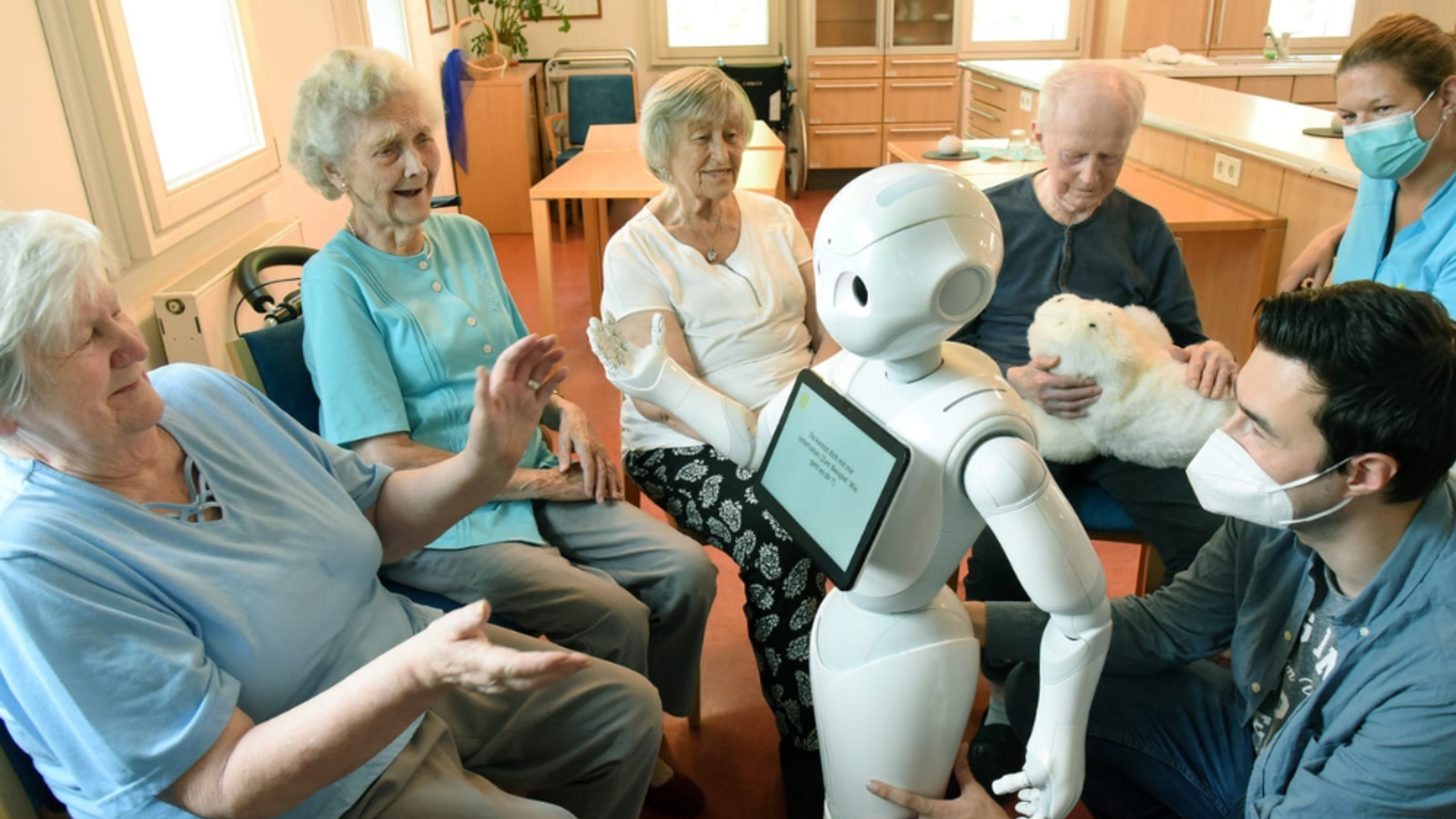
For an older person living alone, a robot can prove to be way more helpful than just cleaning the floor or organising stuff. It can remind them about taking their medicines and can help them walk around the house. A robot can also monitor their health and can even talk to them when they feel lonely. Yes, you read it right!
All these possibilities are almost becoming realities. Thanks to the advancements in AI and robotics. However, as robots are taking on more responsibilities in elderly care, one question can’t be ignored. And that is: Will robots eventually replace human carers? Well, the answer is not as straightforward as you might think.
In some parts of the world, robots are already being used to help older people. In fact, some robots are even capable of reducing loneliness and improving emotional wellbeing. However, at the same time, today’s robots are nowhere near capable of replacing everything a human carer does. And do you know why? Well, the reason is that taking care of someone doesn’t mean helping them with physical tasks only. In fact, caring involves much more than that, such as showing genuine empathy, emotional understanding, flexibility, and the ability to understand what a person is going through even if they aren’t able to express their feelings.
So, that’s why the future of elderly care won’t be as simple as opting for either humans or robots. In fact, there’s a lot more to the story. And here, the realistic approach would be to figure out how robots and human carers can work together.
Why Care Robots?
There are 2 main reasons why the interest in care robots is growing rapidly nowadays. One of them is the growing aging population, and the other one is the shortage of care workers. A number of countries are facing serious shortages of care workers, including South Korea, Japan, and even the UK. And as per the estimates, in the coming years, this gap is gonna increase even more. Governments and healthcare organisations are looking out for new ways in order to overcome this gap and help elderly people.
Now this is where AI & robotics make the difference. For some countries, robots are being explored as a way to fill gaps in the care system. While for other countries, the goal is to use technology to help human carers manage their workload and give older people way more independence. The difference is worth noting. A robot that’s designed to help someone stand safely is completely different from the one that is designed to operate like a human and provide emotional and personal care to older adults.
Robots as Companions
When people think about robots in elderly care, they may imagine humanoid machines walking around nursing homes. In reality, some of the most widely used care robots look nothing like humans. Companion robots are already being used in several countries. These devices are designed to interact with people, provide reminders, encourage conversation, and offer emotional support.
One of the best-known examples is PARO, a therapeutic robotic seal developed in Japan. The robot responds to touch and sound, reacts to interaction, and is designed to provide comfort and engagement. It has been used in care environments for years, including settings involving people living with dementia.
Research into therapeutic robots has also explored whether these devices can help reduce loneliness, depression, anxiety, and agitation among older adults.
Another example is Hyodol, an AI-powered companion robot developed in South Korea. Designed for older adults living alone, the robot can communicate with users, provide reminders, and support daily routines. Some older users have developed strong emotional attachments to their robots, giving them names, dressing them in clothes, and treating them almost like family members.
ElliQ is another example of an AI companion designed specifically for older adults. It can initiate conversations, encourage activities, and help users stay socially engaged. These examples show that care robotics is not simply about machines performing physical tasks. Robots are increasingly being developed to address one of the biggest problems faced by older adults: loneliness.
Humanoids in Elderly Care
Companies around the world are developing robots that can walk, manipulate objects, and perform physical tasks. In the future, these machines could potentially help older adults with activities such as carrying objects, fetching items, assisting with household chores, or supporting mobility.
However, there is still a significant gap between demonstrations and real-world deployment. Many of the most impressive humanoid robot demonstrations involve carefully controlled environments or some degree of human teleoperation. Operating reliably inside a real home is much harder.
Homes are unpredictable. Floors may be uneven. Furniture can move. Pets can suddenly appear. Objects may be left in unexpected places. A robot needs to understand its surroundings and respond safely to situations that its developers may never have anticipated.
This is particularly important when working with older adults. A mistake in a warehouse may damage a product. A mistake around a vulnerable person could cause a serious injury. For this reason, fully autonomous humanoid carers are still a long way from becoming common in homes and care facilities.
Helping, Not Replacing
The most realistic future for robotics in elderly care may be one where robots assist human carers rather than replace them. Robots could take responsibility for repetitive or physically demanding tasks. They could monitor certain activities, provide reminders, help with mobility, or perform routine checks. This could allow human carers to spend more time on the parts of care that require empathy and personal attention.
Imagine a future where a robot reminds an older adult to take medication, detects a potential fall, or helps them retrieve an object from another room. Meanwhile, a human carer can focus on conversation, personal care, emotional support, and making decisions based on the individual’s needs.
In this model, robots do not remove the human element from care. Instead, they give human carers more time to focus on emotional well-being. This could become increasingly important as care worker shortages grow.
Ethical Concerns
The rise of care robots also creates serious ethical challenges. One concern is privacy. Companion robots may collect sensitive information about users, including conversations, daily routines, health information, and behavioural patterns. If this data is stored on commercial servers, questions arise about who controls it, how it is protected, and what happens to it in the future.
There is also the issue of emotional attachment. Older adults, particularly those living with dementia, may not always understand that they are interacting with a machine. If a robot speaks like a human and behaves like a companion, the emotional relationship can become very real for the user.
That raises difficult questions about transparency and consent. Should a robot always clearly identify itself as a machine? How should it respond if a person believes it is alive? And who is responsible if an AI companion gives inappropriate advice or encourages risky behaviour? These questions become even more important when robots are used with vulnerable people.
The Future: Robots as Care Partners
The future of elderly care will probably not be about choosing between robots and humans. Instead, robots are more likely to become care partners.
Humanoid robots could eventually take on more physical responsibilities as the technology becomes safer and more reliable. Human carers, meanwhile, will continue to provide the emotional connection, personal attention, judgement, and compassion that machines struggle to replicate.
The most successful future for elderly care may be one where robots handle what machines do best, while humans continue to do what humans do best. The goal should not be to build robots that replace carers. It should be to build robots that help carers care better.
More articles on this topic
60 articles ReportChina's Humanoid Supply Chain Moves Toward Industrial Production
 ReportChina Launches First National Standards for Humanoid Robots
 ReportCounterpoint Expects Work Applications to Drive 90% of Humanoid Shipments by 2030
 ReportHealthcare And Care Robots: Which Companies Are Building Robots For Hospitals, Clinics, Elderly Care?
 ReportUnitree’s 'Superman' Robot Claims to Outrun Usain Bolt
 ReportForeign Investors And Tech Executives Pay Up To $15,000 To Tour China’s Factories
 ReportCan Certified Robots Compete With China's Cheap Patrol Bots?
 ReportQuadruped Robots Are Becoming Big Business: Here’s Why The US Is Targeting Chinese Makers
 ReportHumanoid Robots Hit Mass Production
 ReportHow Robots Are Learning to Read Minds?
 ReportAre Humanoid Robot Videos Misleading Us?
 ReportHow Do Collaborative Robots Increase Workplace Safety?
BUSINESS NEWS WEEKLY LETTER
The Weekly Letter for Robotics Professionals, Summarizing the Most Important Industry Moves, Launches, Deals and Signals.