Tiangong Ultra Smashes Humanoid 100-Meter Record with 8.64-Second Run
The Chinese humanoid posted three progressively faster times in Beijing, but its uncontrolled finish showed that sprint speed and useful mobility remain separate engineering problems.

September 3, 2026 by Vismay
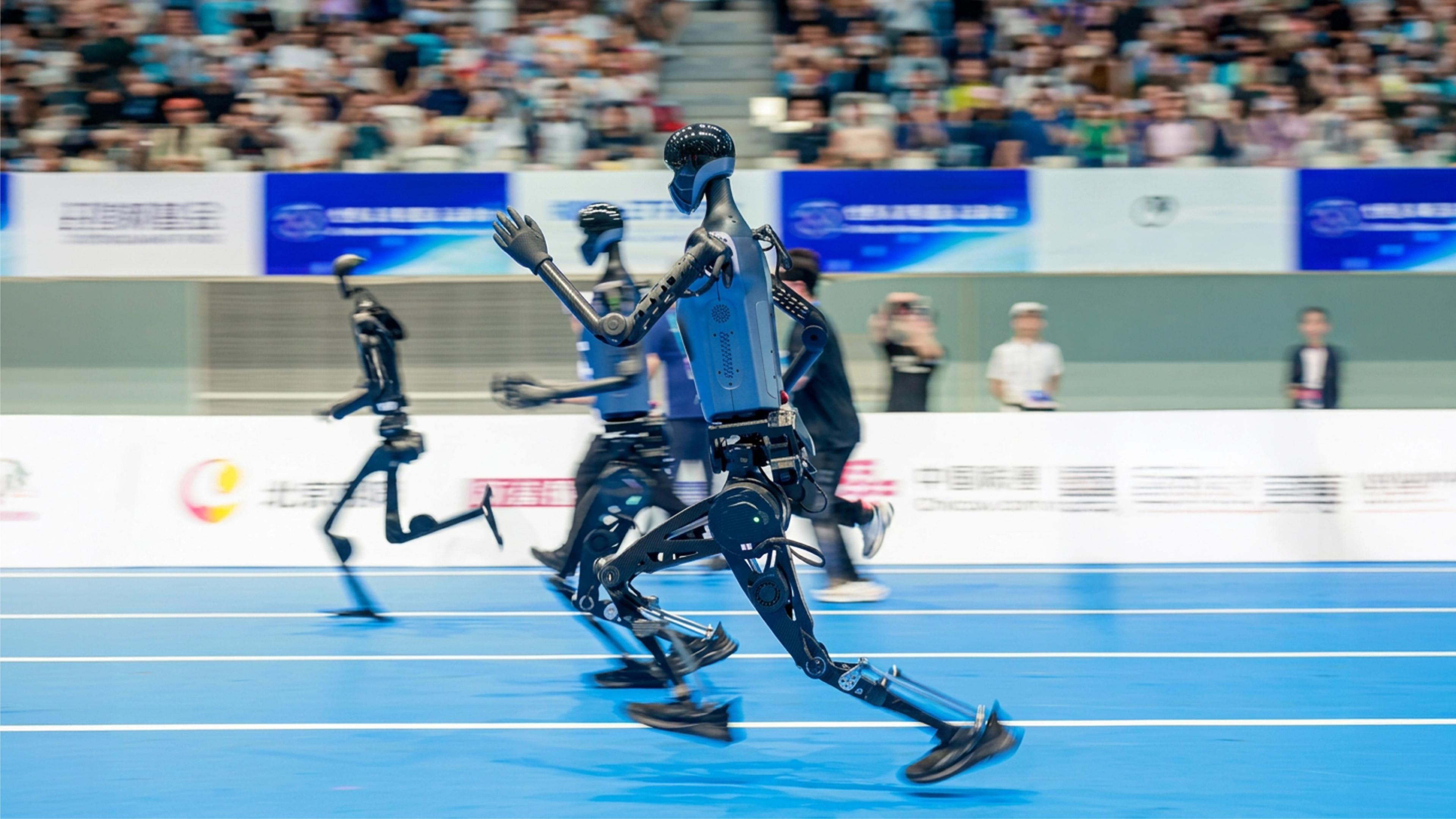
BEIJING: Tiangong Ultra, developed by Beijing Humanoid Robot Innovation Center has completed a 100-meter race in 8.64 seconds recently, setting the fastest reported time for a humanoid robot and winning the large-size division at the World Humanoid Robot Games.
The result lowered the 8.86-second mark the robot recorded in the semifinal one day earlier. Tiangong Ultra also known as X-Humanoid had opened the competition with a 9.39-second run, giving it three progressively faster times during the five-day event, according to Reuters.
The developer attributed enhanced performance to upgraded joint motors, cooling, weight reduction and control algorithms, Beijing Youth Daily reported. However, it has not released detailed test data showing how much each change contributed.
The 8.64-second result is numerically 0.94 seconds faster than Usain Bolt’s 9.58-second men’s world record, recognized by World Athletics. It is noteworthy that the comparison is not exactly like-for-like as it is not governed by human athletics rules.
The Associated Press reported that Tiangong Ultra and several other runners crashed into a padded barrier beyond the finish line.
Sparks came from some robots, prompting track workers to use fire extinguishers. Almost all the runners were carried from the track.
Tiangong Ultra encountered a similar problem after its 8.86-second semifinal. The robot struck a thick stopping mat, collapsed and developed a small fire in its torso, Reuters reported. Another robot came apart during the other semifinal.
Robots had to operate autonomously without remote control in all track and other competitive events except the 100-meter and 400-meter obstacle races, according to an event summary published by the Beijing municipal government.
Over 2,000 robots from 666 teams entered 51 disciplines at the Games, including sports and simulated factory, restaurant, household and emergency tasks. Jonathan Hurst, an Oregon State University robotics professor, told AP that more meaningful progress would be measured by robots performing useful work autonomously for hours.
As for the Beijing games, even the fastest humanoids still depended on barriers and trackside crews to stop safely.
More articles on this topic
235 articles ReportWhat it Really Costs to Own a Personal Assistant Robot at Home
 ReportA Little Company, Courtesy of a Robot
 ReportA Humanoid Walks into a New York Park
 ReportRailway Inspection Robots Search for Defects in Tracks
 ReportChina's Humanoid Supply Chain Moves Toward Industrial Production
 ReportCompanionship now comes with a Charging Cable
 ReportCould a Robotic Guide Help Blind Travelers Navigate Public Spaces?
 ReportThis Robot Finds Cracks and Fixes Them
 ReportXPENG's IRON Humanoid Adapts to Changing Human Gestures in Real Time
 ReportRobots Are Learning to Sort Clothes for Textile Recycling
 Report110 Humanoid Robots Set Guinness World Record With Synchronized Dance
 ReportScientists Teach Humanoid to Climb Ladders and Survive Falls
BUSINESS NEWS WEEKLY LETTER
The Weekly Letter for Robotics Professionals, Summarizing the Most Important Industry Moves, Launches, Deals and Signals.