UMA Reveals Design of Its First Humanoid Robot and Introduces Real-Time Learning
UMA has revealed the design of its first humanoid robot at Machina Summit. This European startup has also introduced a new AI system called Real-Time Learning.

July 8, 2026 by Carl
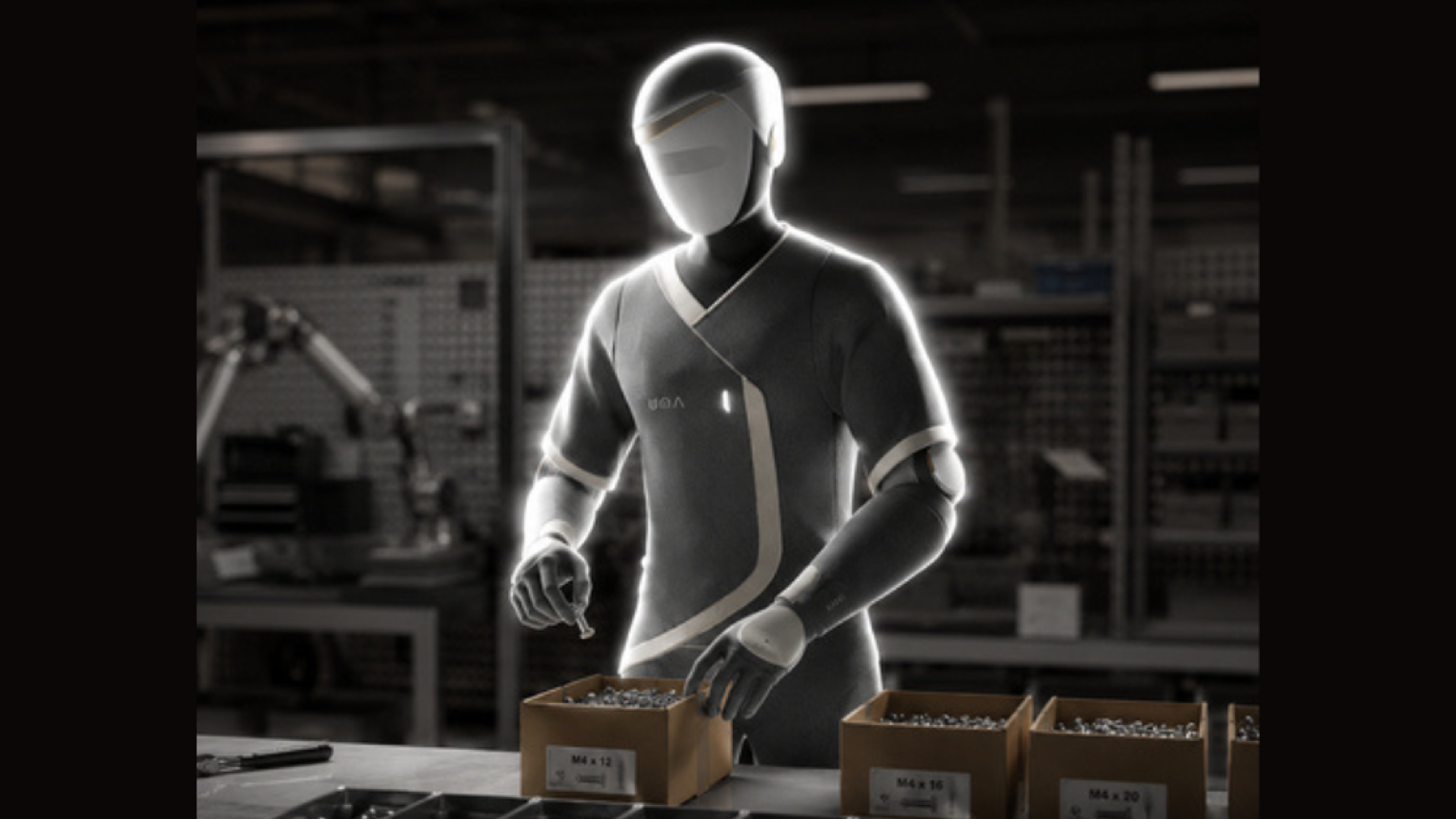
UMA has revealed the design of its first humanoid robot at the Machina Summit. This European startup has also introduced a new AI system called Real-Time Learning. Rather than manually programming robots for each and every task, this new technology allows robots to learn from human demonstrations. With this announcement, UMA has shared its vision of creating such robots that can safely work alongside humans in industries and factories.
Currently, as we all know, there are many countries that are facing labor shortages. And the reason is, of course, the growing demand created by the energy transition as well as industrial reshoring. As per Korn Ferry, there’s a high chance that the global economy may face a labor shortage of around 85 million by 2030. And because of that, the world could lose up to $8.5 trillion. However, UMA believes that intelligent humanoid robots can surely help fill these gaps. The startup is of the view that the tasks that are repetitive or that require a lot of physical hard work can be performed by these robots efficiently. Here, it is worth noting that the company, by no means, is trying to completely replace humans with robots.
“Demographic, industrial, and environmental challenges all point to the same reality: societies need greater productive capacity,” said Rémi Cadène, CEO and co-founder of UMA. “We believe intelligent robots will become part of the solution, not as a substitute for people, but as a new class of tools that enables them to devote more time to what machines will never replace: creativity, judgment, innovation, and caring for others.”
Built for Everyday Industrial Work
According to UMA, their robots are not created just for the sake of showing off technology. Rather, they designed these robots to provide practical value. The company wants its robots to be deployed at places that are already built for humans. These include factories and warehouses or even logistics centers and industrial facilities. The robot’s human-like size and structure help it use equipment that is already there for humans. Not only this, but this robot is also capable of moving through current workplaces and working alongside human teams without major changes to the environment.
The company says this human-centered design also improves the robot’s ability to learn. When the robot interacts with the physical world in the same way as humans do, it really helps it learn demonstrations in a better way. Moreover, it can take guidance whenever required, as well as continuously improve its performance.
UMA didn’t opt for the same traditional humanoid design. In fact, the company chose a different design compared to many other humanoid robots. The robot features human-scale proportions, a neutral visor instead of facial features, a soft outer shell, and visible mechanical joints. According to the company, this design helps people clearly recognize it as a machine while making it suitable for working alongside humans.
Teaching Robots Through Demonstration
Alongside the robot, UMA introduced its new Real-Time Learning architecture. The company says future robots should learn in a way that is closer to how people learn. Instead of programming every movement, engineers can teach robots through demonstrations. It allows them to develop new skills and adapt to different situations. Moreover, they can also improve their performance through experience.
The company believes this approach will make robots much more flexible. Businesses could teach them new tasks without reprogramming the robot each time. And this will, of course, make deployment faster across different industries.
According to Cadène, the robotics industry has already shown that robots can perform individual tasks. He believes the next major step is creating robots that can keep learning throughout their working lives.
Europe’s Role in Physical AI
As we all know, many leading robotics companies are based in the United States and China. However, UMA believes that Europe has the right conditions to become a leader in Physical AI. The company says that the research community and strong industrial sector of Europe can contribute significantly to the growth of physical AI.
“We’re still at the beginning of this journey,” said Cadène. “Humanoid robots will take years to reach large-scale deployment, just as the internet and smartphones required time before transforming entire industries. We believe intelligent robots will reshape the physical economy in much the same way.”
UMA believes that one day humanoid robots will become capable enough of manufacturing future generations of robots. This will, of course, lead to an increase in the production as well as deployment of these robots. However, the company emphasizes that they do not at all aim to replace humans with robots. In fact, the goal is just to provide support to humans in order to perform difficult tasks.
UMA was founded by Rémi Cadène, Pierre Sermanet, Robert Knight, and Simon Alibert in 2025. The company’s headquarters is located in Paris. However, the company has teams in London and Geneva, too. UMA is developing a Physical AI platform that aims to help industries deal with labor shortages. Moreover, another reason why the startup is launching humanoid robots is that it wants the human workforce to focus more on creative and high-value work and let the robots handle repetitive and hazardous tasks.
More articles on this topic
235 articles ReportWhat it Really Costs to Own a Personal Assistant Robot at Home
 ReportA Little Company, Courtesy of a Robot
 ReportA Humanoid Walks into a New York Park
 ReportRailway Inspection Robots Search for Defects in Tracks
 ReportChina's Humanoid Supply Chain Moves Toward Industrial Production
 ReportCompanionship now comes with a Charging Cable
 ReportCould a Robotic Guide Help Blind Travelers Navigate Public Spaces?
 ReportThis Robot Finds Cracks and Fixes Them
 ReportXPENG's IRON Humanoid Adapts to Changing Human Gestures in Real Time
 ReportRobots Are Learning to Sort Clothes for Textile Recycling
 Report110 Humanoid Robots Set Guinness World Record With Synchronized Dance
 ReportScientists Teach Humanoid to Climb Ladders and Survive Falls
BUSINESS NEWS WEEKLY LETTER
The Weekly Letter for Robotics Professionals, Summarizing the Most Important Industry Moves, Launches, Deals and Signals.